


On Wednesday night, Portland lost at the buzzer. Nikola Vučević of Chicago managed to find space for a split‑second and drilled a brutal three‑pointer. The Blazers weren’t only crushed by the dramatic finish, but also by the fact that their 21‑point comeback from the Bulls—who had opened up the lead nine minutes from the end—came up empty.
Still, Vučević couldn’t drown out the chants echoing throughout the arena. “MVP, MVP.” That’s what fans shout when they want to tell the world they’re watching a superstar. The chants were aimed at Deni Avdija, who recorded a triple‑double that night. And Saturday he already carried an extremely thin Portland roster (9‑7 record, 9th place in the West) to a wonderful road victory over Golden State, 127‑123.
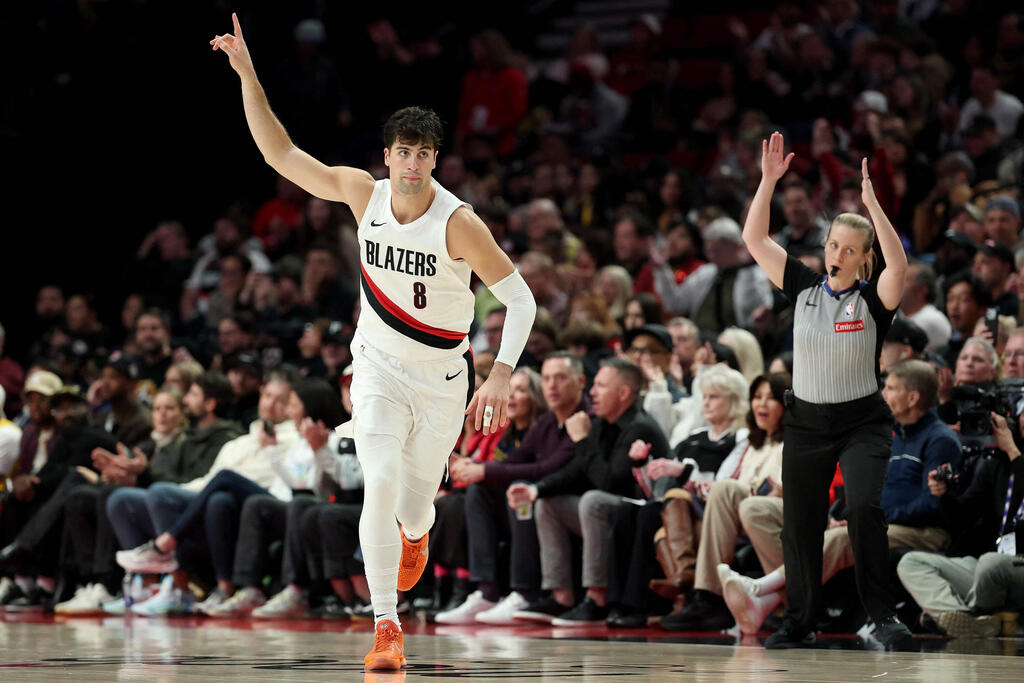
The potential was always there, which explains the dual frustration accompanying the Israeli forward’s first years in the NBA. On one hand, it felt like a weak Washington team wasn’t trying to build a winning squad and didn’t give him a fair chance—neither stylistically nor in minutes; on the other, the small flashes followed by droughts left the feeling that something was holding Avdija back—usually himself. The early period in Portland wasn’t good, but what started in the final months of last season is no longer just a phase: Deni Avdija is the best player on a decent team and, more than that, one of this season’s NBA elite in terms of numbers and impact.

Deni Avdija
(Illustraion: Ofir Begon)
The easiest way to understand the positive change is to look at the numbers, and three averages are especially notable: career highs in free‑throw percentage (84.1 %), assists (5.7), and an excellent 37 % from three. These stats signal his growing involvement in the offense and upgraded efficiency—these are not percentages reflecting few attempts, but rather coming from consistent volume: 6.8 three‑point attempts per game and 8.3 trips to the line placing him sixth in the league.
Rare breed
So did the move to Portland unlock him, or would Avdija have exploded anyway in his sixth NBA season no matter where he was playing? Reece Kuntz of the popular blog “Rip City Project” says: “I think it’s a combination of both. There were already signs in Washington, especially in his last season there, when he became a much better shooter. But beyond that, Portland is the perfect spot for him to make the leap. The Blazers give Deni the freedom to be who he is.”
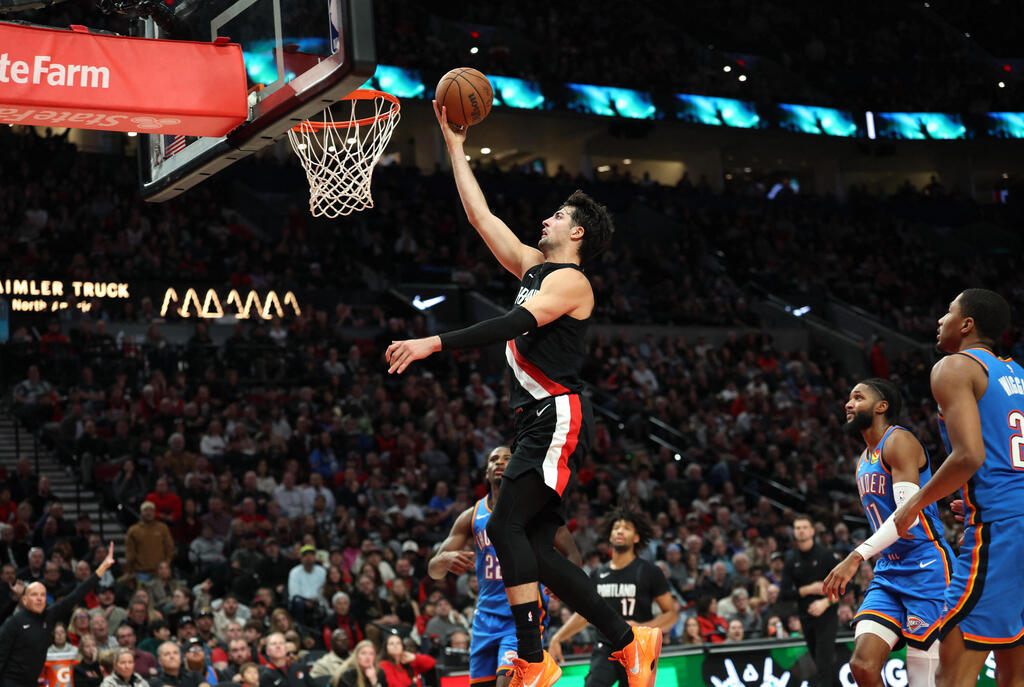
Danny Avdia over the Oklahoma defense
(Photo: Jaime Valdez-Imagn Images)
Who he is. What is that identity? The explanation seems complex but is fundamentally simple. Avdija was once called “Turbo” during his Washington days because of his ability to take the ball all over the court from coast‑to‑coast, but last year the uniqueness crystallized. When that aspect connected with increased physical strength and improved finishing, a player was created that you don't see much of in the NBA these days
In an era of three‑point bombing, Avdija changes the defensive set of the opponent and the momentum of the game with his quick and powerful drives. They finish in a lay‑up, sometimes a dunk, and often a foul he draws. Much of that change was physical—but it required Avdija’s understanding that he was capable of it, alongside a supportive professional environment, for him to reach this level.

Avdija was once called 'Turbo'
(Photo: Amanda Loman/AP)
Thanks to his size, speed and especially his high‑quality passing for a player his height, Avdija creates several problems with those drives. Some more aggressive teams wait for him in the paint and make the drive harder, but in that case he can still get a whistle in his favor—or find a laser‑sharp pass to an open three. In his last two games he broke his career‑high in assists twice—now up to 14. Together with the defense he always had (no longer talked about) and his new weapon of generating his own threes, this is a rare skill‑set in the league. And when you combine all that with what Kuntz calls “the friendliest contract in the NBA,” a comfortable deal for Portland that Avdija signed while still in Washington before the big breakout, you understand that Portland won.
'Love the passion'
“The fans love him, and he’s embraced Portland,” says Kuntz. While he’s not a local legend like Damian Lillard who returned to the team after a major injury, or a young star like Shaedon Sharpe or Scoot Henderson receiving rave reviews, Avdija has become a very popular figure in the city.
Joe Freeiman, who covers the team for The Oregonian, says: “The fans didn’t know him much before he joined, and in the first months he struggled to find his rhythm, but he blossomed and became a star and a fan‑favorite. The fans love his passion, the fact he’s not selfish, and his tough physical style. Professionally, Deni is a player you enjoy working with. He’s always willing to be interviewed and share his view on the team and every topic I write about. He takes responsibility after losses and shares the praise after wins.”
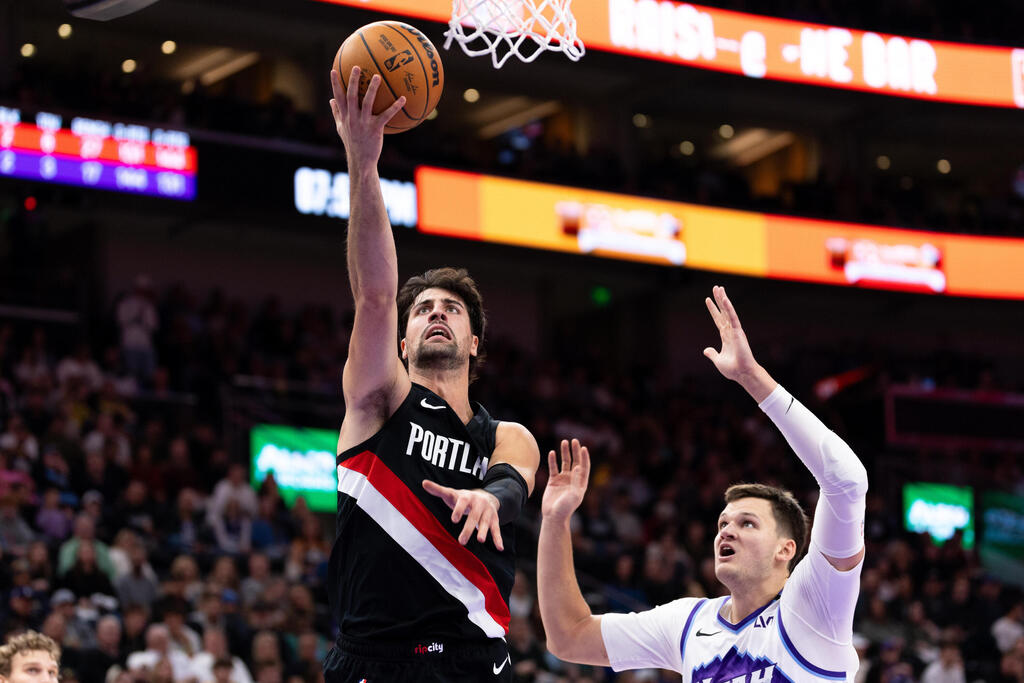
The fans love his passion, the fact he’s not selfish, and his tough physical style
(Photo: Anna Fuder/AP)
There is a specific part of the fan base worth talking about. Portland is not Brooklyn in terms of Jewish presence—but what city is? Deni has no chance of receiving the support magnitudes of Ben Saraf or Danny Wolf across the U.S., but some 57,000 Jews live in Portland, many of them Israelis, and they are not believing their luck.
Rami Mornel, who has lived in Portland for 15 years, says: “When Deni moved here, there was great excitement. Suddenly our representative in the NBA came to my city. From the moment he arrived it’s been a source of joy and pride. With the breakout that started mid‑last season, when people are already saying he’s the best Blazer, the pride is even bigger. I coach a kids’ team, and in my team the style is more Israeli and European, more team‑oriented. It’s nice that the Israeli star is someone a little different from the Americans who bring a style we identify with.”
Mornel adds: “Last week I sat at a game, and I sent a voice message. I have a loud voice and I saw a woman giving me looks—I thought she was angry, but she was just waiting to ask if I was from Israel. She told me how much they love Deni as Jews from Portland. You hear shouts of ‘Go Deni’ and ‘We love you’ at every home game.”
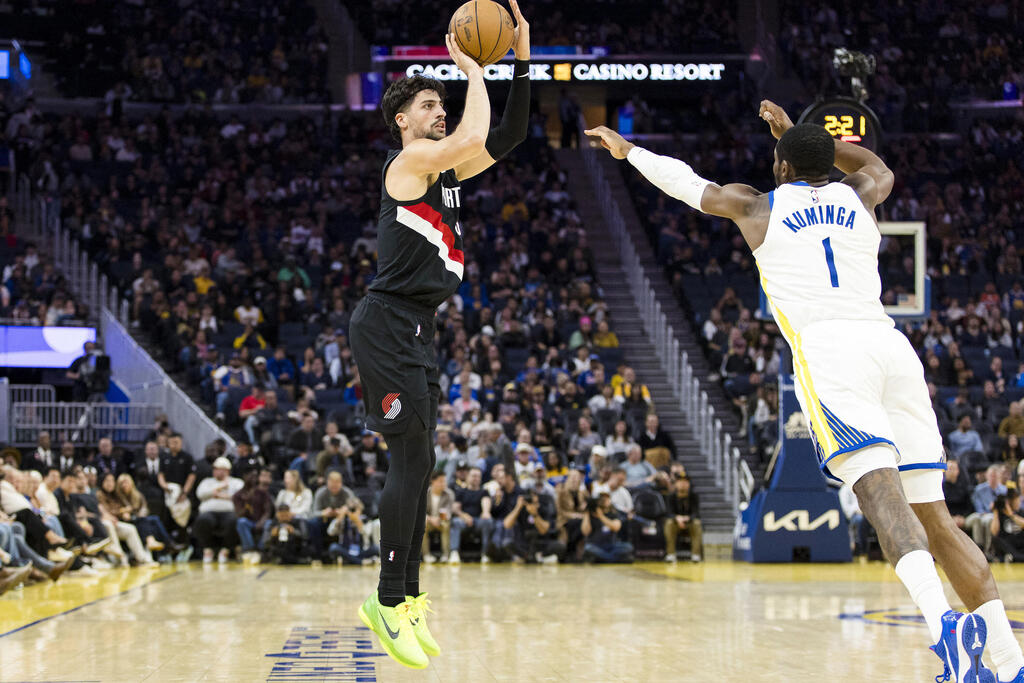
Hear 'Hey Deni' at every game
(Photo: John Hefti/Reuters)
Did he connect with the community?
“When Deni first arrived here and there was an open practice, my son and I sat in the front row. When we called him in Hebrew, he got emotional and came over to us. He is relatively accessible for pictures, but less so for building a personal bond. The connection is about our pride, and the fact there are many Jews and Israelis who come and see our representative leading the team. I dream of bringing him to the practice of my club, but I don’t think that’s very likely.”
A chain of turnovers
There are stars you have to talk about. Avdija is ranked 10th in the NBA with 3.6 turnovers per game. That’s a necessary evil for a play‑maker who moves the ball a lot, but at times there’s the feeling that once one turnover happens, others follow in a chain. For example, Nikola Jokić has the same average but balances it with twice as many assists. Last week Avdija also worried with critical mistakes that made the difference between loss and win: two bad shots trying to take over against Dallas, and a free‑throw miss followed by a defensive error against Chicago.
An interesting question has emerged recently in the U.S.: can Avdija be the alpha, the number 1 player of a successful playoff team? He is clearly the number 1 for the Blazers now, but where he will end up is anyone’s theory. The worry is natural because he hasn’t shown that level over multiple consistent seasons yet.
Freeman is not worried. “Deni stands out as one of the corner‑stones of a club that’s being rebuilt, and his growth and development are essential to the Blazers’ success," he says. "The process is looking excellent at the start of the season—much thanks to him—until injuries hit the team. If Portland indeed manages to contend for a playoff spot, Deni will play a central role in that.”

Nikola Jokić of the Denver Nuggets
(Photo: Ron Chenoy-Imagn Images)
The club also has real and not hypothetical burning problems—chief among them the coach situation. The entanglement of Chauncey Billups in the gambling scandal likely ended his NBA tenure permanently.
“The day after Billups was arrested and left the team in October, the Blazers played against Golden State. It was the first time we got access to the team since the scandal broke," Freeman explains. "Before the game, Deni was the only player in the locker‑room who spoke with reporters and addressed the scandal. That showed his leadership, fearlessness. I’ll never forget it.”
Billups had carefully built a team with a clear defensive philosophy, which he paired with speed when Avdija arrived. The interim coach Tiago Splitter—still holding the “temporary head coach” tag—is a basketball brain who won a title as a player under Greg Popović in San Antonio and led Paris to a title in France as a coach—but right now his hallmark is constant substitutions, and it doesn’t look like it’s working (especially due to a shaky bench).
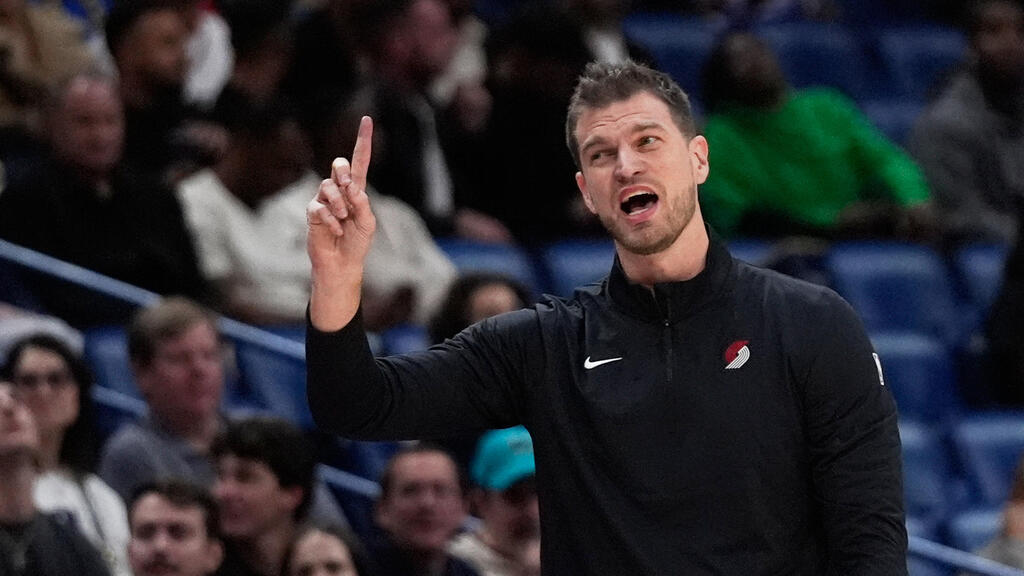
Tiago Splitter
(Photo: Gerald Herbert/AP)
The all-star question
Yet it would be wrong to focus only on the problems. The NBA is built on long‑term thinking and development, and in this case the optimism is high. Thanks to the fact that Avdija turned out to be a steal, the speed of the rebuild in Portland is faster than expected—not to mention that Avdija is just 24 years old and already brings five years of NBA experience and before that senior‑level play with Maccabi Tel Aviv.
“His scoring average improved by nearly 10 points over last season, and the first month was fantastic," according to Freeman. "He was significant in the fourth quarter of many games and carried the team to more than one close win. We must remember he played four games with no point guard, and took even more responsibility in managing the game—that showed his versatility.”
Kuntz adds: “In my view, his ceiling is becoming the kind of point‑forward you can run the entire offense through. He needs to reduce turnovers and improve his ability to change speeds—sometimes he plays too fast and forces the action too much. But he is already showing signs of improvement in that area and he is a legitimate All‑Star candidate.”
Freeman says that Avidja "has begun to generate buzz in regard to the All‑Star, but it’s still very early in the season and there is tough competition in the West. It will depend on Portland’s record at voting time. Voters tend to reward players from winning teams.”
When senior writer Tim Bontemps summarized the first month of the season for each team on ESPN, Avdija was the only one who got mention from Portland. It seems that on the popular site, in the Blazers organizsation and across the NBA they feel exactly what the scout who spoke anonymously said: “He is way better than I thought he would be.”