

Even though nearly two years have passed since he last competed, Sagi Muki still looks for his judogi whenever he packs a suitcase for a conference or lecture overseas. A few seconds later, he remembers that he has retired from the sport that took him to its greatest heights and instead packs a tailored suit, a symbol of his new life.
That automatic habit will likely remain until Muki fully adjusts to being called a former athlete. His final contest came in the round of 16 at the 2024 Paris Olympics. Since then, he has delivered lectures, appeared on the Israeli version of Dancing with the Stars and the youth series Ziggy, and opened a network of judo clubs in Netanya, where he lives.
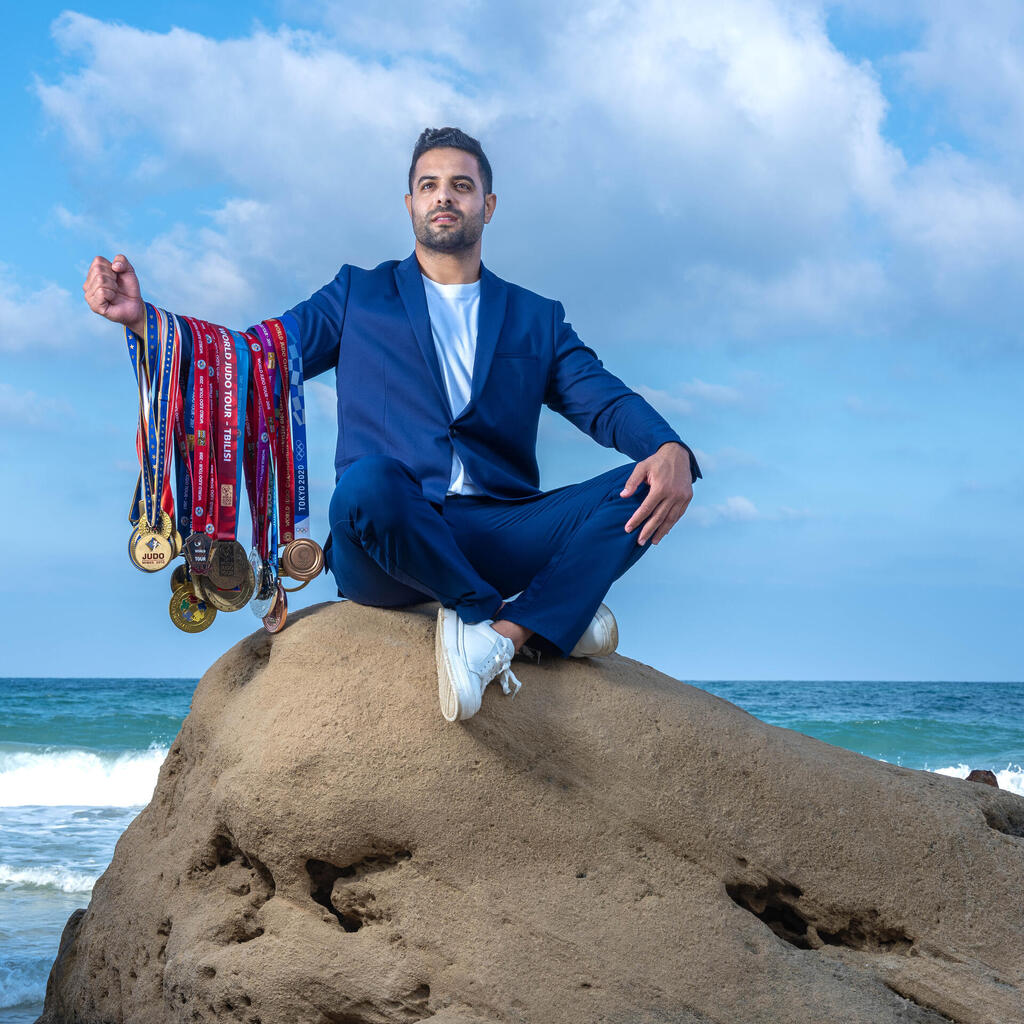
“I felt good before the day I competed at the Paris Olympics,” he recalled in an interview with ynet, describing what ultimately became the final day of his career. “I received a relatively difficult draw. I gave my heart and soul, especially after October 7, when the antisemitism was very noticeable. Representing the country during that period was an enormous mission.”
You initially said you were considering continuing until the Los Angeles Olympics so your children could watch you compete
“I hoped it would happen. Something in me changed after they were born. I live for them, not for judo, as I did before. After Paris, I took time for them and for my wife, Natalie. I calmed down and breathed. I tried to understand what I was going to do next. I wanted to be at peace with myself. When that happened, I held the press conference where I announced my retirement.”
When did the idea of opening your own clubs emerge?
“In September. At first, I opened a small club, as Oren Smadga did. I have a photo from when I was 5 years old in which Oren is holding me, and I thought that perhaps one day I would have a similar photo with an Olympic champion.
“Watching the children develop is addictive, and I have come to love being part of that process. Their progress is incredibly moving. I try to pass on the values judo gave me, including excellence and respect for one’s opponent. I am proud of what we have built, and next year we will expand to Ra’anana and Ramat Gan.”
How has your daily routine changed since retiring?
“I still wake up early for Eliya and Adele, and I am still busy. My training is more focused on the gym, but I still practice judo. Things are calmer now, even though I maintain a healthy lifestyle. Back then, the diets were extreme. I once had to eat 40 pieces of nigiri to gain weight. Now there are fewer flights. I am getting used to the new life.”
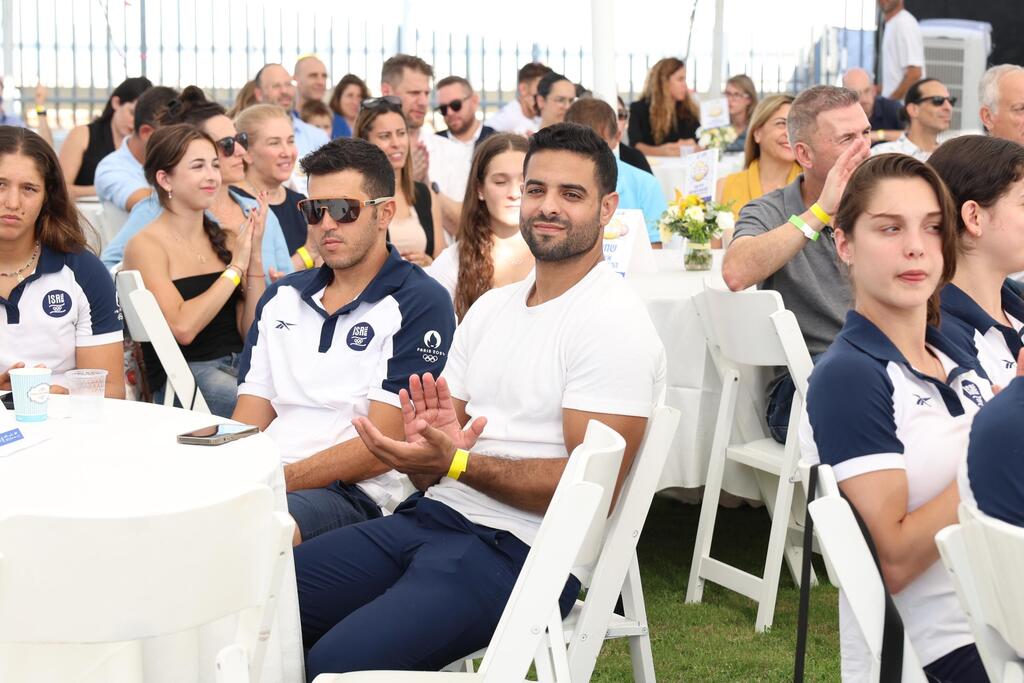
Getting used to the new life
(Photo: Dana Kopel)
Muki and Mollaei, the film
Seven years have passed since the 2019 World Judo Championships, where Muki won the gold medal and became the first and so far only Israeli man to be crowned world champion in the sport.
But another story emerged from that competition: Iranian judoka Saeid Mollaei. The draw created the possibility of a final between Muki and Mollaei, the reigning world champion. Mollaei ultimately lost his semifinal amid pressure from Iranian authorities to avoid facing an Israeli.
Iran was later suspended by the International Judo Federation and returned to competition only toward the end of 2023.
The more remarkable development, however, came on a personal level. Mollaei defected to Germany, later made a historic visit to Israel and competed at the 2022 Tel Aviv Grand Slam. In the years since, he and Muki have developed a close friendship.
Mollaei is expected to return to Israel later this month for another meeting with Muki and what both men see as a form of closure. They will face each other in an exhibition bout at the arena in Netanya on July 29.
The event is being produced in cooperation with SIPUR, which has followed their friendship in recent years for a documentary directed by Yariv Mozer and scheduled to air on Israel’s Channel 13. Their bout in Netanya will serve as the documentary’s final scene.
Asked about the match that never happened in 2019, Muki said he deliberately shut out the surrounding drama. “If I had focused on anything other than my fights, I would not have been able to advance,” he said. “It was a moment many people were hoping for. There was hope that everything would come together and that we would step onto the same mat, an Israeli and an Iranian. Things happened that were beyond anything we could have imagined.”
At that moment in the warm-up hall, when the draw placed you on course to meet, did you understand the potential for a historic moment?
“I understood the significance immediately. But I was so focused that day that I managed to block it out and set it aside. It was one of the greatest mental challenges I faced in my career.”
Is it really possible to shut something like that out when it is unfolding right beside you?
“You could not avoid feeling and experiencing the madness. My challenge was to ignore everything. What people felt at home about Saeid was not what I felt during the competition. My phone was on airplane mode, and nobody could speak to me.
“I had a similar situation in the semifinal with an Egyptian athlete: Would he compete or not? And if he did, would he shake my hand? When I felt those things beginning to overwhelm me, I withdrew into myself. I reminded myself that I wanted to be the best in the world.”
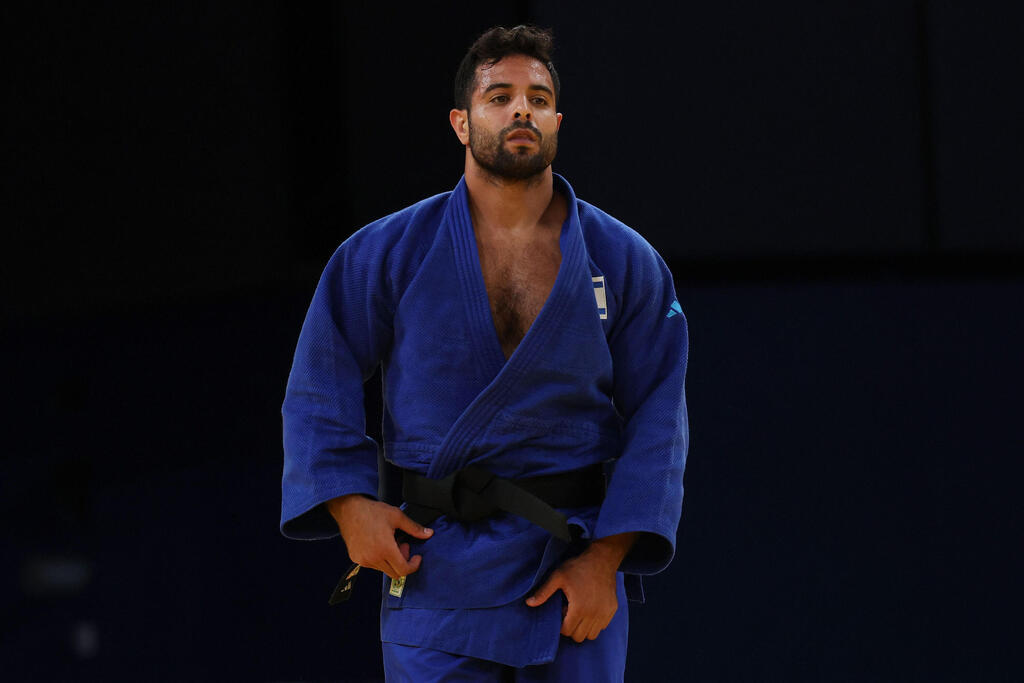
"I wanted to be the best in the world"
(Photo: Jack GUEZ / AFP)
Even when representatives of the Iranian regime entered the training hall to speak with Saeid?
“Yes. It was a sterile area. I told my physiotherapist to protect me. I wanted to focus on the competition. I did not care what was happening. I neutralized the fear. In those moments, I remembered where I had been after suffering two herniated discs in 2016.
“I knew this was the moment when I had to be most focused because it had taken me a year and a half to return to the mat after Rio. The doctors did not believe I would come back. That stayed with me throughout the competitions, and the peak, of course, was the World Championships. Afterward, I was sad and even shed a tear.”
When did you actually learn what had happened?
“By the time I finished competing, I had already pieced the puzzle together myself. There is a reason they are making a film about it. I saw Saeid running, crying, and walking over to his people. He was right next to me in the warm-up room. During the competition, we fought one after the other, and we both kept winning. We were moments away from meeting each other in the final. There was pressure from so many directions. Now I imagine our bout here.”
What will it look like?
“He will enter with the flag of a free Iran, and I will enter with the Israeli flag. We are coming to close a circle that has to be closed. There is no other option. How wonderful that it will happen here.
“I have supporters in Iran, and I receive messages from them saying how much they love Israel and my relationship with Saeid. We lecture around the world about our story, and our vision is for it to appear on as many platforms as possible. After the bout, there will be a panel. We want to connect communities and bridge divides.”
How do you feel about the film?
“I am excited. The film is also coming out during a dark period of wars, when people cannot see the light at the end of the tunnel. It can show how simple we really are, and that an Iranian and an Israeli can be friends.”
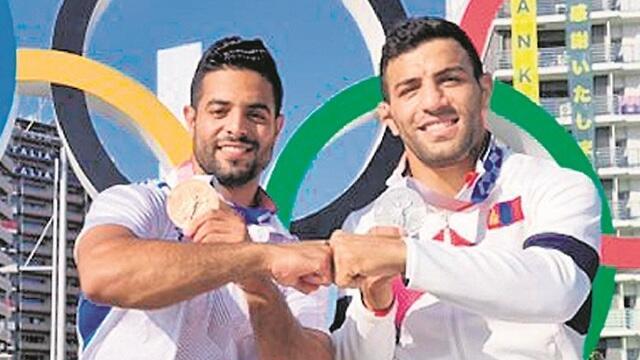
"Iranian and an Israeli can be friends". Muki and Saeid Mollaei
(Photo: Instagram)
Did reviewing the archival material bring back any memories?
“It made me nostalgic. The pictures make me scroll backward through the gallery on my phone, and I realize the incredible things we went through. It is impossible to grasp. I am waiting for the moment the film comes out and everyone can watch it.”
‘I wanted it more than anyone’
Muki considers the 2016 Rio Olympics a turning point in his career, a period still surrounded by complicated emotions and questions about what might have been.
“What would have happened if I had retired then?” he said. “I would not have become world champion. How many people can say they were world champion and twice European champion in two different weight classes? I also have the Olympic medal from Tokyo,” he added, referring to the bronze medal Israel won in the mixed team event.
“That came from learning how to fight my way back from a crisis. I remember winning three bouts in Rio before the semifinal, when no one believed I could do it with two herniated discs. I came out of that experience much stronger, though there were moments when I considered retiring.”
At what point during your rehabilitation did retirement cross your mind?
“I was waiting with my father outside the treatment room to receive an injection, surrounded by elderly patients. I remember thinking, who suffers from back pain at 24? One man even shook my hand and praised me for accompanying my father. The thoughts of retirement were brief, but I did fall into some dark places.
“I eventually made it back, and Rio became the most meaningful Olympics of my career, even more than Tokyo or Paris. I wanted it more than anyone. My 2018 European Championship title came just six months after I returned to training, following a year and a half away. At first, my coaches pushed me to compete and set a deadline for my comeback.
“I also moved up a weight category during that period, so I had to strengthen my entire body, not just my back. In the end, it was my mindset, fighting spirit and determination that carried me through.”
Do you see not winning an individual Olympic medal as a missed opportunity, or have you made peace with it?
“I am an Olympic medalist. Period.”