

Exactly 80 years after gaining independence, Jordan is preparing for another historic milestone that many in the kingdom consider just as significant — if not more so: its first-ever appearance at the World Cup.
Excitement across the country has reached fever pitch. Moroccan coach Jamal Sellami, who took charge of the national team in 2024 and guided the Al-Nashama ("The Chivalrous Ones") to the tournament in North America, has even been granted honorary Jordanian citizenship.
Jordan debut at the World Cup


The draw placed the newcomers in Group J alongside Austria, Algeria and Argentina. An all-Arab showdown against Algeria's "Desert Foxes" is scheduled for the second round of group matches on June 23.
Jordan will make its World Cup debut against Austria on Wednesday in California.
Arab media outlets, especially in Jordan, have devoted extensive coverage to preparations for the occasion.
Jordan's training camp is based in Portland, Oregon, but Sellami's squad traveled a long road to get there. Preparations began May 21 at the Al-Nashama training center in Amman before the team moved to San Diego for a 10-day camp.
During the stay in California, Jordanian Crown Prince Hussein paid an official visit to boost the players' morale.
The royal visit received widespread media coverage. In a video posted on the crown prince's official Instagram account from an interview with Qatar's beIN Sports, Hussein said: "For me, what matters is next week, and we have great confidence in the team. The achievements of the Jordanian national team over the past three years have given us, as Jordanians, feelings we have never experienced before and have motivated us to continue developing our sports system.
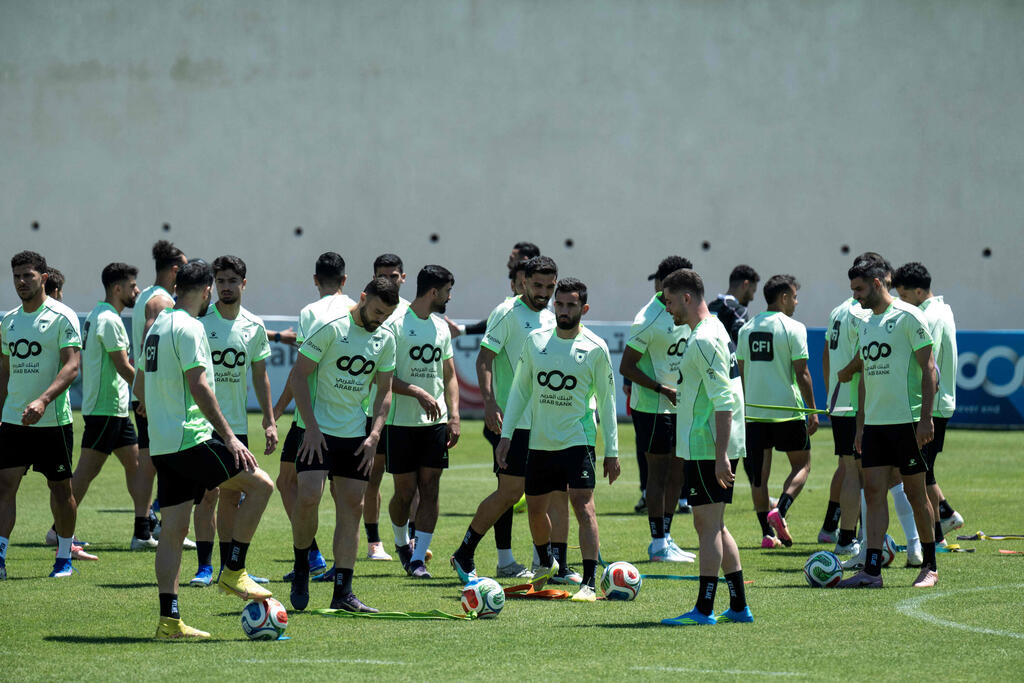
"Today is our opportunity to present our Jordanian and Arab culture to the world. Our group is not easy, but we have great confidence in our players. Their morale is high. Their physical and mental preparation is at its peak. They have done everything required of them, and I believe in them. I'm certain they will deliver a respectable performance."
Hussein also emphasized Arab solidarity. "I am happy with the level of representation by Arab teams. We Jordanians are proud of every victory and qualification achieved by an Arab national team, just as we are proud of our own. We are one nation, with one goal and one vision," he said.
Jordan's royal family has long been deeply involved in soccer. "It is a national event," said Prof. Ronen Yitzhak, head of Middle East studies at Western Galilee Academic College and a researcher at Tel Aviv University's Dayan Center.
The Jordanian national soccer team
(Photo: Jewel SAMAD / AFP)
"Prince Ali bin Hussein, King Abdullah's brother, is president of the Jordan Football Association and everyone is mobilized. Civil servants have been allowed to arrive three hours late on days when Jordan plays. Once the regime sponsors the association, it is viewed as a state matter. Everyone is committed. The national team represents the government."
Jordanian authorities recently announced that employees could begin work at 10 a.m. on match days "to support the Jordan national team's historic first participation and allow fans to watch the games."
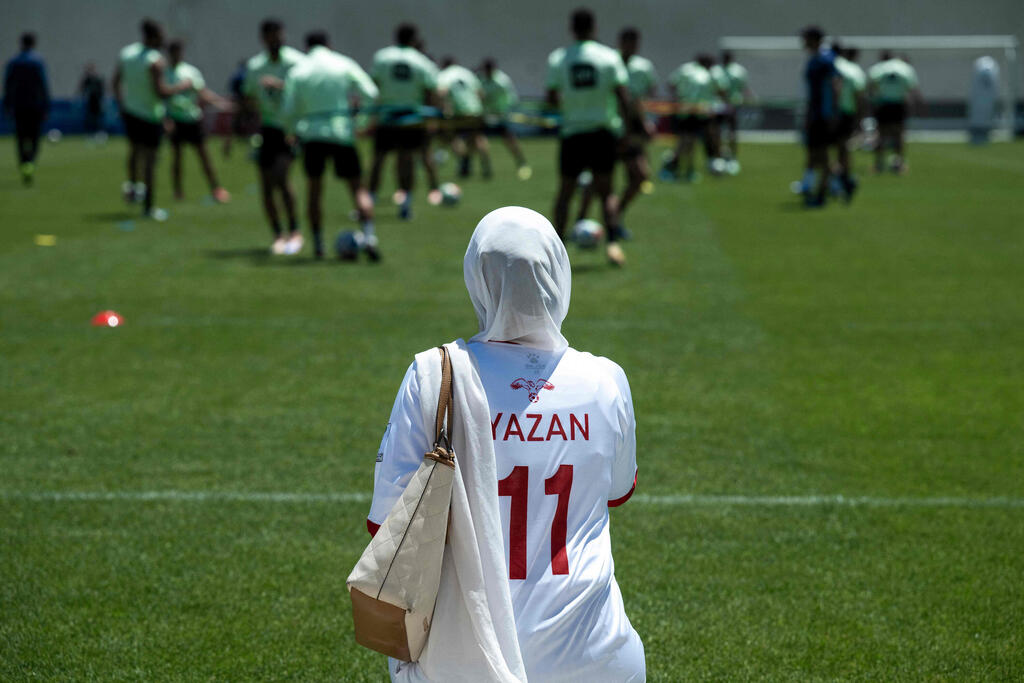
Yitzhak said the excitement stems from more than just the team's first appearance. "People want to disconnect from current issues — the economic situation, the fighting, the Palestinian issue," he said. "It diverts attention from daily concerns and gives people hope. That's why the entire nation has mobilized. They have something to hold on to. It takes them out of their routine."
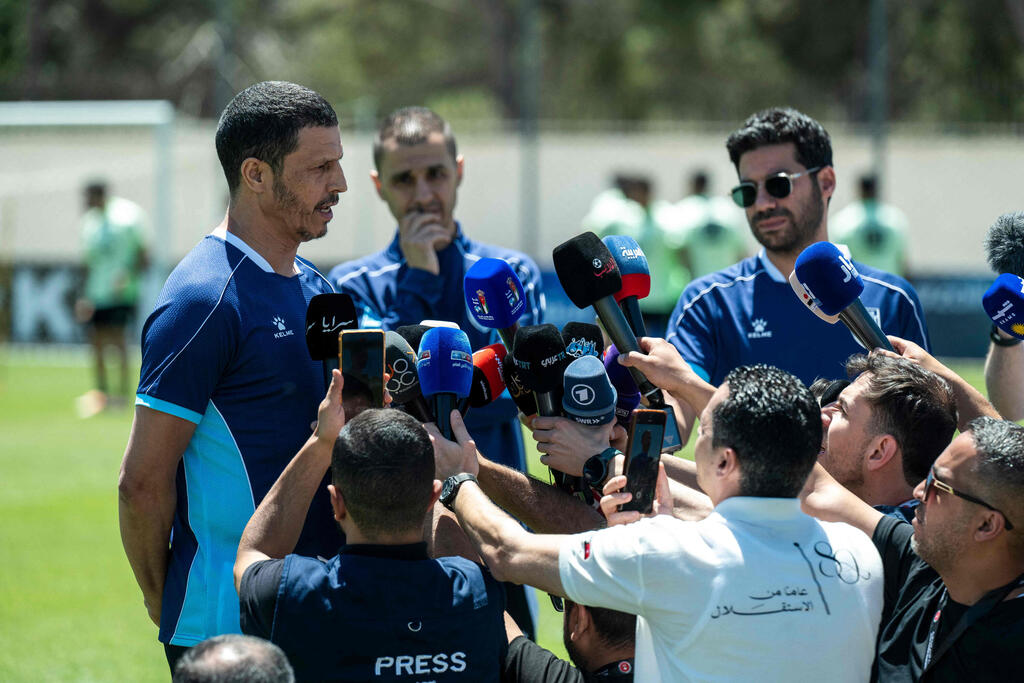
Jordan national team coach Jamal Sellami
(Photo: Jewel SAMAD / AFP)
Jordanian fans interviewed by ynet expressed similar sentiments. "From the heart of Jordan to the brave men of Al-Nashama — today you represent not just a team, but an entire nation," one woman said. "Our first World Cup appearance is not just an achievement, but the beginning of history written in Jordan's name. Raise the flag, play with a warrior's heart and show the world what it means to be Nashmi. Whatever the result, you have created something every Jordanian will remember."
Another fan said: "We wish Al-Nashama success. We hope they advance from the group stage and reach the later rounds. We have complete confidence in the great Jordanian national team."
Turkey's Anadolu Agency recently interviewed Jordanians about the tournament. "When I see Jordan's flag flying alongside the flags of countries from around the world, I feel proud to be Jordanian," taxi driver Ahmad al-Khalayleh said. "Jordan is strong everywhere. It is always first and its flag will be raised everywhere."
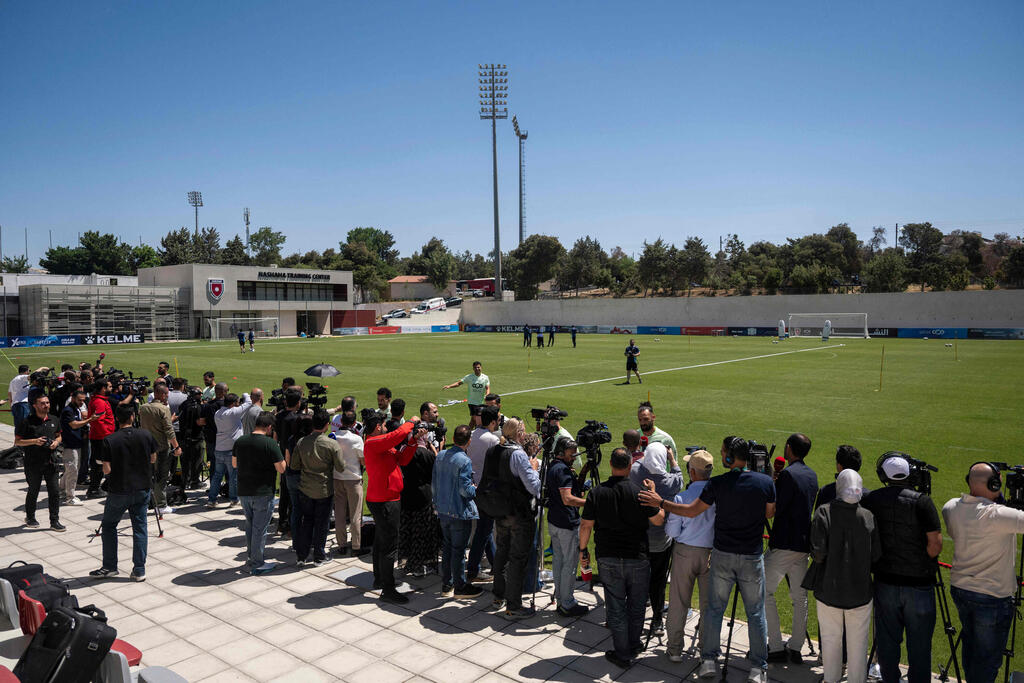
Journalists in Jordan's training
(Photo: Jewel SAMAD / AFP)
Another interviewee, Wadih al-Qaisi, said: "We want the whole world to know who Jordan is and what the Jordanian national team looks like. We want them to see how Jordan can break records and fulfill the aspirations of the Jordanian people. God willing, we will reach the highest levels at the World Cup."
A third fan, Aboud al-Dik, said simply: "All Jordanians are happy about this achievement."
A young Jordanian boy, Hamza Salah, said he hopes the team "wins the Cup."
'Jordan kept its word'
Meanwhile, the Jordan Football Association has been regularly publishing photos from the national team’s training sessions and counting down the days to its first World Cup match.
On June 6, the team released an official anthem featuring the lyrics: “Cheer for Al-Nashama, Jordan kept its word, a people fulfilling its dream.”
Jordan is not the only Arab team participating in this year’s World Cup. It joins Morocco, Tunisia, Egypt, Algeria, Saudi Arabia, Qatar and Iraq — an unprecedented Arab presence made possible by the tournament’s expansion to 48 teams.
Each Arab team arrives with its own background and ambitions. Morocco, for example, entered the tournament after reaching the semifinals at the 2022 World Cup in Qatar, the best result by an Arab or African team in World Cup history.
Egypt returned to the World Cup after an eight-year absence with a clear goal: securing its first-ever victory. Egypt is set to face Iran in a match that has already drawn controversy after Seattle designated it a “Pride Match,” despite the clear clash between the social and religious values of the two countries and the event’s theme.
The match also comes against the backdrop of restrictions imposed on Iran’s national team during the tournament, as well as tensions and the war between Iran and the United States, one of the host countries.
First published: 07:31, 06.16.26