

Five players from Iran’s women’s national soccer team have received visas and political asylum in Australia after expressing fears about returning home following a protest during the Asian Cup, Australian officials said Monday.
Australian Home Affairs Minister Tony Burke said the players were moved to a secure location under police protection and later granted visas under the country’s humanitarian program.
Gallery
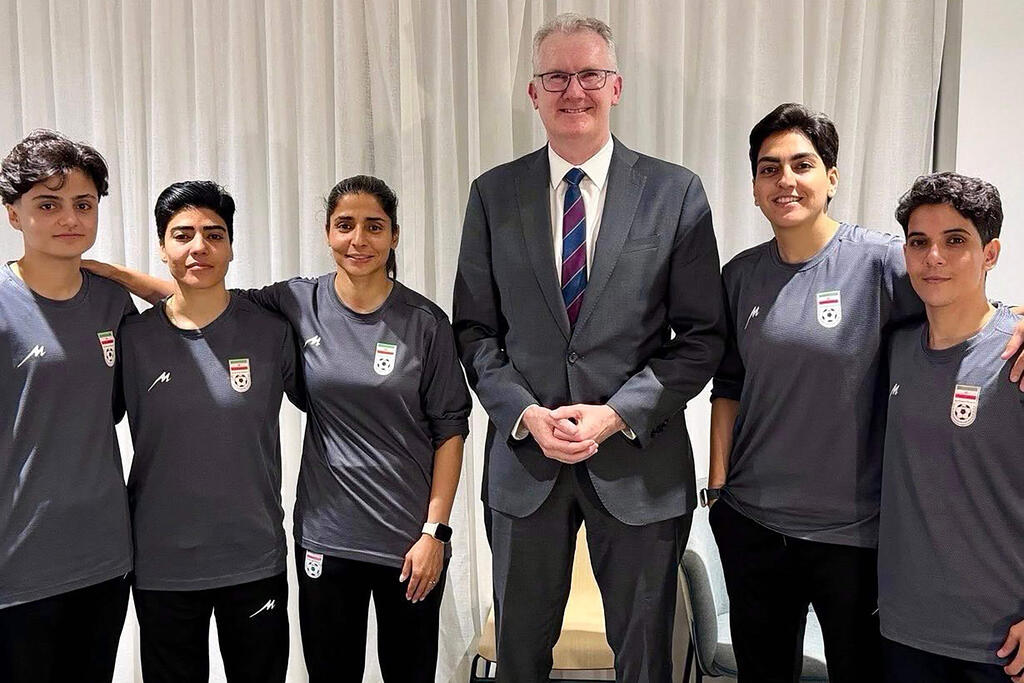
Australian Home Affairs Minister Tony Burke (center) and five Iran’s women’s national soccer team players who have received visas and political asylum in Australia
(Photo: HANDOUT / AUSTRALIAN DEPARTMENT OF HOME AFFAIRS / AFP)
The program allows people seeking asylum or facing serious risk to receive permanent protection, including the right to live, work and study in Australia.
The players who applied for protection were identified as Fatemeh Pasandideh, captain Zahra Ghanbari, Zahra Sarbali, Atefeh Ramazanzadeh and Mona Hamoudi.
Burke said the athletes stressed they were not political activists. “They’re athletes who want to be safe,” he said, adding that discussions about their situation continued for several days before the visas were approved.
In a post on the social media platform X, Burke wrote: “Last night I was able to tell five women from the Iranian Women’s Soccer team that they are welcome to stay in Australia, to be safe and have a home here.”
Australian authorities said it became clear Monday that the five players wanted to remain in the country. That same day, they left the team hotel and were transferred to a secure location by police. Burke later met with them personally before approving their humanitarian visa applications.
Earlier Tuesday, opposition news outlet Iran International reported that another player, Mohadeseh Zolfi, had also requested and received asylum in Australia.
Australian Prime Minister Anthony Albanese later confirmed that the visas had been approved. He said Australia had “taken the Iranian women's soccer team into our hearts” and noted that the players had received strong support from the public.
The controversy surrounding the team began after its opening match of the tournament against South Korea, which ended in a 3–0 loss, when several players refrained from singing Iran’s national anthem. The gesture sparked an uproar in Iran, where conservative commentators accused the players of treason during wartime and called for severe punishment.
Concerns for the players’ safety intensified after Iran was eliminated from the tournament. On Sunday evening, hundreds of supporters surrounded the team bus outside a stadium on Australia’s Gold Coast, chanting “Save our girls.” Many feared the players could face repercussions if they returned to Iran.
Witnesses also described tense scenes inside the team’s hotel. Several players were seen leaving the lobby after speaking with human rights activists. Shortly afterward, another group that included a translator and the team’s coach entered the hotel looking for them, appearing distressed.
A relative of one of the players told the Australian broadcaster ABC: “I want to kiss the hands of everyone who helped.”
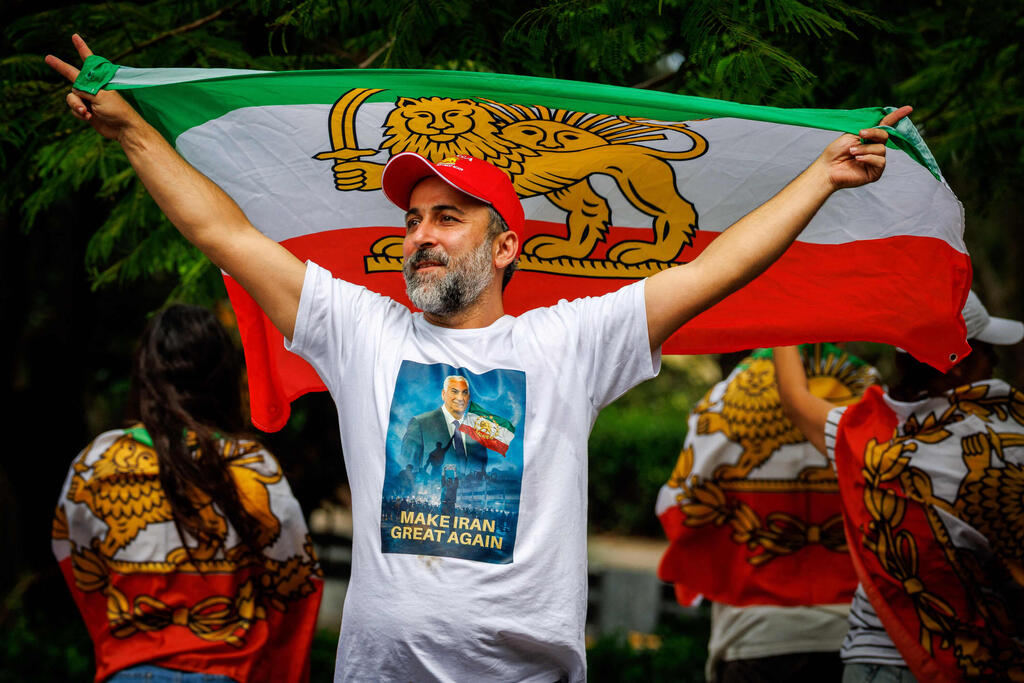
Anti-regime Iran supporters
(Photo: Patrick HAMILTON / AFP / AFP)
The situation also drew international political attention. U.S. President Donald Trump called on social media for the players to be granted asylum.
“Australia is making a terrible humanitarian mistake by allowing the Iran National Woman’s Soccer team to be forced back to Iran, where they will most likely be killed. Don’t do it, Mr. Prime Minister, give ASYLUM. The U.S. will take them if you won’t,” Trump wrote, later saying he had spoken with Albanese about the issue.
Reports indicate that some members of the Iranian team are still undecided about whether to seek asylum or return home, partly because of concerns for family members who remain in Iran.
During later matches in the tournament against Australia and the Philippines, the team sang the national anthem and saluted the flag, prompting speculation among critics that Iranian officials accompanying the delegation had pressured the players.
Former Australia national team star and human rights advocate Craig Foster has been leading public efforts in support of the players.
“There must be safe processes in place at every FIFA/AFC tournament for athletes to access and any time it is even suggested that a group is being silenced or coerced, the governing body should intervene to be satisfied otherwise,” he said.
Members of the Iranian community in Australia have also voiced strong support. Hundreds of fans attended the team’s final match against the Philippines and cheered the players, while boos were heard from parts of the crowd during Iran’s national anthem — a protest by some supporters who oppose the government in Tehran.