

Ukrainian President Volodymyr Zelensky has announced that, for the first time in the war against Russia, his forces had captured an enemy position using only unmanned systems.
In other words, the Ukrainian army managed to seize a position without infantry and without a single human soldier setting foot on the ground or risking his life. Drones and ground robots identified the target, overcame Russian defenses and captured the position without the force suffering a single casualty.
Ukrainian improvisation vs. American regulation
At the center of this historic attack is UFORCE, a Ukrainian-British defense technology startup that has merged nine local companies under its umbrella. Since Russia’s invasion in 2022, the company has carried out more than 150,000 combat missions in the air, at sea and on land, and recently became Ukraine’s first defense unicorn, with a market value surpassing $1 billion.
The footage released by Zelensky: Ukrainian drones explode on a plane, helicopter and ship


Ukraine’s short-term military goals are ambitious: replacing up to 30% of manpower in the toughest front-line areas with autonomous technology, with the ultimate goal of having 100% of front-line logistics carried out by robotic systems.
To achieve that goal, the Ukrainian army plans to purchase about 25,000 unmanned ground vehicles in the first half of the year alone, twice the total procured last year.
But while Ukraine is presenting a model of rapid and inexpensive innovation, strategy and defense experts around the world are warning of a deep paradox: The United States, the world’s leading military power, is unable to adopt this approach.
The reason is not a lack of budgets or engineers, but legal, contractual and technological obstacles known in the civilian world as the “right to repair.” In Ukraine, the decisive advantage comes from shortening the time between fighting in the field, technical adaptation and redeployment.
Robot and drone operators at the front run independent repair labs, maintain stocks of components and develop improvised software and hardware solutions, or crack code in real time to contend with electronic warfare.
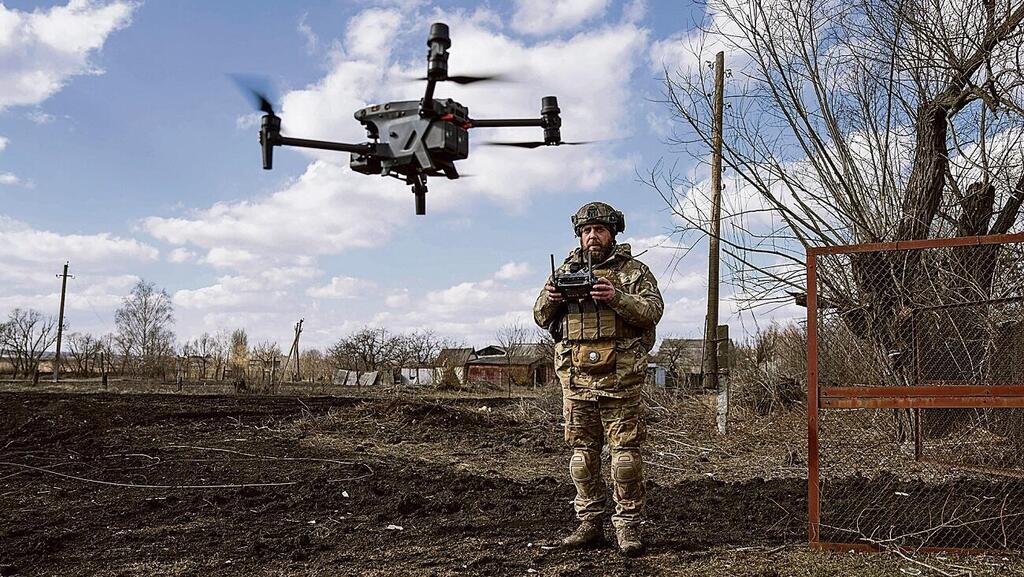
Moreover, Ukrainian army units also operate independently in choosing their equipment and procurement, all through a unified platform that resembles an e-commerce site — a kind of Amazon for quartermasters.
In the United States, by contrast, major defense companies maintain monopolies and intellectual property rights over the diagnostic systems, code and software of their weapons and systems. An American soldier in the field is not authorized, and is not technologically able, to make independent changes or repairs to equipment without violating contracts or breaching strict safety standards.
This obsession with patent protection slows the adaptation cycles required in high-intensity combat, leaving Western militaries vulnerable and slow in a dynamic battlefield where the life span of a software version is sometimes measured in just a few weeks.
Between China and Israel
The contrast is even sharper when looking at other arenas around the world, particularly China. Beijing’s military doctrine is rapidly moving toward a strategy of “saturated and algorithmic mass.” China this year unveiled its Atlas drone swarm system, capable of launching 96 drones in just three seconds under the supervision of a single human operator.
The drones communicate with one another through a decentralized mesh network, independently divide reconnaissance, deception and attack roles, and neutralize air defense systems through economic attrition: a $3,000 drone that forces the enemy to waste a Western interceptor missile worth hundreds of thousands of dollars.
In addition, the Chinese are converting hundreds of obsolete 1960s-era fighter jets into fast, expendable suicide drones, designed to deceive and drain the enemy’s surface-to-air missile batteries in the very first wave of attack.
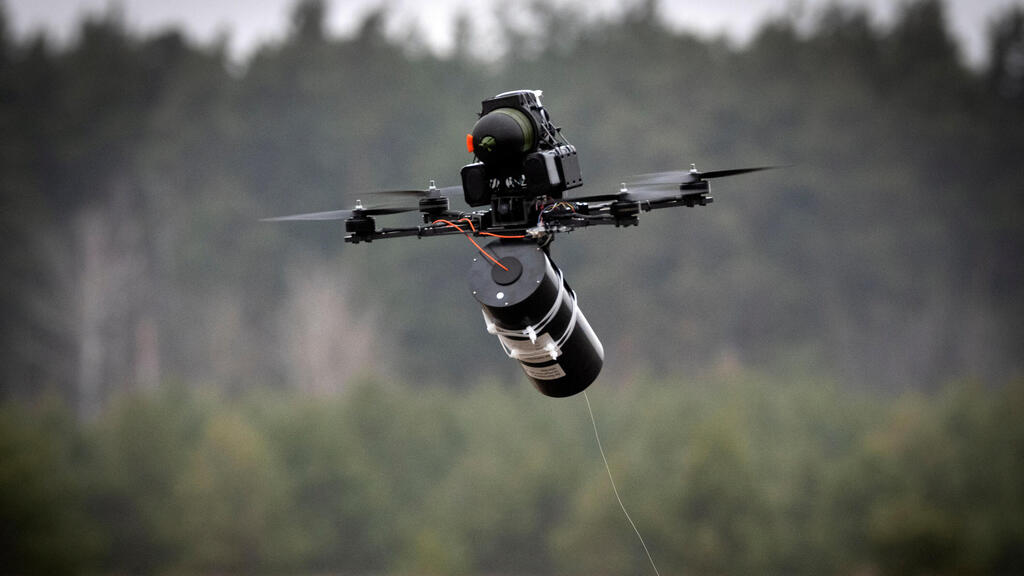
Ukrainian fiber optic drone
(Photo: Efrem Lukatsky, File/AP)
The middle-ground solution, bridging Western rigidity and the need for extreme operational flexibility, can actually be found in Israel’s defense industry. Local companies, led by Elbit and other robotic technology manufacturers, have managed to develop advanced autonomous ground robots, including operational systems such as Rook and Probot, that are based from the start on a modular “box” architecture.
This structure enables rapid replacement of components, hardware and software upgrades and tailored field adaptations without requiring involvement from the original manufacturer’s laboratories. The Israeli model proves that it is possible to maintain strict military standards while giving combat forces the technological freedom critical to their survival in the field.
Historically, the world of warfare is now experiencing what is known as the “new revolution” in military affairs, or RMA. If military power was once measured by heavy, rare and expensive hardware platforms built over decades, such as armored tanks or stealth fighter jets, the focus is now shifting to software-defined, AI-based systems that are updated and reset within weeks.
The concept of “precise and inexpensive mass” is completely changing the political and strategic economy of modern conflicts. The age of unmanned warfare is no longer a distant forecast discussed at defense conferences, but an active and critical line item on the balance sheets of the world’s most influential countries and companies.