

Israeli defense technology company Elsight has signed a Basic Ordering Agreement with the US Army, giving military units a more direct procurement route for the company’s connectivity technology for unmanned systems.
The agreement marks another step in Elsight’s push into the US defense market, following the addition of its Halo platform to the Pentagon-linked Blue UAS list earlier this year.
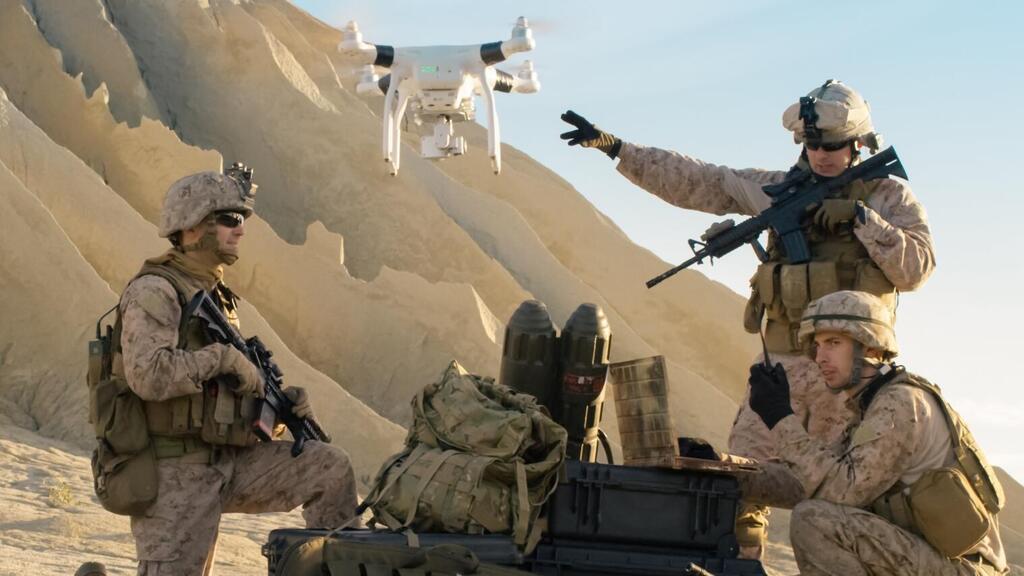
Elsight develops secure connectivity technology for unmanned aerial and ground systems
(Photo: Gorodenkoff, Shutterstock)
A Basic Ordering Agreement does not by itself represent a firm purchase order or guarantee future sales. Rather, it establishes terms that can simplify and accelerate subsequent orders by eligible US Army units.
Elsight, headquartered in Or Yehuda, develops secure communications technology for unmanned aerial, ground and maritime platforms. Its Halo system is designed to maintain connectivity for drones and other autonomous systems operating beyond visual line of sight, including in areas affected by jamming, electronic warfare or disrupted communications.
The platform combines multiple communications links, including cellular, satellite and radio-frequency connections, and can switch between them to maintain a continuous data link.
Elsight says Halo has accumulated more than 500,000 operational hours across more than 100 customers and has been deployed in high-intensity combat environments. The company has also demonstrated the technology at US military events involving the Defense Innovation Unit and US Special Operations Command.
“This agreement further expands our path to rapid military procurement for US Army units, following our addition to the DCMA Blue UAS Cleared List,” Elsight CEO Yoav Amitai said.
“As unmanned warfare continues to proliferate, defense forces are realizing the value of Halo as the connectivity backbone for high-performance execution of uncrewed missions.”
The agreement follows a series of steps that have positioned Elsight more closely within US military procurement channels.
In May, the US Defense Contract Management Agency added Halo to the Blue UAS list, a catalog of approved unmanned systems and components that have undergone US defense vetting for areas including cybersecurity, supply-chain assurance, data integrity and operational reliability.
That designation cleared a significant procurement hurdle by allowing US military users to acquire the platform through a faster process rather than requiring separate certification procedures for each program.
Elsight had also previously been selected by the Pentagon’s Defense Innovation Unit for the next phase of Project G.I., an initiative aimed at accelerating autonomous systems for small combat units operating in areas with limited communications or GPS access.
Under that program, Elsight’s role centers on maintaining resilient communications for unmanned systems in electronically contested or communication-denied environments.
The company says its technology can be integrated across drones, ground vehicles and maritime platforms without locking customers into a single hardware supplier.
Elsight has also said it is expanding manufacturing capacity in the United States and Germany as governments place greater emphasis on localized and resilient defense supply chains.
The company said several programs involving NATO-aligned defense forces and US government agencies are moving from pilot and evaluation stages toward potential production-scale procurement.