


The phrase “future battlefield” may be overused, but if remarks at last week’s Defense.TechExpo by the Stier Group is any indication, the current battlefield is already the future. Technology is increasingly embedded in combat operations, helping achieve military objectives while protecting soldiers’ lives.
“Once, 100 years ago, the Wright brothers led aviation,” retired Brig. Gen. Ran Kochav, former commander of Israel’s Air Defense Array and chairman of the expo’s steering committee, told ynet. “Then aviation and space led civilian development. For the past 50 years, civilian technology led the military, and we bought off-the-shelf systems. But military conflicts have brought us back to a reality in which defense tech leads in many ways.”
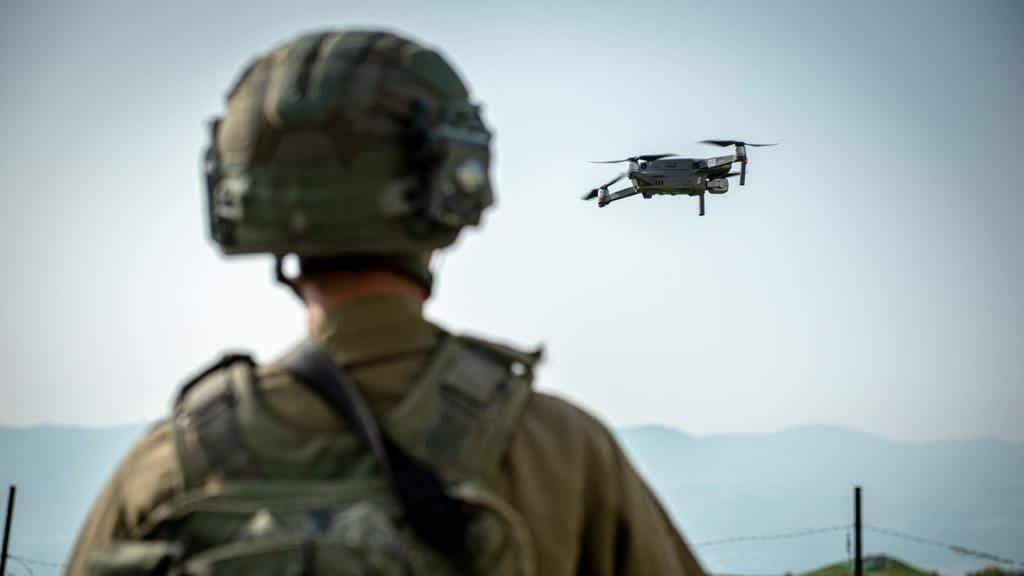
According to Kochav, today’s conflicts underscore that shift. “The future battlefield is already here. Our conflict needs no introduction, but there is also the war between Russia and Ukraine, tensions between India and Pakistan, Cambodia and Thailand, Vietnam and China. The future is here because we now have artificial intelligence, drones, UAVs, space and satellite capabilities integrated into warfare.”
What does Israel bring to the table?
“We don’t just present the successes or boast. We share capabilities and failures, lessons learned from the past two and a half years. We listen to others and connect technology, ideas and lessons into what is now called defense tech.”
Experience forged under fire
Over the past two and a half years, roughly 50,000 projectiles of various kinds — UAVs, drones, rockets and cruise missiles — have been launched at Israel from Gaza, Lebanon, Syria, Iraq, Iran and Yemen.
“The knowledge held by the current air defense commander, and the ability to turn that into AI that improves detection, interception and decision-making — when to intercept, how and how many — that’s experience you cannot buy,” Kochav said. “If we’ve reached 94% interception accuracy, we can go higher. Everyone wants that.”
Still, he acknowledged gaps, particularly in dealing with drone swarms similar to those seen in Ukraine.
“You’re right. I wrote that Israel is not ready for a drone swarm attack. We need an integrated solution I call detection, control and interceptors. Detection can be done in many ways. Control is about who is responsible and who makes decisions. Interceptors can include missiles, shells, drones, lasers. What we lack is an integrated national concept that brings it all together.”
Robots on land, sea and below
Technological threats are no longer confined to the air. Ground, subterranean and maritime systems are advancing rapidly. China has unveiled armed humanoid robots, but battlefield robotics more often takes the form of wheeled or tracked systems, remotely operated or increasingly autonomous.
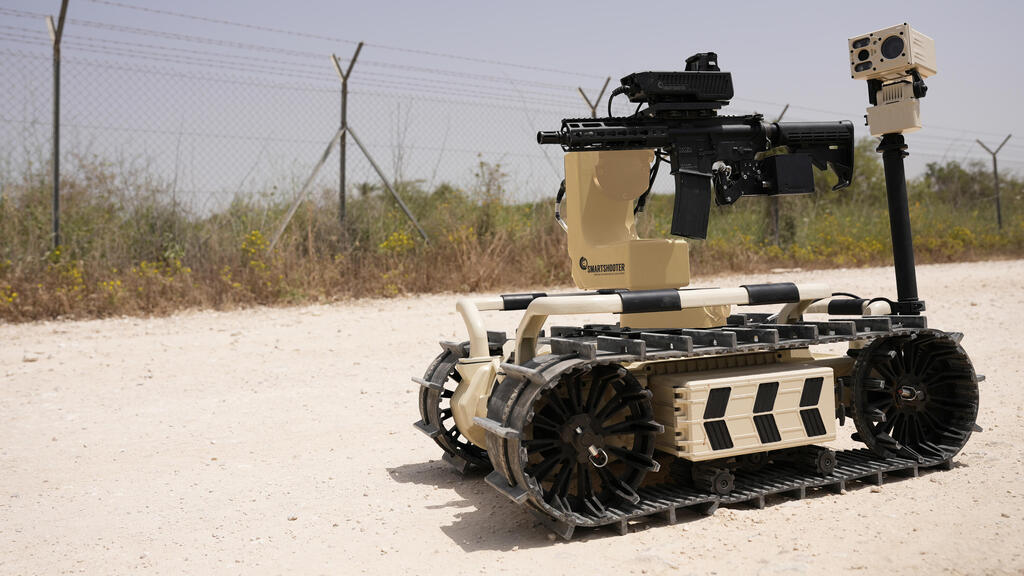
Smash Hopper mounted on a robotic platform made by a robotics company
(Photo: Smart Shooter)
Israeli company Smart Shooter showcased its Smash series, known in the IDF as “Dagger.” These smart fire-control systems mount on small arms or heavier weapons and enable precise targeting of ground and aerial threats, stationary or moving.
The system locks onto a target, tracks it using AI-based image processing and releases a round only when a hit is assured, reducing the risk of harming uninvolved civilians.
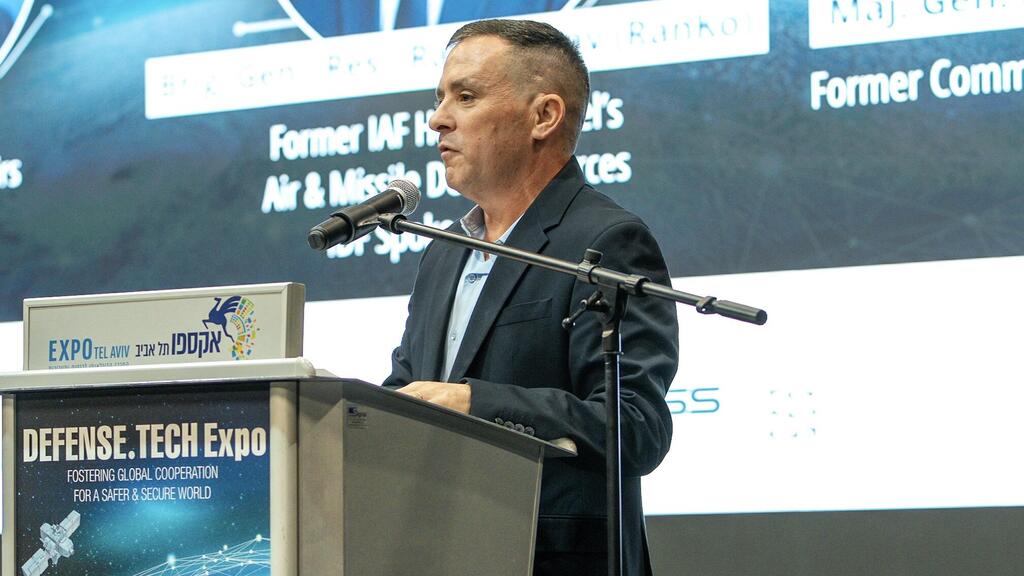
Retired Brig. Gen. Ran Kochav
(Photo: Konstantin Grossman)
Smart Shooter recently filed a prospectus ahead of a planned public offering at a valuation of about 700 million shekels. The company, based in Kibbutz Yagur and employing about 100 people, reported $20.8 million in revenue in the first nine months of 2025, a 241% increase year over year. Forty percent of revenue came from Europe, 36% from Israel, 20% from the United States and the rest from Abraham Accords countries.
“Our core technology improves shooting accuracy through real-time ballistic calculations — where to aim and when to fire,” said Shir Ahavia, the company’s vice president of products. “We analyze both target behavior and shooter behavior to deliver a ballistic solution in real time.”
The company offers systems for individual soldiers and small remotely operated weapon stations that can be mounted on vehicles or robots.
“One limitation in robotics today is weight and power supply,” said product manager Yoav Glaster, formerly head of combat equipment in the IDF Ground Forces. “Operational platforms must be small enough to pass through a doorway. You want the robot to go first and protect soldiers, but heavy weapons add weight. Our system enables smaller robots to achieve high accuracy.”

Shir Ahuvia
(Photo: Maya Havkin)
Countering drones with a single shot
One of Smart Shooter’s notable developments is its drone interception capability. The system enables a single soldier to down small, fast drones with one round — a task nearly impossible without smart optics.
“Traditional weapon stations are designed for ground targets and have limited anti-drone capability,” Glaster said. “We can intercept drones effectively, even from a mobile robot platform.”
Another company at the expo, Macushla, was founded in 2018 by CEO Liad Pfeifer and her partner, Yair Tamir. Originally focused on medical devices, the company pivoted after October 7 to develop ground robotic platforms and remotely controlled firing systems.

Liad Pfeifer
Its Shadowfax system is a modular robotic platform adaptable to various missions, including tunnel warfare, missile towing, debris clearance and door breaching. Another system, Sauron, provides smart fire control, including drone interception.
“We see the platform as a Swiss Army knife,” Pfeifer said. “It goes ahead of the soldier and performs dangerous tasks, saving lives.”
The company also developed robotic arms capable of clearing obstacles, extracting casualties or entering buildings before troops. Logistics robots can autonomously transport heavy loads from point to point.
During the war, highly autonomous tools were introduced, Pfeifer said, but the ground robotics field remains less mature than aerial drones.
“Before a soldier trusts a highly autonomous robot, they must build confidence in the system,” she said. “We started with remote-controlled ground platforms capable of navigating varied terrain. Now, after trust is established, we’re adding autonomous capabilities step by step.”
Innovation and humility
The expo highlighted how Israel’s prolonged conflict has accelerated battlefield innovation, turning operational experience into exportable expertise.
Yet even amid technological breakthroughs and surging demand, senior defense figures concede that Israel still faces structural and conceptual gaps — particularly in integrated drone defense and broader systems coordination.
The battlefield may already look like the future. But as Israeli officials acknowledge, it remains a work in progress.