

Forget everything you knew about digital photo editing. A new Google AI feature nicknamed “Nano Banana” is making waves — some even call it “the feature that will bury Photoshop.” Officially called Flash Image, it’s part of Google’s latest Gemini 2.5 model and enables high-quality image creation and editing in seconds using simple text prompts.
Launched by DeepMind in August, Nano Banana spread rapidly: what began as a playful campaign—sharing banana images and emojis—led to nearly a billion images created or edited within a month. India leads global usage.
Gallery
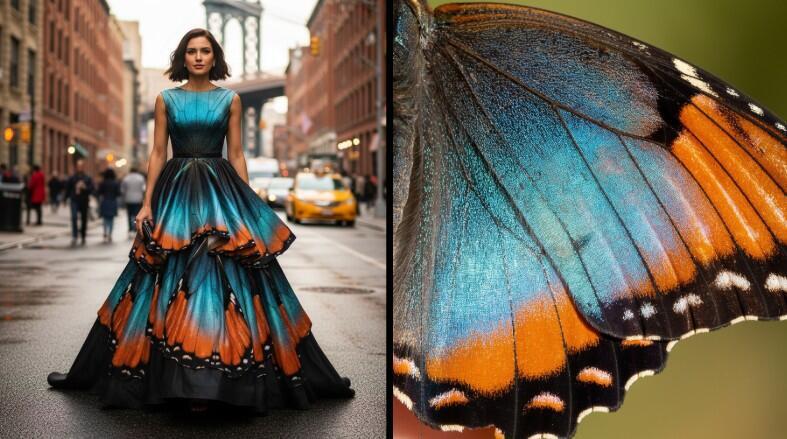
Right: Close-up of a butterfly wing Left: Image created by Gemini with the butterfly texture
(Google)
The project is led by David Sharon, a senior Google and DeepMind developer originally from Israel. Over the past nine months, he’s directed a team of about 1,000 people working on Gemini, and he also co‑leads Veo 3, a companion video AI.
Veo 3 can generate realistic video clips—up to eight seconds—using text or image prompts with aligned audio and music. Together, Flash Image and Veo 3 allow seamless transitions from static photos to speaking, moving images.
veo3.mp4
(Google)


What sets Nano Banana apart from other image models is its uncanny consistency: it preserves facial features across transformations. You can change a subject’s wardrobe or environment and still maintain a natural, authentic likeness. Sharon calls that consistency “the secret sauce.”
The tool also supports object removal, fine positioning (“move the chair a little left”), image merging and background replacement. Interior designers, for example, can add or remove items within a photo by a simple command.
The team has also seen emotionally stirring applications. A caregiver in Mexico used the tool to create a photo of her late grandmother holding her newborn grandchild—and printed it to show to the family. Sharon, named after his grandfather who died in the Six‑Day War, used Nano Banana to recreate a grayscale photo of his grandfather—and his grandmother was speechless.

Photo of a dog and a woman before editing
(Google)

A composite image of the two hugging created using Nano Banana
(Google)
Sharon, 41, lives in Menlo Park, near Google headquarters. He was born in Los Angeles to Israeli parents, returned to Israel as a child, served in the Israel Defense Forces and studied in the U.S. He worked at YouTube for eight years before pivoting to AI—believing generative intelligence would be the next transformative wave.
In addition to Nano Banana, his team is pushing Veo 3 as a direct competitor to OpenAI’s Sora 2. Both models aim to animate still images, synchronize sound and motion and blur the line between staged scenes and reality. Some creators now use Nano Banana to prepare a precise image and then feed it into Veo 3 for cinematic animation.
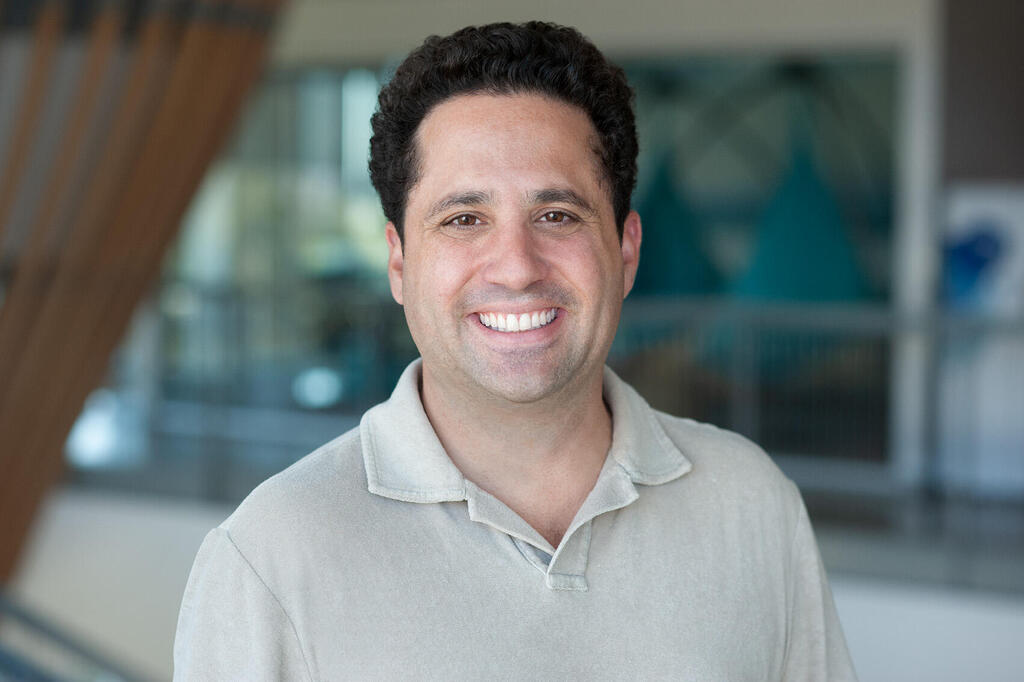
David Sharon
(Courtesy of Google)
Unlike Veo 3, which is maturing rapidly, Sora 2 is currently limited to iPhones and has yet to be broadly released. It is expected to roll out in a social app reminiscent of TikTok.
Creating tools like Nano Banana is no small feat. David Sharon says the project involves more than 1,000 people from diverse disciplines. Some handle data collection and training, others work on infrastructure, legal compliance, security or turning capabilities into user-friendly applications. “It’s like the IDF,” he jokes, “everyone comes from a different unit, but the mission is shared.”
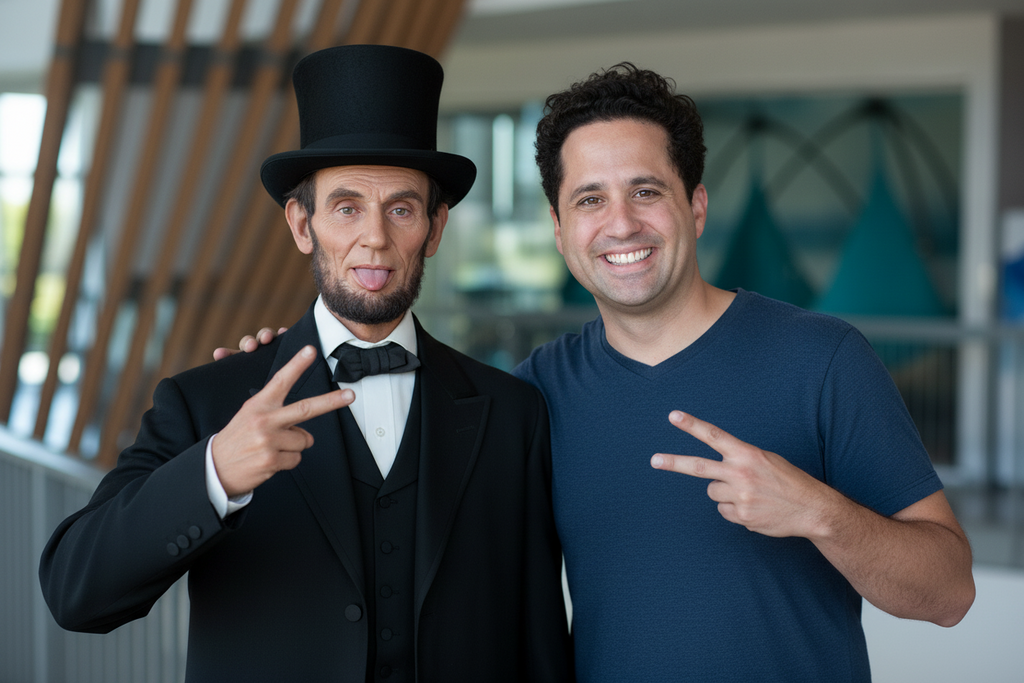
Sharon with Abraham Lincoln in a photo created by Nano Banana
(Google)
Asked whether coders or creatives contribute more, Sharon insists it’s a team effort. “You’d be surprised—some of the most magical ideas come from researchers or even marketers,” he says. One standout feature of Nano Banana—generating multiple stylistic versions of a single portrait—was initially developed by a marketing team member who casually experimented with Gemini’s Canvas feature using simple text prompts. Engineers later refined the tool.
Sometimes features emerge by accident. In one case, a designer doodled an “X” over one figure in a photo. When uploaded to Gemini, the AI automatically removed the marked character—despite no explicit instruction. Another time, a sketched arrow pointing to an open window prompted the model to “close” it in the image. “It just did it,” Sharon recalls. “We were stunned.”
These moments reinforce what Sharon sees as a key lesson in AI development: “You need to use the tool, discover its strengths and weaknesses firsthand, and keep an open mind.”
He credits Irina Bloch, a Jewish AI expert from Ukraine on his team, as “the model whisperer.” According to Sharon, “She draws amazing insights from every new model—she’s the most creative person I know.”
Israel plays a critical role in these projects. Sharon works closely with a major engineering group in the country, particularly the team led by Yael Karov, a director at Google AI with over 25 years of experience. “They’re brilliant problem solvers—not just technical experts, but big-picture thinkers. Each one approaches the product like a CEO,” he says.
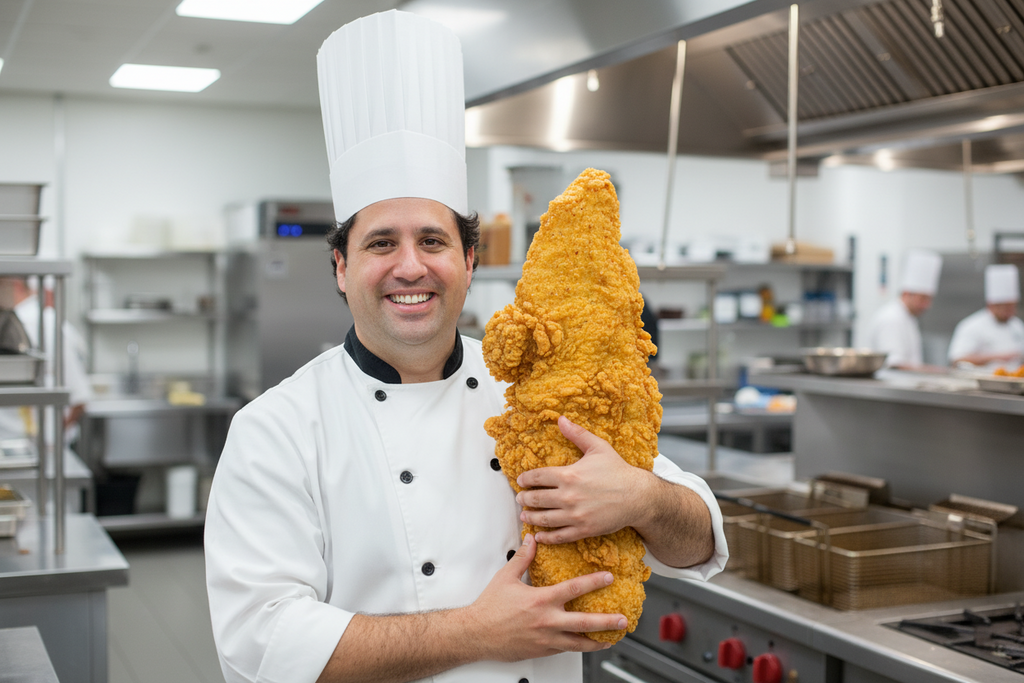
David Sharon as a chef holding an extra-large schnitzel, created in Nano Banana
(Google)
Sharon still visits Israel, though less frequently since COVID-19 and the ongoing war. “By the way,” he adds, “Google employees say the Israeli office has the best food in the world—some say Tokyo gives it competition, but I don’t agree.”
The pace of progress in AI video is dizzying, says David Sharon, and competition is heating up. Just last month, OpenAI announced it was working with Vertigo Films to produce Critterz, the first AI-driven full-length feature. Based on a short demo from 2023, the film will be made by a 30-person team in just nine months on a $30 million budget—sending shockwaves through Hollywood.
So how close are we to fully AI-generated movies, built entirely from text prompts?
“I feel like we’re in a spaceship,” Sharon says. “We’re moving incredibly fast, but the windows are closed, so we don’t know if we’ve passed the Moon and Mars or just left Earth.” Predicting timelines, he says, is nearly impossible—only that the changes are happening “very quickly.”
If Google CEO Sundar Pichai asked him to deliver a full-length AI film in a year, Sharon sees two major challenges. “The script will always need to be human-made. That’s what makes a story relevant and moving.” The second hurdle is technical: while today’s AI can generate “shots” of up to eight seconds, linking them together seamlessly—with consistent voices, environments, objects and soundtracks—remains difficult, especially with human characters, whose appearance must stay uniform across scenes.
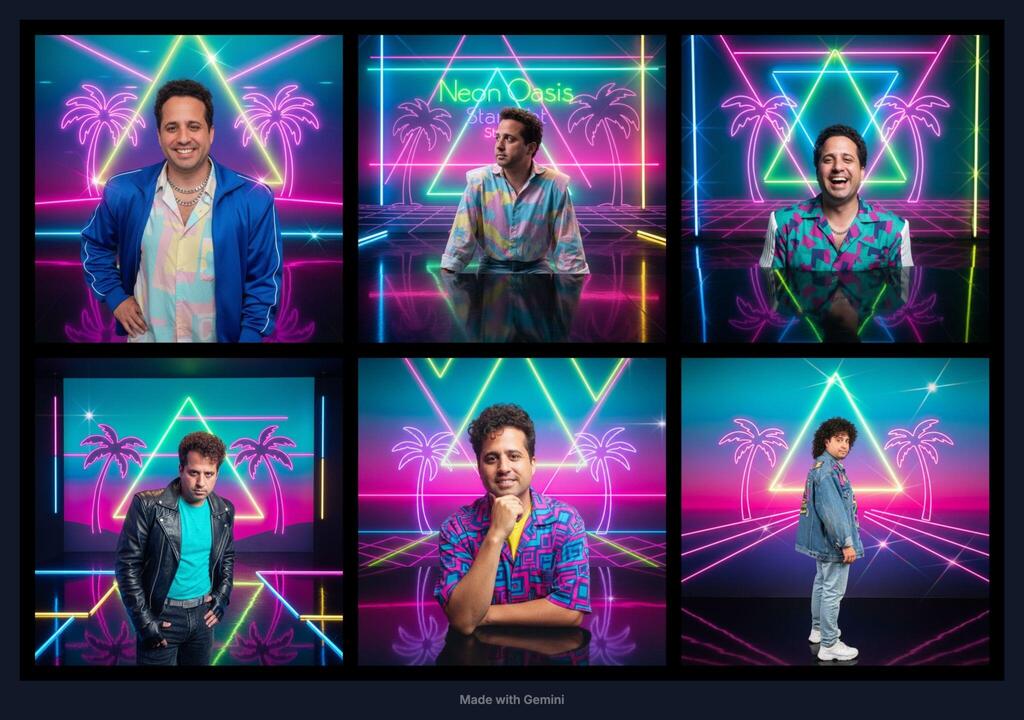
An example of how to make one character into many different situations using Nano Banana
(Google)
Could Google’s deep involvement in AI video threaten smaller players like Israel’s Lightricks? “I don’t think in those terms,” Sharon says. “The market is enormous, with room for many niches. We’re just at the beginning. What we’ve done in a year now would’ve taken a decade on YouTube.”
Still, Sharon acknowledges that the same tools revolutionizing media are ripe for misuse—deepfakes and disinformation among them. “Our principle is boldness with responsibility,” he says. Google has invested heavily in safeguards, including dedicated policy and validation teams, “red teams,” and constant monitoring. One of Sharon’s team members is a former senior CIA official.
To distinguish AI from reality, Google embeds visible and encrypted watermarks, including the digital SynthID. “We’re also building a public tool that can quickly identify AI-generated images,” he says. Veo 3, for example, cannot be used to generate politicians, celebrities or explicit content.
That raises a deeper question: if you remove a tree, add a plant or apply a filter to a photo, is it still “real”? Sharon admits these are complex philosophical issues.
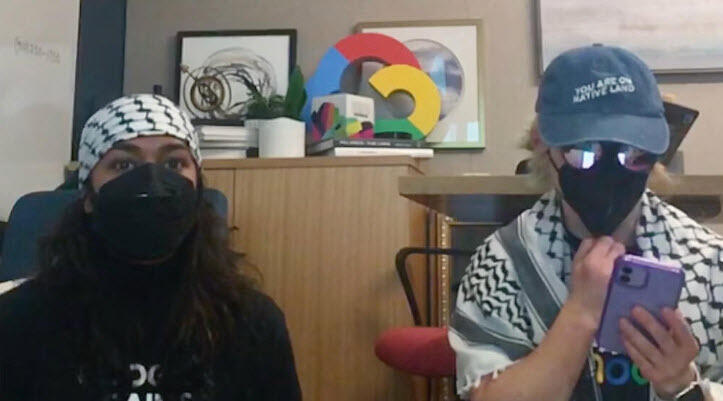
Pro-Palestinians who broke into Google Cloud's offices last year
(Photo: Twitch)
Life outside the lab has become more challenging too. Since October 7, Israelis abroad face growing hostility, and tech giants like Google have been pressured to cut ties with Israel. “I proudly identify as Israeli,” Sharon says. “I haven’t felt issues in my team, but it’s hard—seeing anti-Israel billboards on highways here, or hearing what my sister went through in New York when an Uber driver spat at her for speaking Hebrew.”
His wife, originally from France, asked him to remove their mezuzah from the door out of safety concerns. “That’s how Jews in France live today—and understandably so,” Sharon says. “But I feel differently. I leave the mezuzah outside. It’s like wearing the jersey of your team.”
Despite the tension, he also sees a shift. “People who’ve worked with me for years—some who never identified as Jewish—are now coming up to say, ‘My grandmother was Jewish.’ Their view of Israel is changing.”
And as for rivals, has Zuckerberg offered you a huge paycheck to join Meta? Sharon laughs: “Tell him to give me a call—we’ll see what he’s got.”