

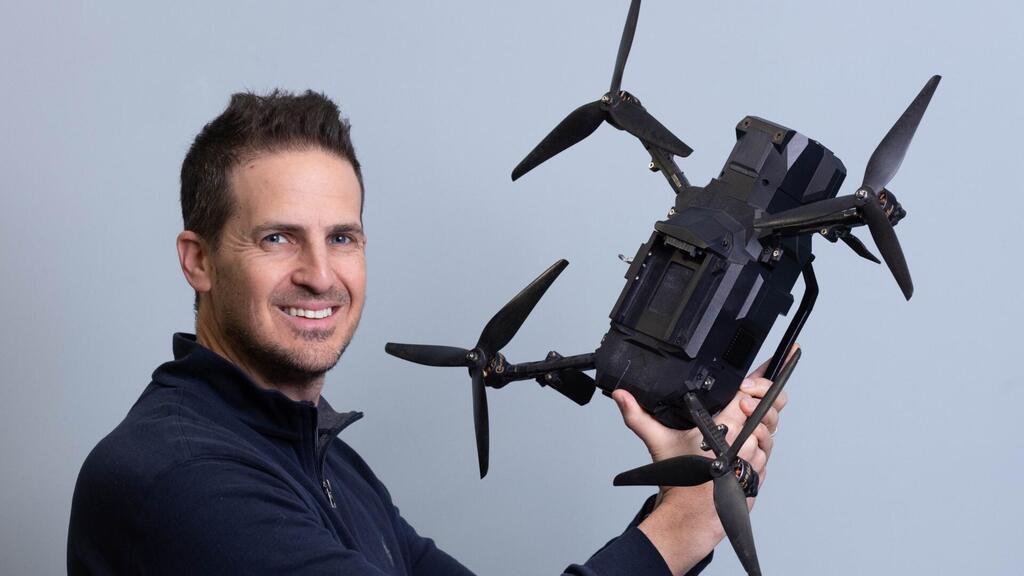

Rishon LeZion, early 1990s, the Shapira family home. The older brother, Matteo, takes over the family computer with video games and the usual teenage obsessions. The younger brother, Aviv, finds a different passion. At age 10, he builds his first model airplane. Fast forward to 2026. At 42, Aviv Shapira has already sold tens of thousands of drones to multiple armies, led by Israel and the United States, and signed a deal with Lockheed Martin that places him firmly among the global defense industry’s top tier.
You may already be familiar with XTEND, the Israeli drone company that gained international attention after footage surfaced allegedly showing one of its drones killing Hamas leader Yahya Sinwar. The incident was never officially confirmed, but it brought global exposure to the company. Still, it represents only a fraction of XTEND current capabilities. In short, XTEND is likely to become part of the future combat architecture of the US Army under Project Replicator, the Pentagon initiative that every military technology and aerospace company in the world is now targeting.
Clicking with the US Army
Here is a 60-second overview of Project Replicator, the Pentagon’s plan to reshape how the United States prepares for a future military confrontation with China. That conflict is expected to rely heavily on autonomous technological weapons on both sides. China’s advantage lies in mass production of inexpensive robots. Replicator’s response is to deploy large numbers of low-cost, expendable systems instead of a limited fleet of high-value aircraft and ships. Artificial intelligence sits at the core of this new military doctrine, in some cases operating without direct human involvement. The battlefield will include swarms of small drones, unmanned surface vessels, autonomous submarines and wheeled ground robots. The concept is simple. Flood the battlefield with vast numbers of systems at once, overwhelm Chinese defenses and force them to expend expensive missiles on cheap targets.
Procurement is already underway, and this is precisely where XTEND fits in. Its loitering attack drones are relatively inexpensive, fast and designed for mass production. The company’s crown jewel is its operating system, XOS, which allows a single operator, assisted by AI, to control a swarm of drones performing multiple missions. XTEND has also opened a drone manufacturing facility in Florida, not far from President Trump’s residence, meeting another Replicator requirement: US-based production.
Over the past year, the company joined the Pentagon’s exclusive list of approved suppliers and even beat several American manufacturers in competitive tenders. Now comes a far more significant step: a strategic partnership with Lockheed Martin. Under the agreement, XTEND’s XOS operating system will be integrated into Lockheed Martin’s command-and-control architecture, designed to manage the entire US military simultaneously. The project is being led by Lockheed’s elite Skunk Works unit, which values not only XTEND’s technology but also its real-world battlefield experience in Gaza, Lebanon and defensive operations in Ukraine.
Skunk Works, known in Hebrew as ‘The Skunk Workshop’, is perhaps the most famous classified defense development unit in the world. It developed the P-80, America’s first operational jet fighter, in just 143 days during World War II, the U-2 spy plane, the SR-71 Blackbird, the F-117 stealth fighter and fifth-generation aircraft including the F-22 and the F-35, which Israel operates. Its mission is to solve seemingly impossible technological problems under extreme time pressure and secrecy. Most of its projects remain classified.
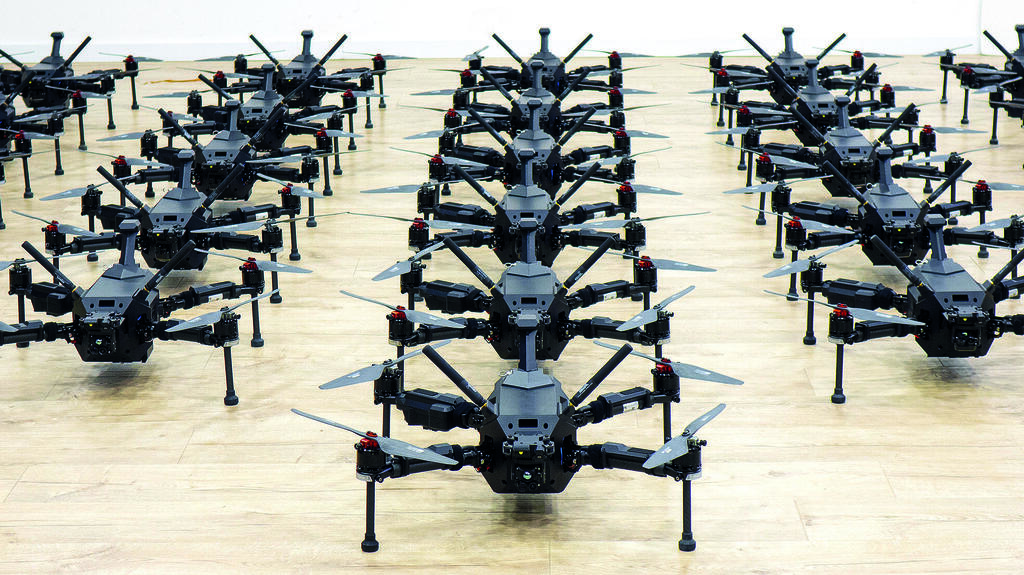
Skunk Works also has a long history of cooperation with Israel, including work with Rafael on the Iron Beam laser system and multiple classified drone projects with Israel’s Defense Ministry research directorate. About a month ago, Lockheed Martin issued an unusually explicit press release announcing a collaboration between Skunk Works and XTEND. The companies revealed that in November 2025 they demonstrated a so-called ‘marsupial’ mission. A large mother drone deploys multiple small drones at the target, all controlled by a single operator rather than multiple handoffs between operators. This approach represents the cutting edge of drone warfare and could become a dominant concept in future US combat plans. Without XTEND’s technology, it likely would not be feasible.
Brothers behind the exits
XTEND was founded in 2018 by four entrepreneurs: brothers Aviv Shapira, 45, and Matteo Shapira, 46, Robbie Liani, 39, and Adir Tubi. Aviv, the company’s CEO, studied aeronautical and space engineering with a specialization in rocket propulsion. He is a serial entrepreneur with four startups behind him. Matteo, who leads AI innovation at XTEND, comes from a computer graphics background and co-founded JVP’s Animation Lab. Liani, the CTO, is a former naval technology unit software engineer and a robotics enthusiast who also co-founded Israel’s drone racing league. The brothers grew up in Rishon LeZion and later relocated to St. Louis, Missouri, following their father, an Amdocs employee. Their first joint venture dates back to 2010, when they founded Replay. “The idea for Replay was born in a bar in England,” Aviv recalls. “We were watching a game and I said, ‘I wish I could broadcast it from the player’s eyes.’ Four years later, I won an Emmy.”
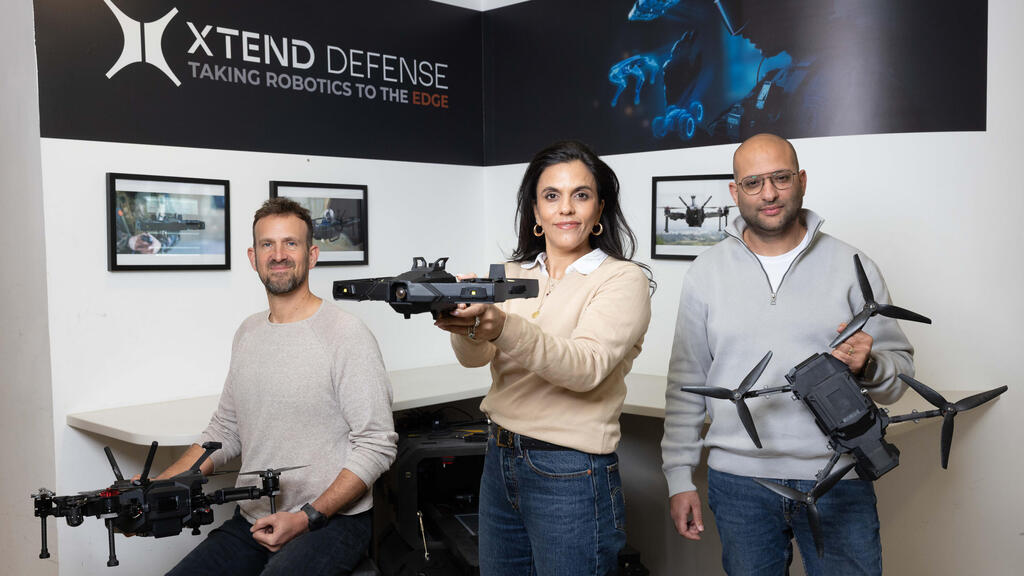
From right: Rubi Liani, Co-Founder and CTO; Chen Haim, GM XTEND Israel; and Matteo Shapira, Co-Founder and CXO
(Photo: Oz Mualem)
Replay developed a real-time 360-degree sports broadcasting system using dozens of high-resolution cameras placed around stadiums. In 2016, the company was sold to Intel for $175 million. Intel shut the operation down in 2021. Out of Replay’s virtual reality technology emerged the core concept behind XTEND: experiencing and acting in remote environments through robots. The company initially developed high-speed gaming drones paired with VR headsets, flying at speeds of up to 150 kilometers per hour. Reality intervened in 2019, during the incendiary balloon attacks from Gaza. Israel’s Defense Ministry saw immediate military applications. After a successful demonstration, XTEND secured its first defense contract.
From there, the company received extensive support from the Defense Ministry’s research directorate, including tens of millions of shekels in funding and hands-on operational testing with elite combat engineering units. That experience accelerated XTEND’s growth dramatically. Today, its software enables drones to operate in GPS-denied, communication-jammed environments using computer vision and onboard AI.
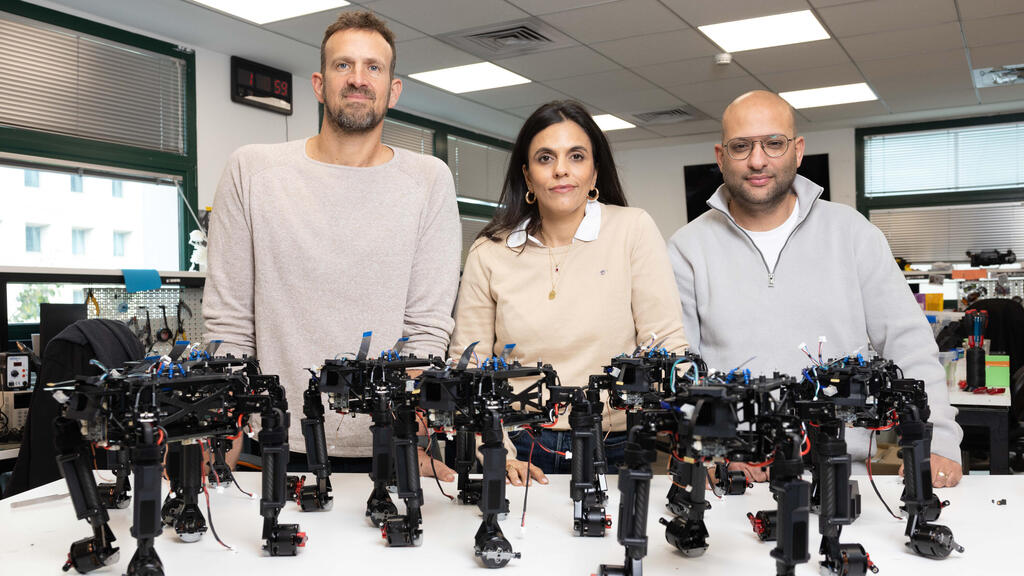
From right: Rubi Liani Co-Founder & CTO XTEND, Chen Haim GM XTEND Israel and Matteo Shapira Co-Founder & CXO XTEND
(Photo: Oz Mualem)
What is it like to start with gaming technology and sports drones and end up with military technology?
Matteo: “It is a very, very great honor to be able to influence classical military thinking and contribute. We took concepts from computer games and managed to integrate them into Mafat so that they became part of the core. At the same time, we essentially built a computer game about how to defeat the bad guys without putting ourselves at risk.”
Did you ever imagine you would reach the forefront of military technology worldwide?
Liani: “Not at all. What has happened over the past three years is simply a hysterical acceleration in the company’s maturity. And it is crazy that this happened while our teams were fully mobilized. We were all serving in the reserves. When you look back, you say this is an impossible mission, what is happening.”
At the same time, XTEND is not giving up on the civilian market. Its long-term plan includes developing drone and robot control systems for policing and rescue forces. One of its current customers is the robotics company Boston Dynamics. Few people know this, but XTEND’s operating system is installed in the robotic dog Spot.
Toward massive contracts
George Hellestren, a senior fellow at Lockheed Martin for autonomy and AI missions, is the man behind the development and implementation of MDCX, the strategic platform through which Lockheed aims to become a central player in managing the US military. Hellestren specializes in human-machine teaming while reducing the number of human operators and lowering their workload through AI. He is also one of the leading proponents of the marsupial warfare concept.
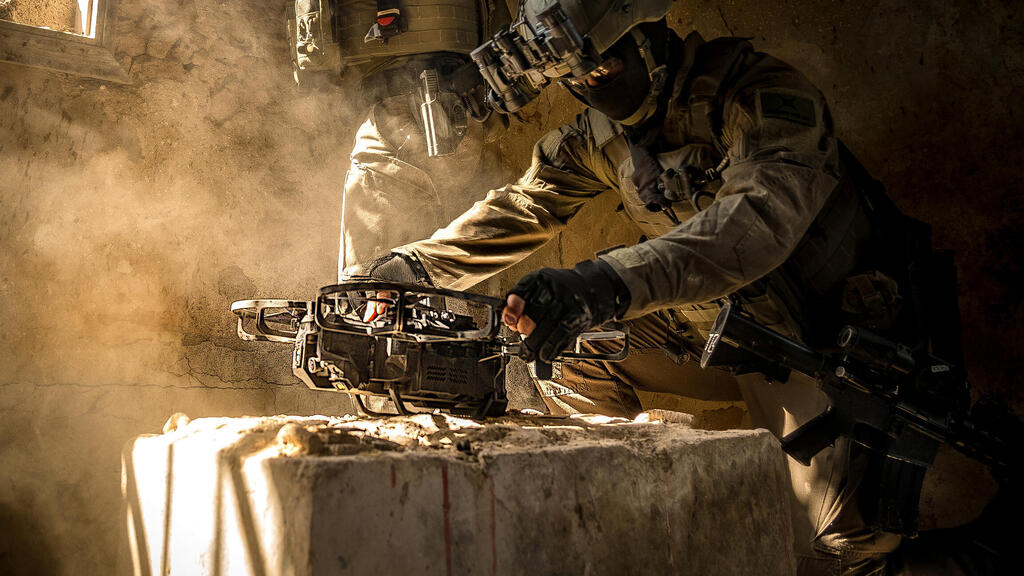
Operation of an XTEND drone in the field
(Photo: courtesy of XTEND)
Hellestren saw significant value in XTEND’s technology and is responsible for integrating it into the most important platform for Lockheed Martin’s plans in the coming years. Like a marsupial, XTEND is receiving a powerful boost from Lockheed as it heads toward major contracts with the US defense establishment and, subsequently, with government customers around the world.
When did your cooperation with the Israeli company XTEND begin?
Hellestren: “I met Aviv in 2019, and since then we have been working together, talking about how to leverage the strengths of both our companies. We were very impressed by the work Aviv’s team managed to do and how it became a force multiplier for the IDF and also for Ukraine. We are very interested in seeing how we can take what we recently demonstrated to the next stage and move forward to try to change the world of warfare.”
Where does XTEND’s technology fit into your system?
“We are connecting our multi-domain command-and-control system to XTEND’s first-person-view flight technology. We are building the system so that it receives mission targets, and the aerial platforms arrive with autonomous routing and execute the mission autonomously. Aviv brings this capability in the final 100 meters that allow the mission to be completed. “We are also examining whether a single ground control station could control ground vehicles as well, vehicles that could breach doors and enter buildings.”
Shapira adds: “One of the biggest problems of modern warfare is the number of unmanned systems you have to deal with. There may be 50 suppliers, each controlled by a different controller. What Lockheed Martin decided to do was create one control system that would manage all of them. “In practice, this is an enormous problem, and Lockheed selected us to provide the software that would enable control of a group of drones and robots.”
Aviv Shapira: 'Our message is that we are not a drone company but a software company. We are not in the business of building the best drone. We are in the business of keeping human operators out of danger'
Are there already orders from the US defense establishment for this system? Will it be integrated into Project Replicator?
Hellestren: “At the moment, this is research and development with internal investment. We worked with Aviv to try to build a capability that would suit many customers among US special operations forces, such as the Marines and other elite units. The goal is to build a product they will want to order.”
In today’s combat environment there are problems of communications jamming and GPS disruption, as well as cognitive overload on operators. How are you addressing that?
“The GPS denial issue is one of the reasons we chose XTEND, because they proved they can operate in environments where GPS is repeatedly denied, in Gaza, in Lebanon and in Ukraine. They operated in areas where GPS was completely shut down. We were very impressed by their capabilities there. “Cognitive workload is extremely important to us. We are trying to reduce human workload in tedious missions and allow autonomy to perform those tasks without requiring a person to operate a joystick. That is another thing we saw at XTEND. They truly built a system that is very easy for people to learn. With short training, they become experts.”

XTEND’s robotic operating system for drones
(Photo: courtesy of XTEND)
Shapira adds: “The GPS challenge is behind us, but when you operate in dense environments with heavy jamming, we activate what we call AI pilots. The secret lies in how you tell the drone what to do, and that is what we specialize in. Ultimately, drones are changing the picture of warfare. Everything needs to be autonomous, combined with human guidance.”
Are you entering an exclusive partnership with Lockheed Martin, like Anduril with its closed Lattice system? Are you becoming a sub-system within MDCX?
“At this stage, we do not have exclusivity with anyone. We can work with any system, including, of course, Israel’s three major defense industries. Lockheed Martin’s objective is different from others. We are trying to develop a unified controller, and that is a major difference. “We handle the final 100 meters, as George said, and that is where technological cooperation between the companies is most critical.”
When do you think we will see the system in use in the US military or elsewhere?
Hellestren: “I think we took an important step with what we published. We created a prototype integrating Aviv’s XOS with our MDCX and proved that it can be done from a single workstation, where one person can control large drones and deploy small drones as marsupials.”
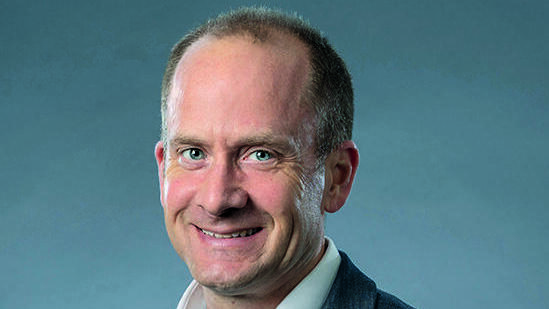
George Hellestren, senior fellow at Lockheed Martin for autonomy and AI missions
(Photo: courtesy of Lockheed Martin)
Shapira adds: “When you look at drones from other companies, they still require dedicated operators for each one. That is not how you solve problems. You solve problems by positioning human operators remotely. “That is what XTEND and Lockheed Martin are doing. Creating a control station from which you can manage everything anywhere in the world. That is the future from our perspective, and it is the only way to scale in this market. Otherwise, you will be forced to send soldiers into combat and have them die.”
What impact has this partnership had on you as a company?
“The boost comes from working with large companies like Lockheed. Our message is that we are not a drone company but a software company. Robots and drones change all the time. They grow or shrink, carry payloads or lasers. We are not competing to build the best drone. We are competing to move operators out of danger.”
Peak wartime activity
Customers at Israel’s Defense Ministry, the IDF and across much of the world, including Serbia, India and Greece, are often surprised to discover that the person standing opposite them is Chen Haim, CEO of XTEND Israel. It is still rare to see a woman in a field overwhelmingly dominated by men, but Haim brings a proven track record. She joined the company in 2021 after 12 years at Israel Aerospace Industries. In her last role there, she headed an administrative division with 60 employees and global clients. She now manages a large team that includes both sales and support personnel.
Support teams are key to training soldiers to operate such sophisticated drone systems, aren’t they?
“It is nice to supply drones to the IDF, but if there is no training and implementation, the drone will likely sit in a warehouse. We provide very simple and very fast training. One day of simulator work and understanding how the system works. On the second day, the soldier is already in the field and knows how to operate a drone, enter through a window, under a table or through a door. “I have an entire team of integrators moving between units, providing training for both regular soldiers and reservists.”
What can you say about what the company did during the wars in Gaza and Lebanon?
“We did enormous things during the war. We had dozens of systems that were supposed to be shipped to the American customer, and very quickly, with the customer’s approval, we diverted them to the maneuver in the south. We knew how to respond very fast. “There were many operational uses and many collaborations. We worked very closely with special units and with Golani and Paratroopers battalions.”
She notes that this also translated into major deals. “We carried out very large projects, for example a procurement project of nearly 40 million shekels for hundreds of systems for the Ground Forces. We then continued procurement and won a tender for 5,000 attack drones for all units. I am currently at the peak of deliveries, and discussions are underway about exercising the option to supply another 10,000 drones and upgrades that will make them more intelligent.”
Until recently, Israel was XTEND’s primary customer and testing laboratory. The tender to supply 5,000 drones was valued at nearly 20 million shekels, with additional payments for maintenance, training and software updates.
XTEND’s US subsidiary, XTEND Reality, won a Pentagon tender worth $8.8 million for the development and supply of loitering munitions for urban combat. It also won tenders to supply hundreds of Wolverine drones for special units in the US Army, Marine Corps and Navy, as well as additional tenders totaling tens of millions of dollars. The company reports it has sold more than 10,000 drones to over 32 countries, including the United Kingdom, Singapore, the United Arab Emirates, South Korea and European states.
There is also a significant market for XTEND’s products in Ukraine, although the company usually keeps it low-profile. In the past, Shapira told Yedioth Ahronoth and Ynet that Israel does not allow the sale of drones to Ukraine, and that XTEND sells software only, installed on drones made by other companies.
What missions do those drones perform in Ukraine?
“Mainly reconnaissance missions, for example in areas with blocked communications. You cannot fly if there is no communication, so you have to fly with AI. These are scouting drones that go out, search for something and then return and report.”
Is there experience you gained there that is different from Gaza or Lebanon?
“Mainly operating in constrained environments. Places without GPS, without communications, with jamming and electronic warfare.”
Shapira may be modest, but the experience XTEND accumulated in Ukraine is a central reason for the growing interest in the company. While other drones crash under jamming, XTEND’s computer-vision-based software allows drones to complete missions without radio communication or GPS navigation. As the world moves toward warfare dominated by swarms of cheap, simple drones, XTEND’s technology could prove a decisive advantage. Against the backdrop of ongoing wars and global military procurement of attack drone systems, XTEND’s business is thriving. From a manufacturer of low-cost drones, it has become a significant defense-tech player, with its software enabling recurring annual revenue from licenses and updates. The company employs about 150 people in Israel and in subsidiaries in the United States, Singapore, the United Kingdom and Europe. It is expanding into an additional floor at its Tel Aviv offices and plans to reach 250 employees by the end of the year.
$100 million in revenue
XTEND’s factory in Florida has so far proven to be a successful move. Its drones are included on the Blue UAS list of systems approved for use across all branches of the US government. Future plans include manufacturing ground robots and maritime robots for Project Replicator.
The company reported 113 percent revenue growth last year. Its order backlog stands at $50 million, and Shapira says XTEND will surpass $100 million in annual revenue this year. Against the backdrop of the Lockheed Martin partnership, forecasts may be even more optimistic, not because of payments from Lockheed itself, estimated at hundreds of thousands of dollars, but because of the contracts that could follow if the system wins US government tenders.
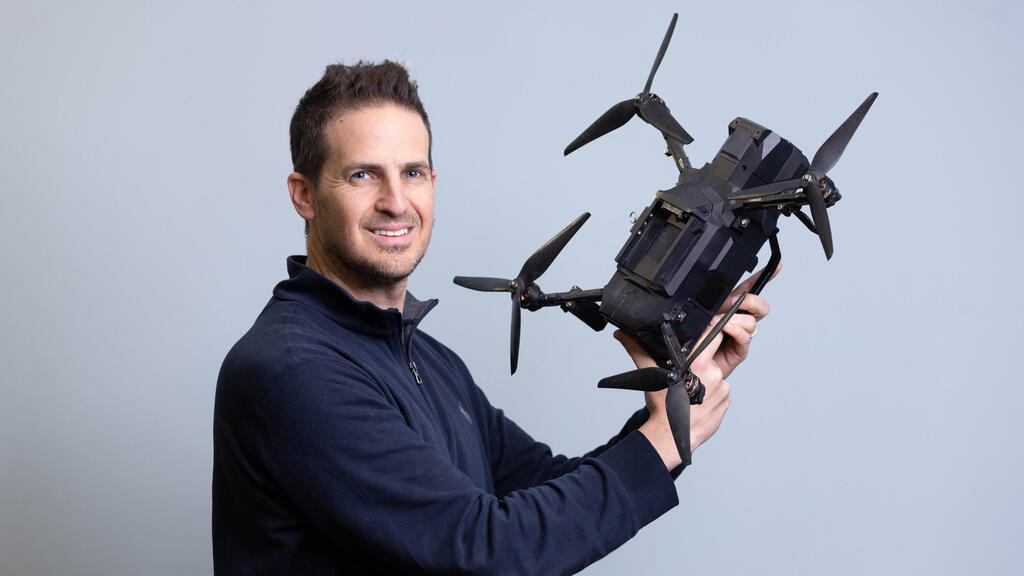
Aviv Shapira, Co-Founder and CEO of the robotics company XTEND
(Photo: Oz Mualem)
In July 2025, XTEND completed a $30 million funding round, in addition to a previous $40 million round, at a valuation estimated at $200 million to $300 million. To date, the company has raised more than $106 million from investors including Chartered Group, Aliya Capital Partners, Protego Ventures, Union Tech Ventures, NFX and others.
The Lockheed partnership could enable XTENDto raise additional capital at a higher valuation. If it becomes a preferred supplier in major Pentagon programs, it could expect deals worth hundreds of millions of dollars and a valuation of $600 million or more. According to particularly optimistic estimates, XTEND could surpass a $1 billion valuation and become Israel’s first defense-tech unicorn, a stage at which the company plans to go public.
George Hellestren: 'The issue of GPS denial is one of the reasons we chose XTEND, because they proved they can operate in environments where GPS is repeatedly blocked, in Gaza, in Lebanon and in Ukraine. We were very impressed by their capabilities'
That optimism is driven by the performance of US defense-tech companies such as Palantir and Anduril, the leading defense-tech unicorn, valued at about $30 billion with roughly $2 billion in annual revenue last year. “If XTEND leads Lockheed Martin to a business victory over Anduril, its valuation could jump into the billions,” Shapira says. “I think Anduril and other companies, with all due respect, are still training somewhere in the deserts of the United States, and I hope for their sake they never see war, compared with what we have seen on several fronts in Ukraine, Gaza and Lebanon,” he adds.
Lockheed Martin’s advantage, thanks to XTEND’s technology, is its ability to operate with systems from all companies. If XTEND reaches just 10 percent of Anduril’s valuation, it would be worth $3 billion, delivering enormous returns for investors. Still, there are risks accompanying XTEND’s success. Despite its focus on software, a significant share of revenue still comes from drone sales. As Shapira notes, drones are becoming consumer products, prices are falling and competition from China is fierce. XTEND will need to shift further toward software-driven revenue.
There is also uncertainty over how long the defense-tech boom will last. A return to global stability could lead governments to cut defense budgets, hurting XTEND’s revenue. Changes in US procurement policy, such as a preference for companies with American founders, could also pose challenges. On the other hand, a major software licensing deal could generate renewed optimism about the company’s future.
First published: 17:59, 01.24.26