

The IDF has begun deploying “AI agents,” a technology gaining traction in the civilian sector, that can independently perform complex tasks alongside human operators.
A senior military official told ynet that the army sees the technology as part of its future, with some such agents already in use in undisclosed systems.
Footage of UAV interceptions
(Video: IDF)


The official said Israel’s use of artificial intelligence in Operation Roaring Lion is unprecedented. Integrated into command-and-control systems from the General Staff down, AI is helping the Air Force plan and coordinate strikes in Iran and Lebanon and assist with navigation.
Identifying missile launchers
In recent weeks, AI has also helped generate real-time situational assessments across multiple theaters — a need underscored by lessons from the failures that led to the October 7 attacks.
One system, known as “Tashan,” is used by the Air Force to identify missile launchers in Iran, Lebanon and Yemen immediately after launches, allowing forces to quickly locate and destroy the source.
Another system, dubbed “Rom,” connects to advanced sensors and radar systems to create an aerial picture, enabling rapid detection of hostile drones and UAVs. Upon identifying a threat, it issues real-time alerts to forces on the ground and relevant Air Force units.
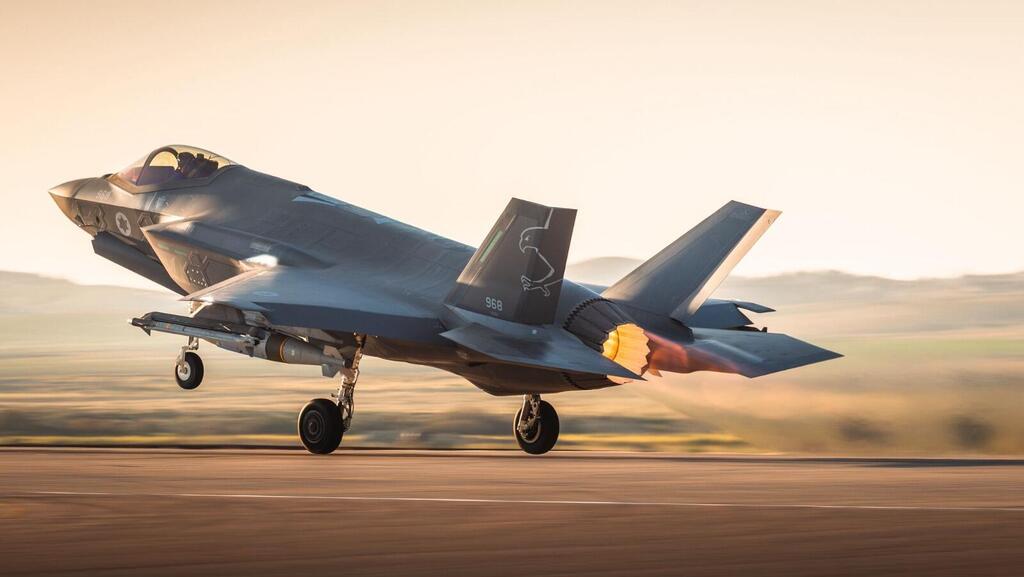
Air Force jet takes off during Operation Roaring Lion
(Photo: IDF)
A related system provides early warnings to ground forces to take cover from incoming fire. According to the IDF, recent upgrades have already helped save soldiers’ lives in at least two incidents in Lebanon.
On the home front, the military is working with research bodies in data science and AI to improve public warning systems and predict likely missile impact zones.
Offensive and defensive AI
The research is led by the IDF’s newly established Bina unit within the C4I Directorate, in coordination with the Home Front Command. The Home Front Command uses AI at missile impact sites to build real-time situational awareness of potential casualties by rapidly processing military and civilian data sources.
Regarding the scale of operations, the senior official said the pace, scope and precision of strikes — as well as their overall quality and volume — would not have been possible without human-machine integration and automated tools capable of synchronizing hundreds of actions simultaneously. Such missions, he noted, would have been impossible for the IDF just a few years ago, or even months ago.
The official added that despite Microsoft cutting ties with the elite signals intelligence Unit 8200 in September 2025, the IDF continues to advance its AI capabilities with the help of other major international companies, which the military views as partners.