

The final post on Ali Khamenei’s official X account, which included a verse from the Quran, brought him back to life, at least online. By the time it was published, it later emerged, the “supreme leader” was already dead, killed in a joint U.S.-Israeli strike at the outset of Operation Roaring Lion.
It was not the first time social media erupted over posts on the ayatollah’s official personal accounts. No one doubts that the posts that stirred controversy over the years were not written by him personally. Still, it is clear that at least most were published with his approval and served as a legitimate channel for the Iranian regime’s battle for public opinion.
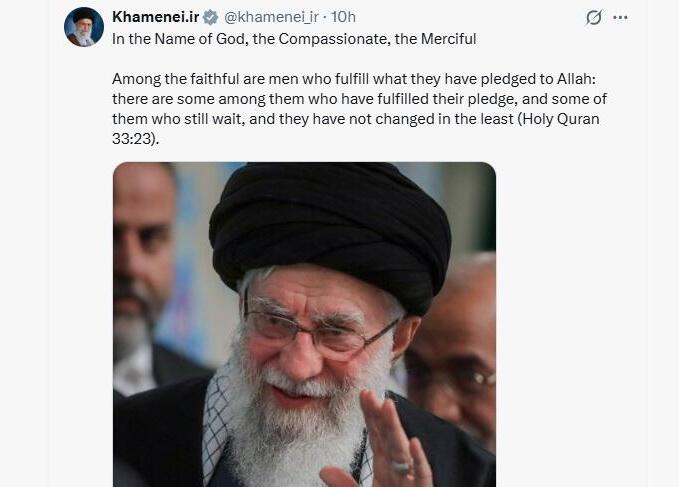
Beginning in 2009, and especially over the past decade, the leader who blocked social media access for his own people maintained an active, multilingual digital presence on international platforms, wielding it as a strategic weapon. Those accounts, primarily on X, Instagram and Facebook, evolved significantly over the years. Between 2016 and 2021, Khamenei operated accounts in Persian, English, Arabic, French, Spanish and even Russian. Their content was devoted to shaping a narrative: alongside nostalgic childhood memories and Quranic quotations were Holocaust denial and sharp attacks on the “Great Satan,” the United States.
His following reached record numbers, with more than 5 million followers on Instagram alone. In the early years, around 2013, the authors of the various accounts still attempted to project a softer, more human side of the leader. In one nostalgic post that later became a viral meme, Khamenei purportedly recounted his childhood.
Another post, dealing with relationships and marriage, drew astonished and mocking responses online. There was even one that rejected, astonishingly, violence against women, words attributed to the leader of one of the most repressive regimes in history toward women.
Over time, the soft, conciliatory tone gave way to something more direct. In January 2021, X, then known as Twitter, removed a post in which Khamenei cast doubt on Western-made coronavirus vaccines and claimed they could not be trusted. Twitter said at the time that it constituted misleading information. Khamenei’s Facebook account, opened in 2012, was permanently removed by Meta on Feb. 8, 2024, along with his Instagram account, for repeated violations of its policy, particularly following his public support for the October 7 massacre.
Meta’s policy prohibits people and organizations with a violent mission or involvement in violence, as well as organizations designated by the United States as terrorist groups, from operating on the platform. In practice, a month later, the Instagram account was reopened after Khamenei’s office said it had lodged a protest with the company. His Facebook page was replaced by several accounts operating on his behalf.
On Telegram, by contrast, Khamenei enjoyed near-total freedom and consistently used the platform as a stable alternative to accounts closed elsewhere. Those channels remain active. The quote that recurred across platforms and languages was: “Israel is a deadly cancerous tumor in the region that must be eradicated.”
Another notable post came in July 2015, the same month the Obama administration signed the nuclear deal with Iran aimed at preventing it from obtaining nuclear weapons in exchange for sanctions relief.
The Hebrew-language account
In October 2024, Khamenei even opened a dedicated Hebrew-language X account under the name “Khamenei.ir Hebrew.” The posts were sometimes written in fluent Hebrew and at other times in clumsy, Google Translate-style phrasing. Their stated — and widely ridiculed — aim was direct psychological warfare against the Israeli public.
The first Hebrew-language post included the traditional Islamic opening: “In the name of Allah, the Most Gracious, the Most Merciful.” The second already carried a threatening message toward Israel: “The Zionist regime made a mistake and miscalculated regarding Iran. We will make it understand the power, capability, initiative and will of the Iranian nation.” Two days later, after just two posts and internal discussions at X management, the account was suspended for violating platform rules prohibiting content that promotes hate and violence.
The suspension of the “supreme leader’s” account triggered a wave of reactions on X. Many users tagged owner Elon Musk and reminded him of his stated commitment to free speech. The official military account of Iran’s Islamic regime — which frequently blocks internet access for its own citizens — posted a screenshot of the tweet that led to the suspension and claimed censorship.
The account was later restored after, according to X, it “underwent review” and the violating content was removed. Still, the episode raised broader questions about X’s policies and the role of social media platforms in safeguarding user safety while protecting freedom of expression.
Who stood behind the mysterious account?
The question of who actually authored Khamenei’s posts has occupied internet users and intelligence officials for years. There are at least three main theories. The first and most plausible is that the office of the supreme leader, the official body that managed his schedule, was responsible. It is believed a dedicated social media team within the office drafted the messages as part of an influence campaign aimed at foreign audiences.
A second theory attributes the wording to cyber units within the Islamic Revolutionary Guard Corps. Experts have argued that the accounts were managed by psychological warfare teams skilled in spreading disinformation and operating bot networks.
According to another speculation, the true ghostwriter was none other than the leader’s son, Mojtaba, long considered a behind-the-scenes power broker. Iranian exiles have claimed that he was responsible for the increasingly aggressive tone of recent years as part of efforts to bolster his status as a potential successor.
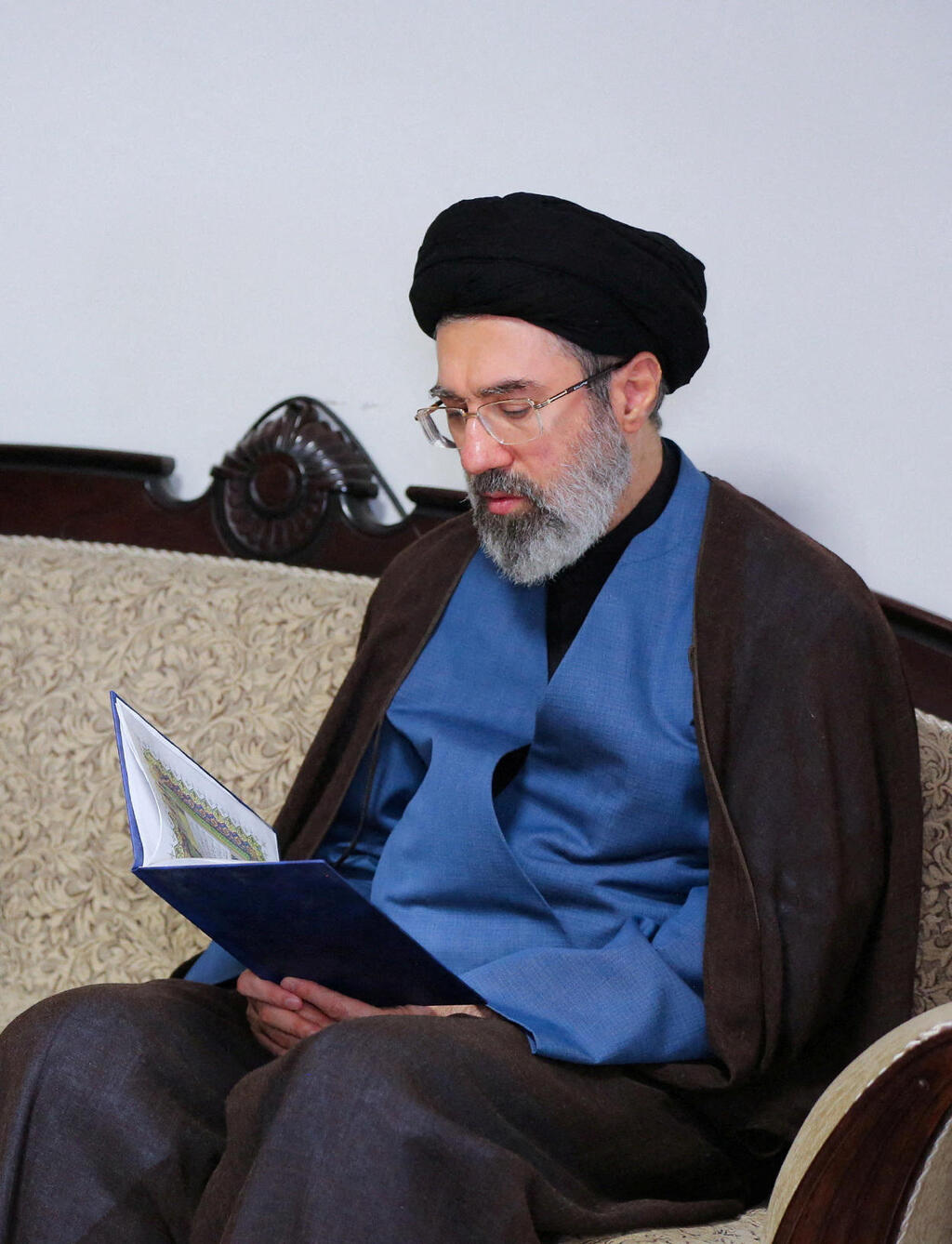
Mojtaba Khamenei
(Photo: Office of the Iranian Supreme Leader/WANA)
It should be noted, however, that none of these theories has been conclusively proven. In any case, the messages that appeared on the accounts clearly served what observers have described as Iran’s international “bot army.” Media investigations have exposed networks of dormant accounts in the United States, Turkey and Pakistan that were activated to amplify Khamenei’s statements and create the appearance of global support.
Built-in hypocrisy
The hypocrisy was built in. Western social media platforms have been blocked in Iran for years, after Facebook was used to organize the failed 2009 protests against the government. Many Iranians nevertheless access them using VPN connections.
In practice, both Iranian citizens and Khamenei’s associates relied on such technology: the former to report to the world about deadly repression at the risk of arrest or worse, and the latter to grant the leader open access to incitement abroad.
Khamenei’s final tweets, posted just days before his assassination, focused as usual on “steadfastness.” In retrospect, they appear to be the last testament of an era in which such an extreme figure could become one of the most influential trolls online.
Khamenei, who led Iran since 1989, controlled the military, the Revolutionary Guard, the judiciary and the country’s ideological direction. Even the moment of his death was used cynically to turn his final X post, a Quranic verse suggesting he had foreseen his own demise, into a calculated religious and psychological message: “Among the believers are men who have been true to their covenant with Allah; some of them have fulfilled their vow [and died], and some are still waiting …”
Cyber experts argued that the post was likely the work of a bot or a preprogrammed scheduling system prepared for emergency scenarios to prevent an information vacuum in the immediate aftermath of the dictator’s death. In any case, the choice of text reflected the narrative built over decades online, a fusion of religious zealotry, defiance toward the West and the sanctification of death.