

Starlink, Elon Musk’s satellite internet service, began operating in Israel this week — but without coverage in the West Bank and Gaza.
The company operates about 8,000 low-Earth orbit (LEO) satellites and offers relatively low internet speeds, ranging from 40 to 220 megabits per second for downloads, compared with up to 5 gigabits per second offered by conventional services. However, Starlink enables internet access from almost anywhere on Earth — including deserts, the open sea and rainforests — as well as during emergencies when existing networks collapse.

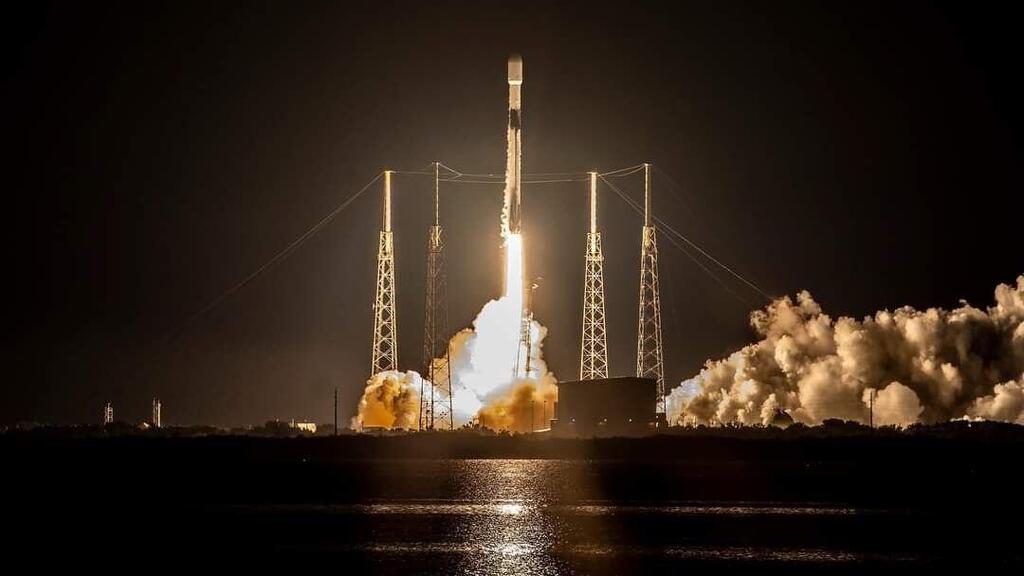
Launch of Starlink satellites
(Photo: Space X)
Starlink’s service prices are significantly higher than the average cost of fixed internet in Israel. For private users, the company offers a fixed package starting at 230 shekels ($63) per month for download speeds of 45 to 130 megabits per second and upload speeds of 10 to 20 megabits per second.
Get the Ynetnews app on your smartphone: Google Play: https://bit.ly/4eJ37pE | Apple App Store: https://bit.ly/3ZL7iNv
The prices do not include the terminal, which costs about 1,500 shekels ($410). The company also offers more expensive packages for businesses, ranging from 300 to 1,400 shekels ($82 to $382) per month, depending on the data volume.
The company received an operating license from the Communications Ministry last year, following lengthy negotiations and regulatory procedures, but its launch was delayed until now. The restriction on coverage in the West Bank and Gaza is likely due to security concerns over potential use by hostile actors.
The service requires a small satellite dish about 60 centimeters in diameter and a dedicated terminal-modem, both provided by the company in addition to monthly subscription fees. Subscriptions and equipment can now be ordered directly from Starlink’s website, but the company will also market them to Israeli businesses through HOT, which holds a dedicated license. Industry sources say Starlink may also set up a local subsidiary to sell terminals directly to private customers.