

When the United States recently announced a new international framework to secure the global supply chain for artificial intelligence and semiconductor manufacturing, Israel was named as one of its core partners. For Lior Handelsman, managing partner at Grove Ventures, that inclusion is far from symbolic.
In an interview, Handelsman explained what the agreement means, why it matters now, and how it could reshape Israel’s role in global high tech.
Lior Handelsman, managing partner at Grove Ventures, talks about Israel's inclusion in Pax Silica
(Video: Mickey Schmidt)


A pact spanning the entire AI supply chain
The initiative, known as Pax Silica, is a joint agreement between the United States and seven partner countries, including Israel, Singapore, South Korea and Australia. Its goal is to secure and develop the global supply chain for AI and silicon manufacturing, "basically from the raw materials, rare earth minerals that are so much in need right now and are almost internationally controlled by one country, China, all the way up to the AI security AI applications, silicon manufacturing, and advanced silicon designs," according to Handelsman.
Handelsman said that President Donald Trump’s backing reflects concern over how much chip manufacturing and materials processing have shifted outside the US. Semiconductor production is heavily concentrated in Taiwan, while memory chips are largely made in South Korea.
"What President Trump wants to do is to secure the overall supply chain so that the U.S. would have more control and more access to these abilities internationally," he said.
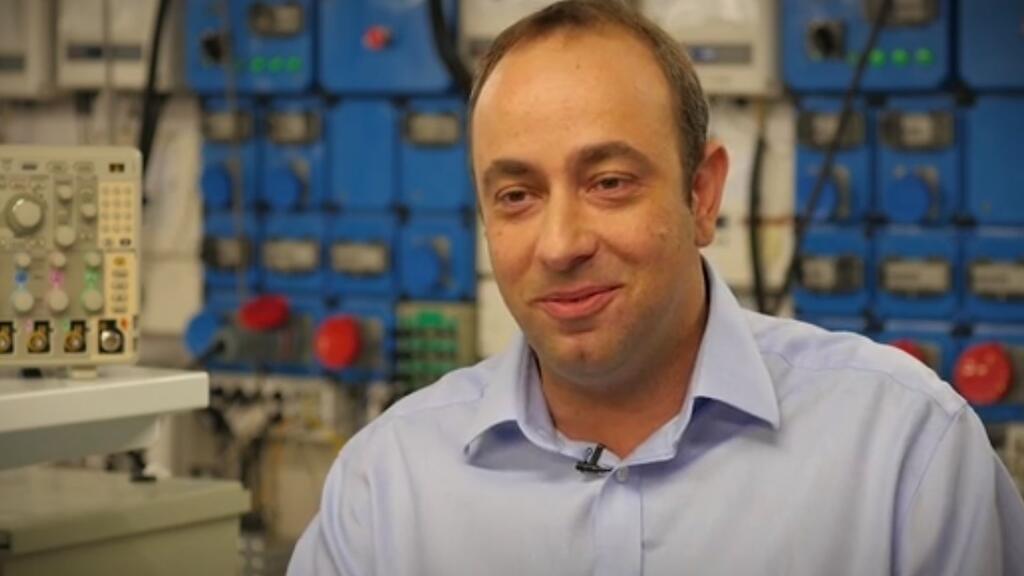
Lior Handelsman, managing partner of Grove Ventures
For Israel, the implications are significant. Handelsman said the agreement effectively safeguards Israel’s access to the most advanced chips, manufacturing technologies and know-how.
"Just six months ago, Trump and the U.S. administration discussed limiting access to some of the most advanced manufacturing technologies and limiting access to export of advanced GPUs. The fact that Israel is inside this agreement secures our access to the most advanced devices and silicon chips and knowledge, but also it opens up a door for international collaboration between Israeli companies and Israel in general to other countries," he said.
"It will bring more capital into Israel. And it will bring access for Israeli companies into the largest and most important companies in the world, including obviously Nvidia," he added.
Cybersecurity as a key advantage
While Israel is often seen as trailing the U.S. in foundational AI models, Handelsman argues that its cyber expertise was one of the main reasons it was invited to join.
"Securing the supply chain means also securing the access and protecting the knowledge inside the supply chain. So actually our cyber capabilities is one of the reasons that we were brought in," he explains.
At the same time, Israel plays a major role in AI applications and is one of the world’s leading hubs for advanced chip design. Global giants such as Nvidia, Intel, Broadcom, Marvell and Google all maintain major design operations in Israel.
That design expertise is a core asset, according to Handelsman: "That's one of the reasons why we are brought in to help with the design of advanced chips."
Handelsman also pointed to longer-term opportunities, including the potential to build advanced data centers in Israel as part of a new fiber network linking India, the Gulf, Israel and Europe.
"There's a big opportunity here in Israel to build the most advanced data centers that will sit on the backbone of the new web. And because it's unsustainable to build data centers only in places like the U.S., - there's an energy crisis, and this brings other opportunities in energy and cooling for Israeli startups," he said.
First published: 12:57, 12.22.25