

Nvidia CEO Jensen Huang has once again emerged as one of Israel’s most outspoken allies in the global tech industry, and effectively the only senior figure publicly backing the country and its employees with clarity and unusual warmth.
Speaking at the company’s GTC 2026 conference last week, Huang told dozens of journalists: “We have 6,000 families in Israel, and I’m worried about them. Our company continues to operate very well, and people are working very hard, but that doesn’t change the fact that we’re concerned about them. I am 100% committed to Israel, and we are going to be there for a very long time. One hundred percent of our employees there have 100% of our love and support.”
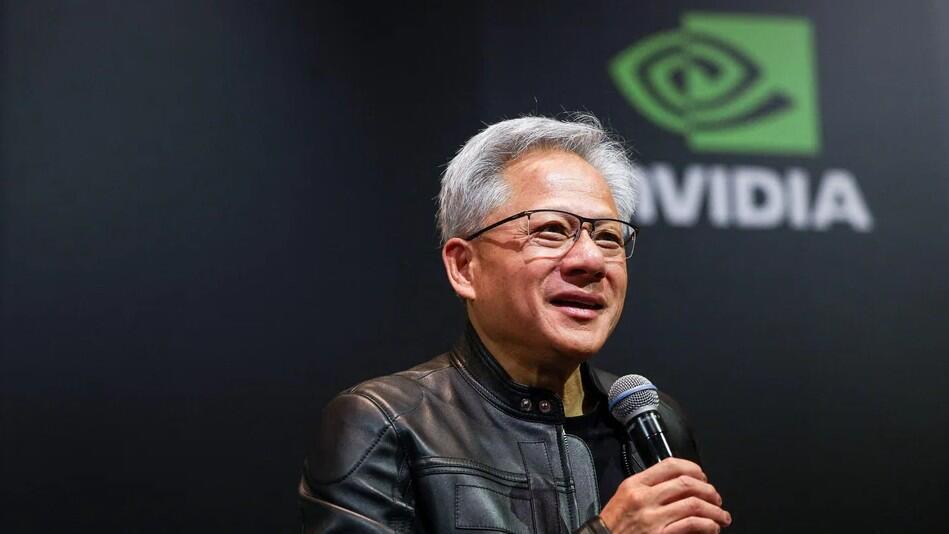
In an interview with the All-In podcast, Huang reiterated his position: “People have asked me several times, are we still considering being in Israel? Well, we are 100% in Israel. We support 100% of the families there. We are 100% in the Middle East.”
He stressed that the war has not altered Nvidia’s long-term commitment to the region or its expansion plans in Israel. “I believe there is a reason we went to war, and I believe that at the end of the war, the Middle East will be more stable than ever," he said. "If we believed in this region before, there’s no reason we shouldn’t believe in it now. We are invested here for the long term.”
Huang also noted the company’s Iranian workforce: “We also have many Iranian employees at Nvidia whose family members still live in Iran. They are stressed, worried and quite frightened. We think about them and their families all the time.”
Huang has a visit to Israel planned for next month, though it remains unclear whether it will proceed due to the ongoing war. His last visit was in 2019; a planned trip in 2023 was canceled following the October 7 attack.
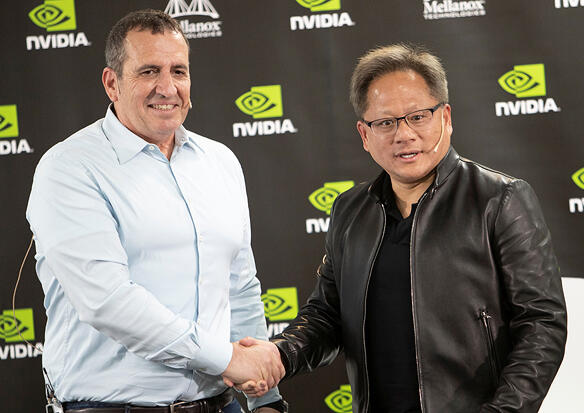
Nvidia CEO Jensen Huang and Mellanox CEO Eyal Waldman
(Photo: Gil Nehushtan)
Just two months ago, at the CES technology conference, Huang praised Nvidia’s Israeli team. “Our team in Israel is amazing," he said. "They are hardworking, smart and dedicated. They care about the company, they care about people, they care about the country, and their sacrifice for each other and for their country is incredible.”
A turning point: the Mellanox acquisition
Nvidia established its Israeli branch in 2016, but its ties to the country deepened significantly after acquiring Israeli company Mellanox in 2019 for $6.9 billion. Since then, Nvidia has acquired three additional Israeli startups and now operates offices in Tel Hai, Yokneam, Ra’anana, Tel Aviv and Be'er Sheva.
The company employs about 6,000 people in Israel, and its local R&D centers are responsible for key components in its products, from advanced AI chips to networking and data center connectivity systems.
Significant portions of Nvidia’s flagship products, including BlueField-4 chips and various advanced networking components, were developed in Israel. According to Huang, four of the six major chips recently unveiled as part of the Rubin platform, the next generation of Nvidia’s AI infrastructure, were developed in the country.
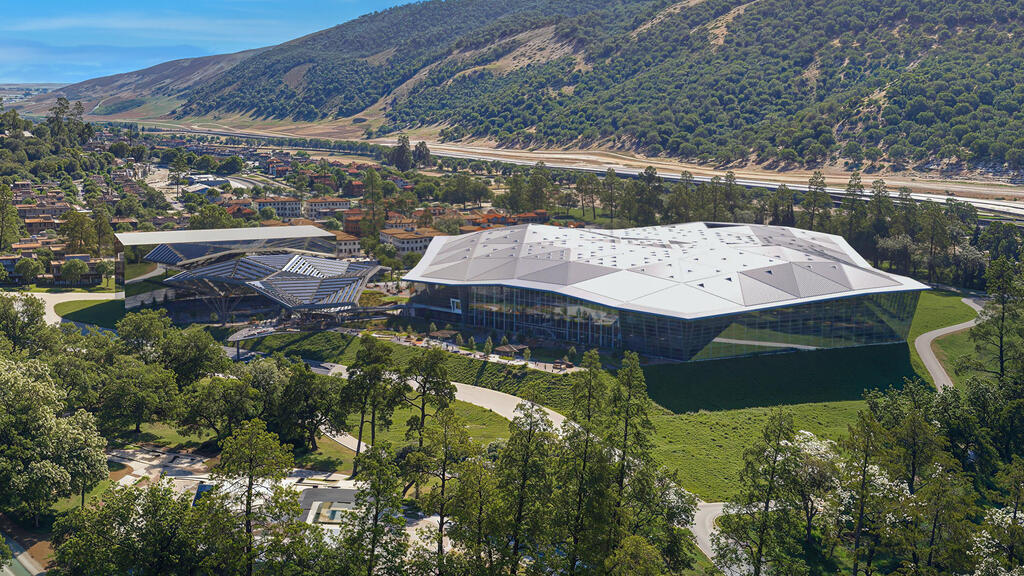
Nvidia's planned major new campus in Kiryat Tivon
(Illustration: Nvidia)
The company is also planning a major new campus in Kiryat Tivon, expected to be Nvidia’s second-largest globally and to employ up to 10,000 people. “Israel has become our second home,” Huang said when announcing the project. “This will be home to some of the world’s most brilliant technologists, a place where our teams can collaborate, invent and build the future of AI. This investment reflects our deep and ongoing commitment to our families in Israel and their unique contributions to the AI era.”
A personal connection
Huang, who was born in Taiwan and immigrated to the United States at age 9, has been consistent in his support for Israel. Recently, he hosted Nvidia Israel employee Avinatan Or, who was released from Hamas captivity after 738 days, along with his partner Noa Argamani, at the company’s Silicon Valley campus.
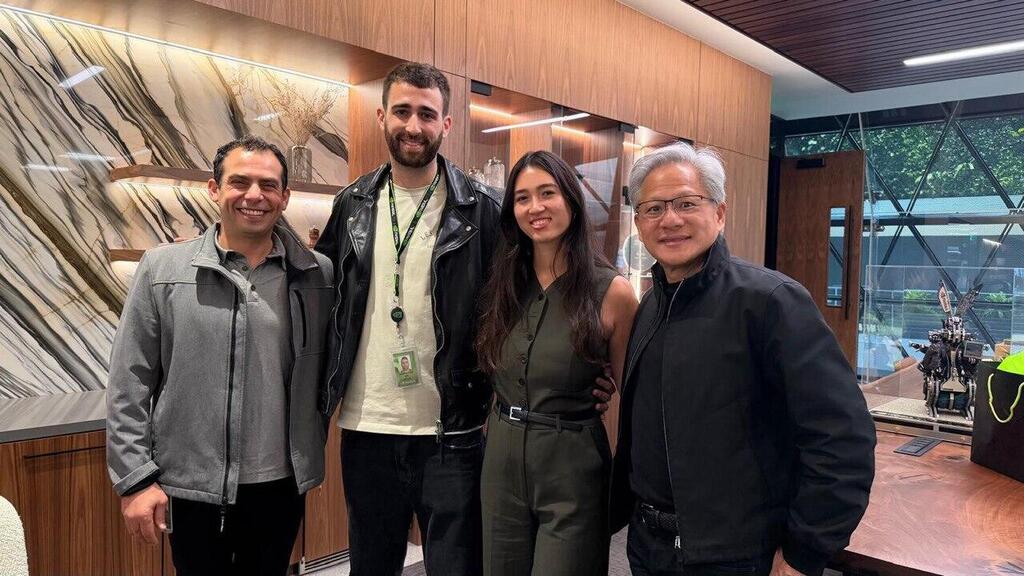
Hosting Nvidia Israel employee and former hostage Avinatan Or and his partner Noa Argamani at Silicon Valley HQs
(Photo: Nvidia)
During the early months of the war, Huang’s video messages and emails expressing support for employees in Israel stood out across the tech industry. Following Or’s return, Huang shared a message with employees worldwide praising the courage of his mother, Ditza Or, and the Israeli staff who supported the family throughout his captivity.
Other prominent Silicon Valley figures have largely avoided public statements on the war and Israel. In a February interview with Wired, OpenAI CEO Sam Altman suggested that Israel serves as a “critical testing ground” for AI-based defensive intelligence. Elon Musk wrote on X that “we support Israel’s right to defend itself, but must be cautious about a point of no return with Iran.” Microsoft CEO Satya Nadella said at the company’s Ignite 2026 conference that “the war with Iran is also a cyber war, and our Israeli teams are on the front lines defending our customers worldwide. We are committed to Israel for the long term, regardless of the security situation.”
First published: 13:52, 03.25.26