

In recent years we were taught to fear the day when artificial intelligence would replace humans. But while the world is busy asking whether AI will take our jobs, another question is barely being asked: who exactly is teaching machines what the world is supposed to look like?
Because when an AI system automatically translates “doctor” as male and “nurse” as female, struggles to recognize female faces (not to mention Black women’s faces), or makes decisions based on biased human data, it is not really creating a new world. It is simply taking our old biases, repackaging them in code and returning them with a stamp of technological “objectivity.”
Gallery
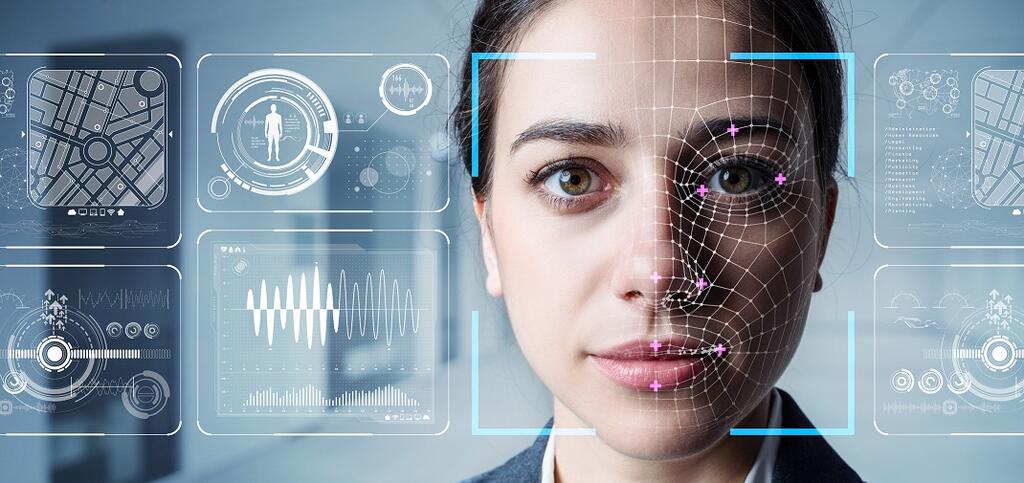
Who exactly is teaching machines what the world is supposed to look like?
(Illustration: Shutterstock)
So-called AI-generated, genderless
The big question is not only why this happens but whether it can even be stopped. This is no longer just a question of who gets promoted and who is left behind. It is a question of who is building the systems that increasingly make decisions for us, what data they learn from, what assumptions they replicate, and who can even understand what is happening inside that black box.
Dr. Gayle Gilboa-Freedman, head of the Faculty of Technology at Sapir Academic College and an artificial intelligence researcher, does not try to soften the picture. In her view, the discussion about gender bias in AI is only the tip of the iceberg. “We are in a loss of control around the entire issue of AI, and it is also reflected in the gender context,” she says.
What do you mean by 'the gender context'?
“When you ask AI to write a CV for a man and a woman for example, the answers are different. Or if you ask it to identify male or female faces, there are more errors when it comes to female faces. Now take that into airport security for example, and you have a serious problem.”
A simpler example comes from language itself. Gilboa-Freedman says she asked ChatGPT to translate two English sentences: “The doctor gave me medicine” and “The nurse cleaned my bed.” In English there is no gender, but in Hebrew the system still translated it as “the doctor (male) gave me medicine” and “the nurse (female) cleaned my bed.” “Why is a doctor necessarily a man and a nurse necessarily a woman? It is true the model is based on existing statistics, but it locks in stereotypes. It is the old world in new packaging.”
Not the absolute truth
According to Gilboa-Freedman, “We tend to attribute to models, especially advanced ones, possession of truth, but that is not correct. If you go deeper you see algorithms, but also the people who program and work on them, and they themselves do not fully understand how the system reaches its conclusions.”
“This is a critical point. For years, when we talked about discrimination, we could at least try to identify it — check wage gaps, analyze hiring data, examine who gets promoted and who does not. In the AI era, bias can form inside a computational chain that no one knows how to fully unpack.”
Dadi Perlmutter -, chair of the committee for increasing human capital in high tech and former Intel executive vice president, approaches the same issue from a different angle. In his view, there is no such thing as objective AI, and expecting it to be objective is a mistake. “By definition, artificial intelligence cannot be objective,” he says.
“The algorithms are created by people, the data AI learns from is human-made data, so by definition it includes biases across many areas.”
Perlmutter describes a simple experiment he conducted while preparing a presentation. “I asked AI to generate an image of high-tech workers. Of course I got mostly white men in suits back.” Only after explicitly requesting gender diversity and contextual changes did the result shift.
The problem starts with the question itself
In Perlmutter’s view, a large part of the problem begins even before the system responds, and it lies in the question itself. “The way we ask the question fundamentally defines the answer,” he explains. “I talk a lot about the skill of asking questions in AI systems. In simple terms, if the question is not good, how can we expect the answer to be good?”
What about Hebrew? It is a language where almost every sentence forces you to choose gender.
Perlmutter argues that some of the harm can at least be reduced if users are more aware of what they are asking. “If someone is aware of this issue, they can ask the AI to take it into account and store it in the system’s memory. The answers will follow accordingly.”

Employees at a startup
(Photo: shutterstock)
The problem, he says, is that not everyone is aware or willing to be aware. “In the end it all comes down to education,” he says. “If people think women cannot serve in combat units, not because they are not good but because they are women, then you will not convince them to write a balanced prompt.”
This is where the conversation about AI returns to the older conversation about women in technology. If most of the people building these systems come from the same background, think in the same way and experience life similarly, some things simply will not be considered.
“If there are no women in the room, the issue of gender bias will not be on the agenda. But if there are women or minority groups, someone will likely raise it, because it is in front of their eyes and part of their lived experience.”
So is the solution to have more women in AI fields?
Perlmutter is cautious. “I cannot say that is necessarily the solution,” he says. “I assume that the more women there are in positions of influence, the more these issues will be addressed. However, despite diversity helping, I am not sure it will solve all the problems. Unfortunately, the amount of data AI processes every day is still biased.”
Gilboa-Freedman offers a broader framing. In her view, feminism in the AI era cannot focus only on correcting biases in existing tools. She calls this “small feminism” versus “big feminism.”
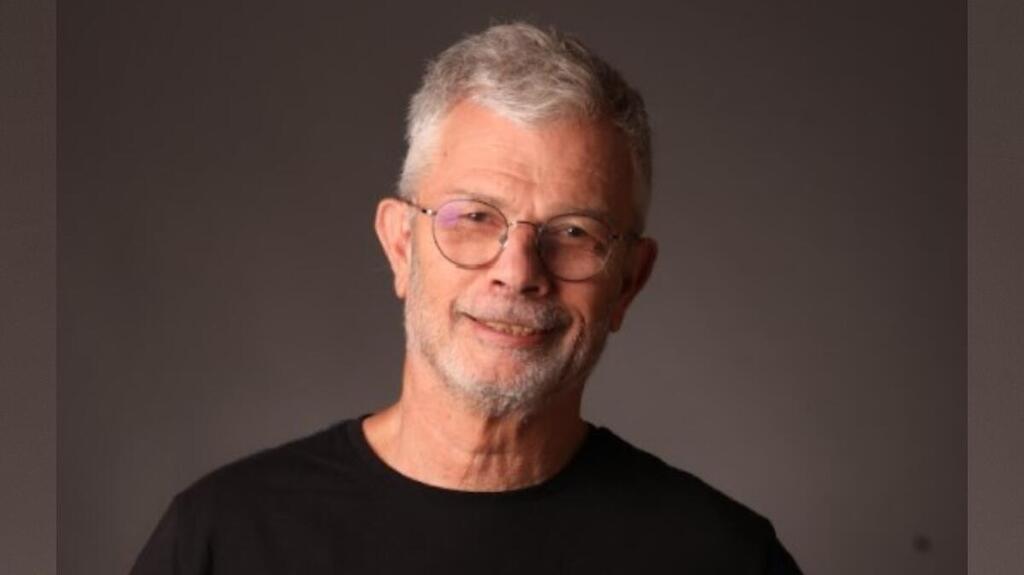
'By definition, artificial intelligence cannot be objective.' Dadi Perlmutter
(Photo: Pini Hamou)
Small feminism tries to fix outcomes, add diversity, identify discrimination and demand correction. Big feminism, she says, understands the issue is much larger. “Women simply need to use AI in their daily lives, and that is what will advance them the most,” she explains. “Not just examining AI, but actually using it, adopting this revolution as much as possible.”
In her view, this may be the first time women and men can start from nearly the same baseline. “Today everyone has a personal tutor at their fingertips. We all have access to AI tools, there is no barrier of access. So the most important thing is to use these tools,” she says. “When we use AI with the same intensity that men do, equality will come naturally.”
But even that optimism has limits. Because above the question of usage stands the question of power. Who owns the models? Who owns the infrastructure? Who controls the computing?
According to Gilboa-Freedman, the question is no longer only whether AI discriminates against women, but who controls this new intelligence in the first place.
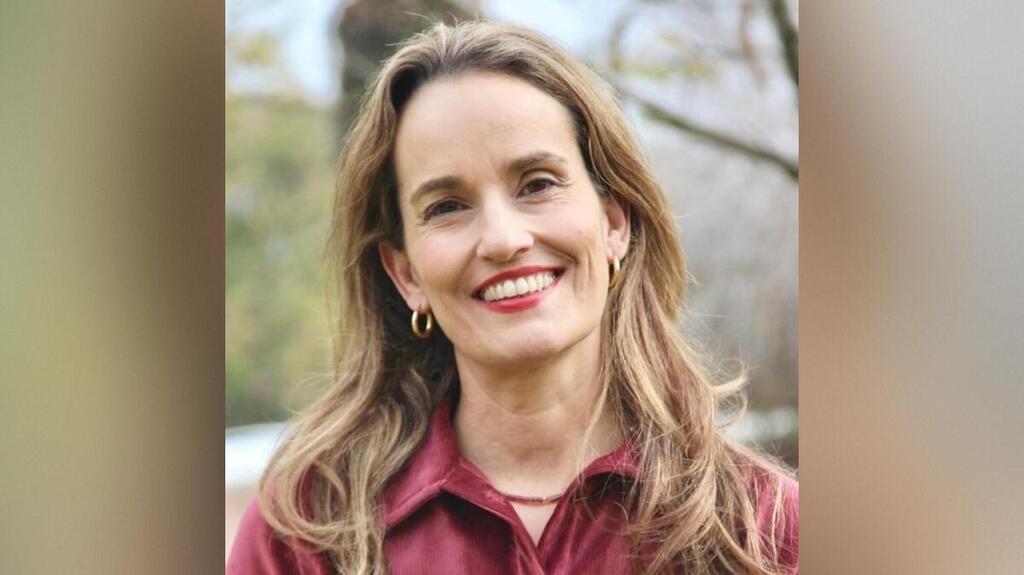
Women may be affected twice: first by the biases systems replicate, and second by gaps in adoption of the tools themselves.' Gayle Gilboa-Freedman
(Photo: Sigal Golan)
“There has never been such a separation between the creation of intelligence and its use,” she says. “A small number of models are used by thousands or hundreds of thousands of applications, and that concentrated control is the power we need to be cautious about.”
Despite the problem being much broader than gender, women may be affected twice: first by the biases systems replicate, and second by gaps in adoption of the tools themselves. Gilboa-Freedman warns that if women do not adopt AI as quickly and intensively as men, existing gaps will only widen.
Perlmutter notes that if more girls are not brought into these fields, those building the systems will continue to come from the same narrow group. “There is absolutely no reason why girls and women should not be involved in this. Today it is purely a social issue that needs to be solved,” he says.
He adds that girls still hear that technology is not for them, that science is for boys, that this world belongs to others. “The effort to bring more girls into awareness, skills and understanding that women should also engage in these fields is much more than sitting in front of a screen and writing code,” he argues.