

The model is the first major release since Alexandr Wang joined Meta nine months ago to lead its AI efforts under the newly formed Meta Superintelligence Labs. Wang, the former CEO of Scale AI, came to the company as part of Meta’s $14.3 billion investment.
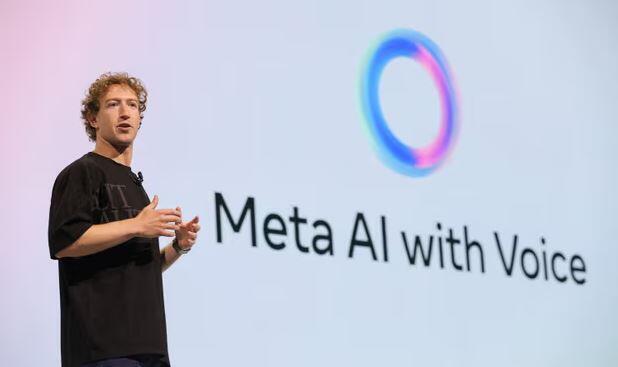
Dubbed Muse Spark and originally code-named Avocado, the model marks the first entry in Meta’s new Muse series. It follows a disappointing rollout of the company’s previous Llama 4 models, which failed to gain traction with developers and prompted CEO Mark Zuckerberg to shift strategy.
“Over the last nine months, Meta Superintelligence Labs rebuilt our AI stack from the ground up, moving faster than any development cycle we have run before,” Meta said in a blog post. “This initial model is small and fast by design, yet capable enough to reason through complex questions in science, math, and health. It is a powerful foundation, and the next generation is already in development.”
Meta is not positioning Muse Spark as a top-tier model, instead emphasizing efficiency and “competitive performance” across tasks such as reasoning, multimodal perception and health-related analysis.
Despite investing heavily in generative AI to support its advertising business and internal operations, Meta has struggled to establish a leading position in the AI model market. Rivals, including OpenAI and Anthropic, are now collectively valued at more than $1 trillion, while Google’s Gemini platform continues to expand in the consumer space.
The company is significantly increasing its spending to compete. Meta said it expects AI-related capital expenditures in 2026 to reach between $115 billion and $135 billion, nearly double last year’s total.
Muse Spark will be a proprietary model, though Meta said it may open-source future versions. That would mark a shift from its earlier strategy with the Llama models, which were released as open source.
(Photo: Ascannio/ Shutterstock)
Meta said advances in training techniques and infrastructure allowed it to build smaller models with capabilities comparable to its previous midsize systems while using far less computing power.
“Muse Spark offers competitive performance in multimodal perception, reasoning, health, and agentic tasks,” Meta said. “We continue to invest in areas with current performance gaps, specifically long-horizon agentic systems and coding workflows.”
The company is also exploring new revenue streams by offering developers access to Muse Spark through an application programming interface. Currently, only select partners have access to a private preview, but Meta plans to expand paid access more broadly.
The model will power Meta’s AI assistant across its standalone app and website, with broader integration planned in the coming weeks across Facebook, Instagram, WhatsApp and Messenger, as well as the company’s Ray-Ban smart glasses.
Meta said the updated assistant will allow users to switch between different modes based on task complexity, from quick responses to more advanced analysis, including legal documents and product information.
A “Contemplating mode” is expected to roll out gradually for more complex queries, using multiple AI agents to “reason in parallel” and “compete with the extreme reasoning modes of frontier models such as Gemini Deep Think and GPT Pro,” according to the company.
The system will also include a shopping feature designed to help users discover and purchase products within Meta’s platforms.
“Shopping mode draws from the styling inspiration and brand storytelling already happening across our apps, surfacing ideas from the creators and communities people already follow,” Meta said.