

Gram Car Carriers, one of the world’s leading vehicle transport operators and part of the MSC Group, will deploy Orca AI’s artificial intelligence-powered navigational safety and fleet analytics platform across its entire owned fleet, the companies announced Tuesday.
Under a multi-year agreement, the Norwegian firm will roll out the technology on 22 Pure Car and Truck Carriers (PCTCs), marking the company’s first standardized AI safety model across its fleet. Gram Car Carriers is the third-largest tonnage provider in the global PCTC segment.
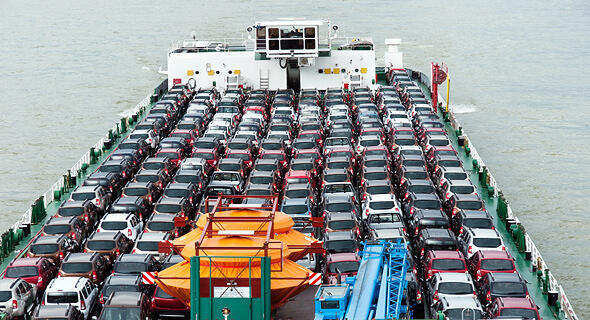
The partnership builds on an existing relationship between Orca AI and MSC but is being described as a strategic alliance rather than a typical supplier contract. The agreement includes joint business reviews, shared operational data and co-developed system enhancements, as the company aims to align onboard decision-making more closely with onshore oversight.
Executives said the initiative is designed to reduce incidents, near-misses and operational inefficiencies by embedding AI-driven situational awareness into daily navigation. The deployment integrates Orca AI’s SeaPod system — a digital lookout installed aboard ships — with its FleetView analytics platform, which provides shore teams with real-time monitoring and long-term performance insights.
“At Gram Car Carriers, safety is a deeply funded part of our culture, and improved navigational safety is a core focus area,” said Børre Mathisen, chief operating officer at the company. He added that the technology will offer bridge crews and shoreside teams “accurate, real-time information” to support continuous improvement.
SeaPod uses computer vision and AI to detect, classify and track nearby vessels and hazards, issuing alerts to bridge teams in congested or low-visibility environments. FleetView compiles and analyzes this data across the fleet, helping managers identify trends, evaluate compliance with internal protocols and refine operational strategies.
Yarden Gross, CEO and co-founder of Orca AI, the agreement reflected growing demand among shipowners for measurable safety outcomes rather than subjective reporting. He added that Gram Car Carriers had selected Orca AI for its ability to translate safety data into operational change “at both bridge and fleet level”.
Gross added that the shipping industry is facing a critical safety inflection point as it enters a more complex operational era shaped by digitalization, decarbonization and geopolitical instability.
“Shipping entered 2025 with a paradox,” Gross said. “ Total vessel losses have fallen to record lows, yet Inmarsat’s latest Future of Maritime Safety Report shows distress calls holding steady at around 800 per year. Incidents are not disappearing; they are shifting.”
He noted that traditional risks such as collisions and machinery breakdowns are now compounded by emerging challenges like cyber disruptions and the transition to new fuels, reshaping the industry’s risk landscape.
“The message is clear: reducing losses is not the same as reducing risk. To protect crews and build resilient operations, we need a mindset that prioritises clarity over complexity and integration over fragmentation,” he said.
Gross warned that fewer ship losses can obscure “the lived reality onboard,” pointing to a rise in distress calls, long working hours, crew abandonments and gaps in training for new fuel systems. “Behind the statistics are human stories,” he said.
He added that the fragmentation of digital systems on board, with multiple dashboards and overlapping alarms, can lead to “alarm fatigue” and reduced situational awareness. “What crews consistently ask for is not more data but clearer insights,” he said.
Gross introduced the concept of “cognitive seaworthiness,” the idea that a vessel may be technically sound yet unsafe if its crew is overwhelmed by alerts and unclear risk information. “Clear, consistent information is as vital as a sound engine room,” he said, arguing that AI can help filter noise, harmonize inputs and support decision-making.

Yarden Gross, Chief Executive Officer and Dor Raviv CTO & Co-founder
(Photo: David Garb)
“The Inmarsat report is unflinching on the human element,” Gross said. “Fatigue, isolation and inadequate training remain central challenges. Safety cannot be separated from welfare. Technology only helps if it reduces stress and supports better decisions.”
He welcomed Inmarsat’s call for a shared, anonymized safety data ecosystem but stressed that real progress depends on integrating live operational data into a “coherent picture at sea,” something he said AI platforms are uniquely positioned to deliver.
“At Orca AI, we’ve seen the impact when crews are given a simplified, integrated view,” he said. “By fusing radar, AIS and optical sensors into one platform, supported by machine learning, we provide more accurate target detection than the human eye.”
“This clarity matters most in congested waters and low visibility,” Gross continued. “By reducing ambiguity, AI decision support lightens workload, lowers stress and enables crews to focus on safe navigation.”
Gross concluded with a call for systemic change. “Safety cannot be measured solely by vessel losses; it must reflect everyday risks,” he said. “We have an opportunity – and an obligation – to reset how safety is managed. The path forward lies in clarity, integration and collaboration.”