

An unprecedented wave of heartbreak has swept across Chinese social media in recent weeks.
Millions of users, mainly young and single, woke up one day to a dramatic new reality: The Cyberspace Administration of China, or CAC, had begun enforcing strict nationwide rules barring artificial intelligence systems from creating “emotional dependence” or harming real-world human relationships.
Gallery

China is trying to wean users off the emotional dependence they developed on bots
(Photo: Shutterstock)
An effort to protect public health and social cohesion
According to Bloomberg, the new regulations, which have formally taken effect and are legally binding, impose sweeping restrictions on technology giant ByteDance, developer of the popular Doubao platform, as well as Tencent and Alibaba.
The companies must fundamentally redesign their algorithms and remove any feature that encourages extreme emotional attachment, addiction or virtual intimacy.
As a result, students and other young users have flooded social media with anguished monologues, comparing the date the rules took effect to the death of a loved one and saying they had no power to prevent the separation.
From Beijing’s perspective, the measures are not merely an intrusion into private life but an attempt to protect public health and the social fabric.
Officials at a Chinese cybersecurity research institute said that although language-based AI services can provide comfort and relief from loneliness, they also pose serious risks, including social isolation, the erosion of basic interpersonal skills and a diminished ability to cope with human conflict.
The regulations include a complete ban on virtual romantic services for minors, a requirement to introduce warnings when users spend extended periods interacting with chatbots and an obligation to remove training material designed to encourage compulsive attachment.
The paradox becomes even more pronounced when viewed alongside China’s domestic robotics industry.
Just weeks before the rules took effect, Shenzhen-based robotics company UBTech unveiled the U1, a hyperrealistic humanoid robot designed for mass production, with a starting price of about 120,000 yuan, or roughly 54,000 shekels.

UBTech’s U1 robot
(Photo: Getty Images)
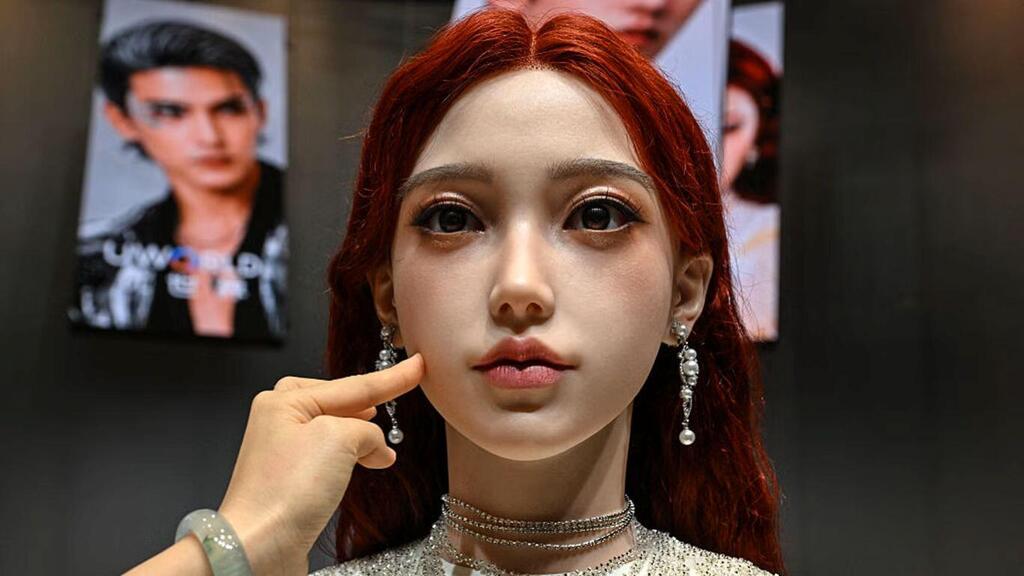
(Photo: Getty Images)
The robot, which features silicone skin, natural hair and an emotional AI engine, is being openly marketed as a solution to loneliness and the difficulties faced by single people.
At the launch event, customers were told that the robot would recognize stress or fatigue, would never be unfaithful and would offer “unconditional love.”
The stark contrast between tight restrictions on chat software and the commercialization of humanlike robots raises questions about where regulators draw the line between software and hardware.
The bond between humans and machines
Emotional attachment to machines is not a new phenomenon.
In 1966, computer scientist Joseph Weizenbaum developed ELIZA, a simple program designed to simulate a psychotherapist. To Weizenbaum’s surprise, users quickly developed deep emotional attachments to the software and began attributing human qualities to it, a phenomenon later known as the “ELIZA effect.”
In the 21st century, the rise of large language models moved the phenomenon from research laboratories into the mainstream, through apps ranging from Replika to Character.AI.
In the West, authorities are attempting to address the risks through personal injury lawsuits against companies such as Character.AI and OpenAI following cases involving addiction and severe mental health crises, as well as through complex European legislation under the EU AI Act, which requires transparency and risk classification.
China has chosen a more direct approach.
The Chinese government has used administrative regulation to sever digital romantic bonds in one stroke, as part of a broader policy aimed at encouraging marriage, childbirth and genuine human interaction in the physical world.