

Fabrix Security, a cybersecurity startup focused on identity and access management, emerged from stealth on Tuesday with $8 million in seed funding to launch its AI-native solution for securing both human and non-human digital identities.
The round was led by Norwest, toDay Ventures and Jibe Ventures, with backing from prominent industry veterans at NVIDIA, Cyera, Palo Alto Networks, Tenable, Google and Microsoft. The funding will support product development and sales expansion.

Founded in 2025 by CEO Raz Rotenberg, formerly a founding engineer at Run.ai (acquired last year by NVIDIA), and CTO Ofir Yakovian, a former technical lead at Orca Security and Microsoft Entra, Fabrix aims to streamline identity security through automation.
Fabrix’s platform uses AI agents trained specifically for identity and access management (IAM) tasks. The system builds an identity “fabric graph” from enterprise data and then applies explainable AI reasoning to enforce least-privilege access, automate user lifecycle management and govern non-human identities such as bots, API keys and AI agents.
“IAM problems have been around for decades, but identity sprawl has made them worse,” Rotenberg said. “At this scale, traditional IAM systems that rely on manual processes can’t achieve their main objectives, enforcing least privilege and reducing the attack surface. With the AI revolution, Fabrix can deliver significant value to customers by making these processes intelligent and autonomous, in ways that could never have been done before.”
Analysts say identity governance and administration has become a persistent bottleneck for enterprises. “AI holds the promise of streamlining IGA operations, and Fabrix Security brings domain expertise and a new approach that holds the promise of turbocharging identity team effectiveness,” said Todd Thiemann, principal analyst at Enterprise Strategy Group.
AI-driven identity and access management, or IAM, is emerging as the next wave of enterprise security tools. Unlike traditional systems that depend heavily on manual oversight, the new “AI-native” approach adapts permissions in real time and uses large language models to map and optimize access across both human and non-human identities, such as service accounts and AI agents.
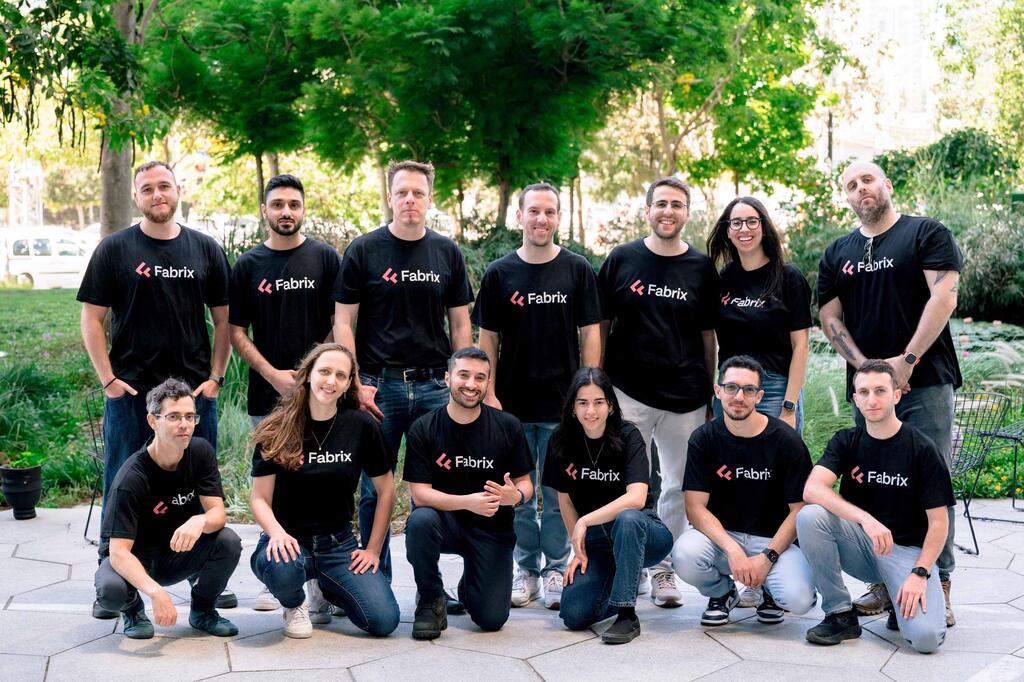
Fabrix team
(Photo: Yarin Taranos)
“Identity and access management is a well-known IT and security pain point,” said Dror Nahumi, general partner at Norwest. “Fabrix Security is using new AI technologies to tackle this difficult and persistent problem. Its technology leverages advanced reasoning methodologies to monitor access decisions. This revolutionary approach adds a powerful layer of intelligence to enhance existing identity platforms.”
Investors say the shift could be transformative. “The identity space is on the verge of major disruption,” said Shay Michel, managing partner at Merlin Ventures. “AI’s ability to multitask at scale and make instant decisions will eliminate today’s approval bottlenecks and long wait times. Identity will become one of the most profoundly impacted areas of cybersecurity in the near future.”
Fabrix: How it works
Fabrix is an AI-native IAM solution designed to strengthen enterprise security. It uses agentless connectors to collect identity and permission data, creating an AI-ready “identity fabric graph.” AI agents then use this graph to automate tasks, integrate with IAM workflows and enforce least-privilege access.
The system is built on an explainable and traceable AI-reasoning layer, ensuring decisions are evidence-based and auditable. It streamlines user access reviews, speeds up approvals and reduces risks through context-aware execution. Fabrix AI agents adapt to each organization’s needs, with setup as simple as a natural language conversation.
“Fabrix brings a transformative approach to identity security,” said Yoni Kaplansky, head of architecture, engineering and operations at FICO. “Their AI-native platform leverages Agentic AI to change the way we do IAM—constantly optimizing permissions, reducing risk and giving IAM teams the confidence to scale securely across SaaS, cloud, on-prem and disconnected apps.”