

How many times have you adjusted the height of your office chair, only to discover that your feet no longer reach the floor? Lower it again, and suddenly your arms are at the wrong height for the desk. It may seem like a minor inconvenience, but for anyone who spends hours in front of a computer, it can become a daily frustration. It's also one of the best reasons to consider buying an adjustable desk.
Height-adjustable desks have become increasingly popular in offices and homes in recent years. With the press of a button, users can raise or lower the work surface and switch between sitting and standing. But despite manufacturers' health claims about working while standing or walking, the scientific evidence doesn't necessarily support all those promises.
Gallery
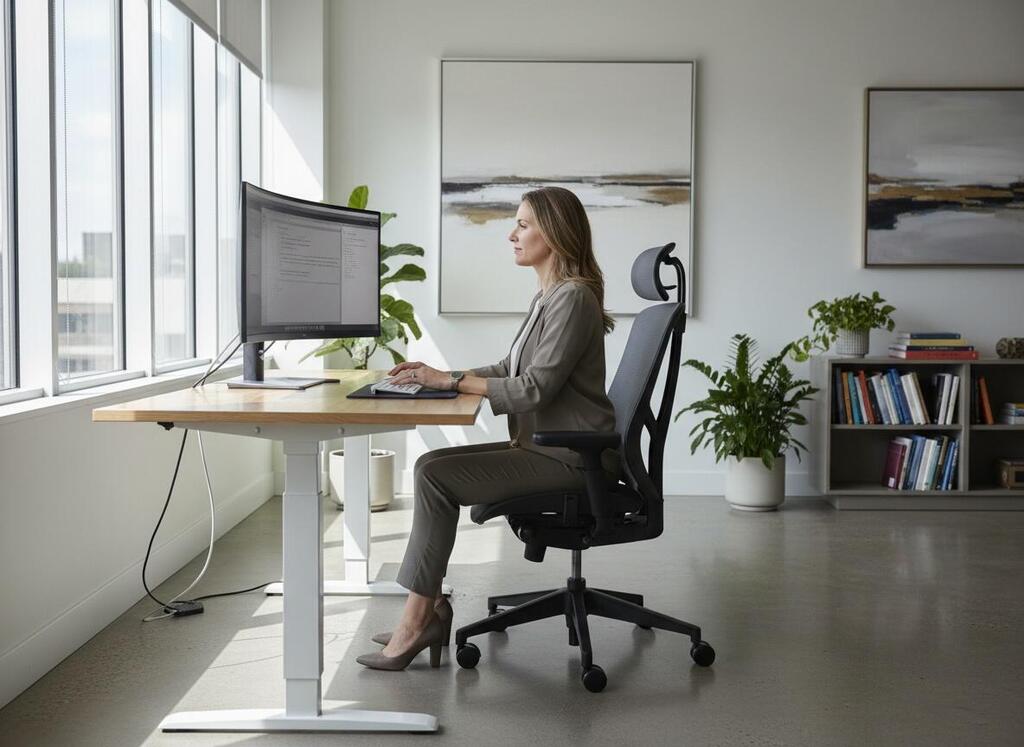
Long hours at the office require proper equipment and an ergonomic sitting position
(Photo: Shutterstock)
As someone who spends many hours, probably too many, in front of a computer every day, I was delighted to have the opportunity to test Lumi's electric sit-stand desk, distributed in Israel by Benda. I wanted to find out what the real advantage of adjustable desks actually is.
Perhaps surprisingly, I discovered that standing or walking while working is far from the biggest benefit these desks have to offer.
The real problem isn't standing
To sit comfortably in front of a computer, your feet should rest flat on the floor, with your knees at a comfortable angle of roughly 90 degrees. At the same time, your shoulders should remain relaxed, your elbows should be close to your body, and your forearms should rest in a natural position without unnecessary bending of the wrists.
These are among the basic ergonomic principles recommended by orthopedic specialists and other experts in the field.
The problem is that a fixed-height desk doesn't always allow you to achieve all these conditions simultaneously. If the desk is too high, you'll need to raise your chair so your forearms are at the correct height for the keyboard and mouse. But then your feet may be left dangling above the floor.
Lower the chair, and you may find yourself raising your shoulders and positioning your arms at an uncomfortable, potentially harmful angle. Of course, you could use a footrest. But an adjustable desk offers a much simpler and more elegant way to solve the problem.
That's exactly the advantage I discovered while testing Lumi's S08-22D-SW, an electric desk with a work surface measuring 118 by 60 centimeters, a single motor and an adjustable height range of 72 to 120 centimeters. It also comes with a storage drawer, USB charging ports and the ability to save preferred height settings.
In practice, being able to adjust the desk to match my chair made working considerably more comfortable. Instead of compromising, I could first position my chair so my feet rested flat on the floor and my knees were at a comfortable angle. Then I could lower the desk until my forearms aligned naturally with the armrests and work surface. The result was a working position that didn't require me to raise my shoulders or strain my wrists.
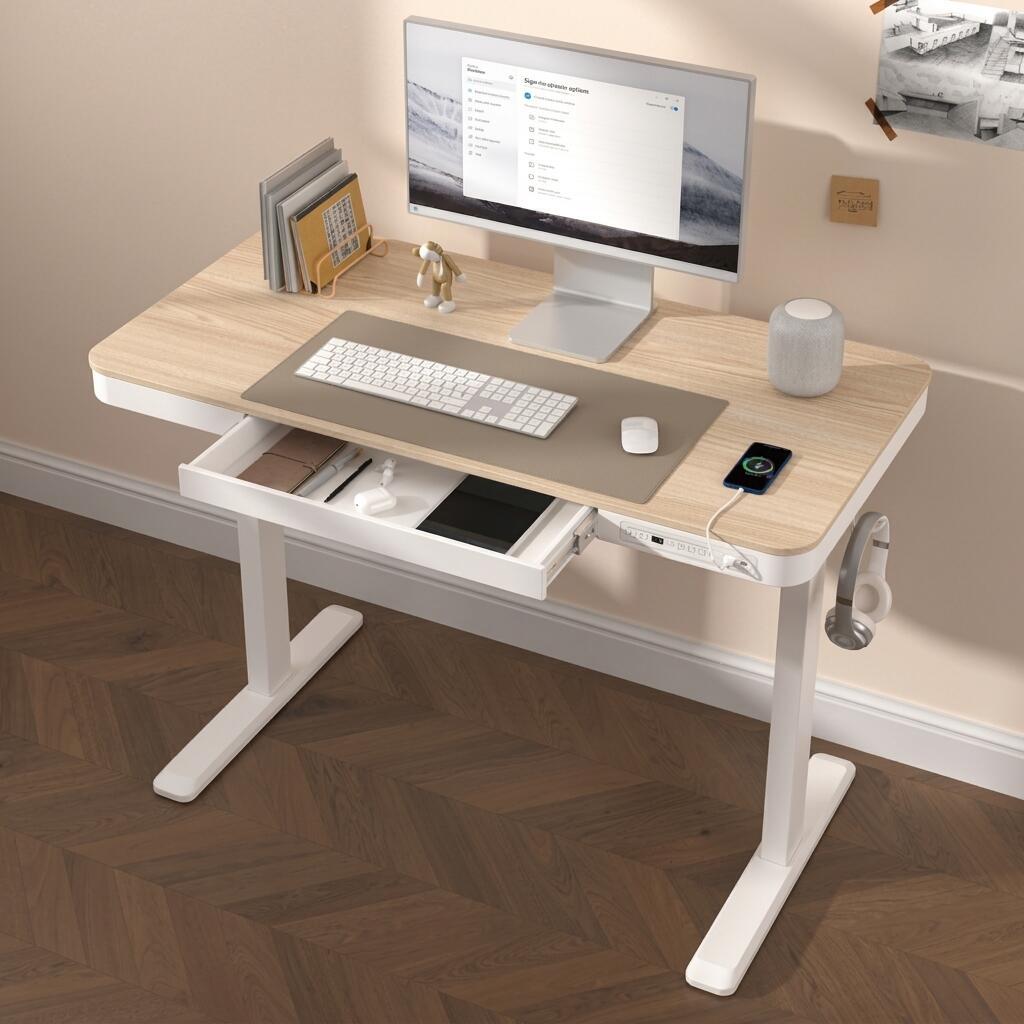
Lumi's S08-22D-SW adjustable electric desk
(Photo: Lumi)
For me, ergonomics is also a deeply personal issue. As a former pianist, I suffered for years from a cyst in my left wrist that caused pain, particularly after long periods of typing. The discomfort was most noticeable after prolonged exertion and had become an almost permanent part of my working routine.
Since I started using the electric desk and paying closer attention to the positioning of my forearms and wrists, the pain has disappeared. Of course, there's no way to establish that this change alone caused the improvement. But from my perspective, it has made an enormous difference to my comfort and quality of life.
There are, however, a few limitations worth considering. The desk's minimum height is 72 centimeters, which may still be too high for some users, depending on their body proportions and chair height. The work surface may also be too small for anyone using several large monitors.
And even after finding a comfortable sitting position, it's important to get up and change posture throughout the day.
Is working while standing actually healthier?
Now for the feature manufacturers are particularly eager to promote: working while standing or walking. A 2025 umbrella review published in The Lancet Public Health, which examined 36 systematic reviews covering 214 individual studies, found that sit-stand workstations reduced sitting time by as much as 75 minutes per day.
However, the researchers did not find a significant increase in physical activity. In other words, employees spent less time sitting, but they didn't necessarily become more physically active.
Another study, published in 2024 in the International Journal of Epidemiology, examined data from more than 83,000 participants to investigate the relationship between time spent standing and cardiovascular health. Importantly, the study examined standing behavior in general, rather than the use of adjustable desks specifically.
The researchers found that spending more time standing was not associated with a reduced risk of cardiovascular disease. Prolonged standing was also associated with an increased risk of certain circulatory problems. However, this was an observational study, meaning it cannot establish that standing itself caused those problems.
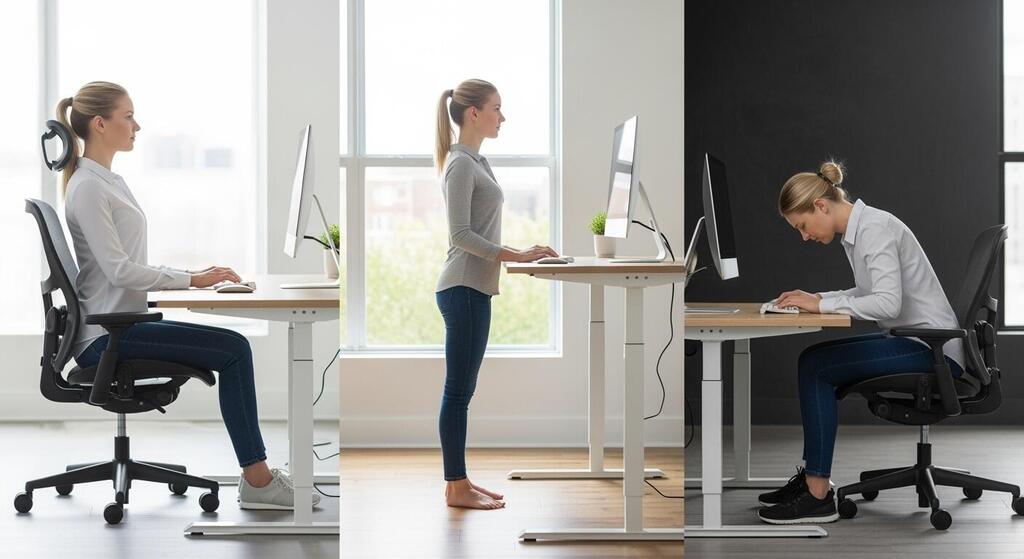
Research has not established a clear health advantage to working while standing rather than sitting, but proper ergonomics remains important
(Photo: Shutterstock)
And what about back pain?
A review of 53 studies published in Applied Ergonomics found that sit-stand desks may help reduce physical discomfort, but the evidence for substantial long-term health benefits remains limited. Adjusting desk height may reduce strain and improve comfort, but it doesn't guarantee that existing pain will disappear.
That doesn't mean adjustable desks have no role in encouraging movement. People looking to incorporate more physical activity into their working day can use them in other ways. For example, a compact under-desk treadmill makes it possible to walk slowly while answering emails, attending meetings or completing tasks that don't require intense concentration.
For those who spend long hours in front of a computer and struggle to find time for exercise, this can be a convenient way to introduce some movement into the day without stopping work.
Naturally, not every task is suitable for walking, and an under-desk treadmill is not a complete substitute for regular exercise. Still, it can help reduce the amount of time spent sitting continuously.
So who really needs an adjustable desk?
If you're already comfortable working at your existing desk, there's probably no compelling reason to spend around 1,400 shekels replacing it.
But if you regularly have to choose between keeping your feet on the floor and positioning your arms at the correct height, and like me, you're not particularly fond of footrests that collect dust and dirt, the ability to adjust the height of your desk may well justify the investment.
For me, testing Lumi's desk demonstrated that the greatest advantage of an adjustable workstation is actually the ability to sit comfortably, even if you have absolutely no intention of working while standing.
When you spend hours in front of a computer, being able to adapt your workspace to your body, rather than forcing your body to accommodate the furniture, can make a substantial difference.
After all, we invest considerable amounts of money in office chairs, monitors and computer accessories. Yet sometimes it's the height of the desk, a detail most of us barely think about, that has the greatest impact on how comfortable we feel throughout the working day.