

Thousands of Israelis have been targeted in recent weeks by a flood of automated phone calls in broken, automatic Hebrew, traced to hostile actors linked to Iran who hacked into two private Israeli phone exchanges.
In an interview on Monday, Ohad Meshulam, head of the National Cyber Directorate’s defense center, said that despite hundreds of complaints, the calls caused no immediate damage to phones, even if recipients answered or pressed digits. But he warned that this was “just the beta version” — a test run — and that future waves could be far more dangerous.
Gallery
Phone calls with threatening messages and attempts to recruit Israeli agents for Iranian intelligence
(Photo: National Cyber Directorate)
Meshulam noted that while the garbled Hebrew limited the attack’s effectiveness this time, the real lesson lies in Iran’s reach. “What matters here is the adversary’s capability. With just two simple breaches, they reached tens of thousands of Israelis,” he said. With artificial intelligence advancing rapidly, he added, the stilted Hebrew will soon disappear: “It will sound completely natural, like a real person speaking to you.”
From nuisance to espionage
Meshulam urged the public to remain skeptical and avoid engaging with unknown calls or links: “Don’t click on links, don’t give out codes if someone asks.” He issued a stark warning about what could come next: “I want to say this very clearly — if a sophisticated enough actor is behind it, one click on a link can turn your phone into a full-fledged spying device, even when it’s turned off.”

Iranian phone attack just the beginning, extortion could be next
(Photo: Shutterstock)
Such a compromise, he said, could enable constant surveillance through the microphone and camera, paving the way for blackmail. “The most significant danger we face in the near future is recruitment attempts through extortion,” Meshulam cautioned. “If someone finds very embarrassing material on your phone, it could become fertile ground for blackmail — and that can definitely cause damage.”
A nationwide challenge
Meshulam also addressed coordination among Israel’s cyber bodies, including the National Cyber Directorate, the Privacy Protection Authority, and the police. “There’s no such thing as airtight protection, especially when we’re talking about small, widely dispersed exchanges,” he said. “We don’t even know where they all are. As we’ve seen, one small company, one small exchange, is enough to reach tens of thousands.”
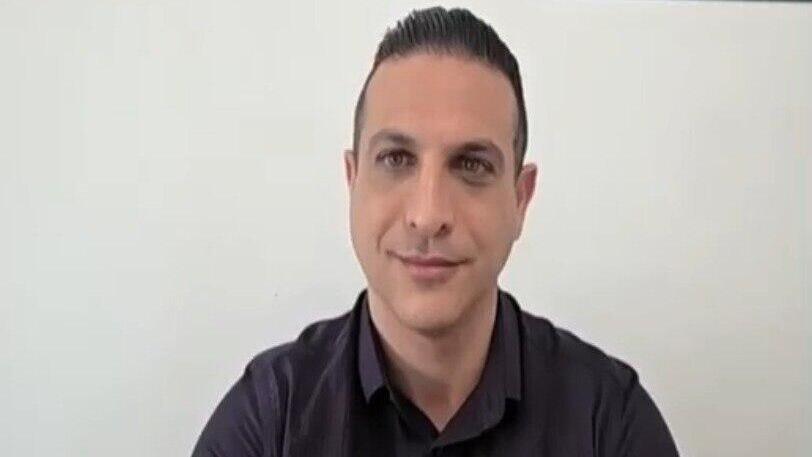
Ohad Meshulam, head of the National Cyber Directorate’s defense center
He stressed that authorities are working around the clock to secure critical national infrastructure and essential services, but vulnerabilities remain at the local level. “We can’t reach everything,” he said.
Ultimately, Meshulam warned, much of the defense lies with ordinary people. “We’ll be left exposed if the average citizen isn’t vigilant,” he said. While unsettling, he noted that basic precautions — such as not sharing personal details with unknown callers or clicking links in suspicious messages — can greatly reduce the risk.