

It was probably not the haul the thieves were hoping to find: Two trailers bearing Nvidia logos were stolen this week in California in what initially looked like another theft of expensive technology equipment. But when the thieves opened the cargo compartments, instead of valuable AI chips or advanced servers, they found about 18 tons of sand.
The trailers belong to PlusAI, a company that develops autonomous driving systems for trucks and is an Nvidia partner. According to WIRED, the theft was discovered almost by chance after a company executive received a message Thursday morning from an acquaintance who said he had spotted two PlusAI trucks near his workplace in Newark, California.
Gallery
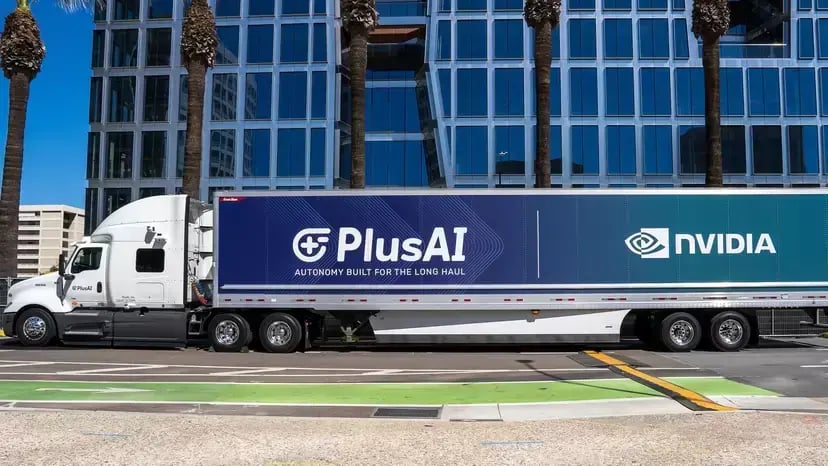
The trailers belong to PlusAI, a company that develops autonomous driving systems for trucks and a partner of Nvidia
(Photo: PlusAI)
At first glance, there was nothing unusual about that — except the trucks were not supposed to be there at all. The company quickly realized that the two trailers had been stolen from the area near its warehouse and police were called.
Investigators believe the thieves arrived with their own tractor units, broke the locks securing the trailers, hooked them up and simply drove away.
Right logo, wrong cargo
Both trailers bore the logos of PlusAI and Nvidia, which are working together on autonomous trucking technology. Did the thieves actually think they were about to get their hands on equipment belonging to the chip giant? There is no answer yet, but it is difficult to ignore the logos displayed prominently on the trailers.
Shipments of chips and data center equipment can be worth millions of dollars, and surging demand for AI hardware has made them an increasingly attractive target for thieves in recent years. But in this case, anyone expecting stacks of valuable chips found something considerably less enticing: sand, and lots of it.
The two trailers contained just over 18 tons of sand, and it was there for a reason. PlusAI uses it as ballast during testing of its autonomous driving systems to simulate a truck carrying a heavy load.
PlusAI’s tractor units, which contain the company’s driving systems and technology, were inside the warehouse and were not stolen.
Once the thieves discovered what they had actually hauled away, they apparently lost interest. Both trailers were abandoned and later located by police. By that afternoon, they had been returned to PlusAI, along with all the sand inside them.
As of the publication of the report, no arrests had been made and police were continuing to investigate.
Why would anyone steal chips?
As much as the story may sound like a joke at the thieves’ expense, it comes at a time when advanced chips and graphics cards have become especially valuable commodities on the black market.
Enormous demand for AI hardware, high prices and, above all, U.S. export restrictions on China have helped create a growing smuggling market.
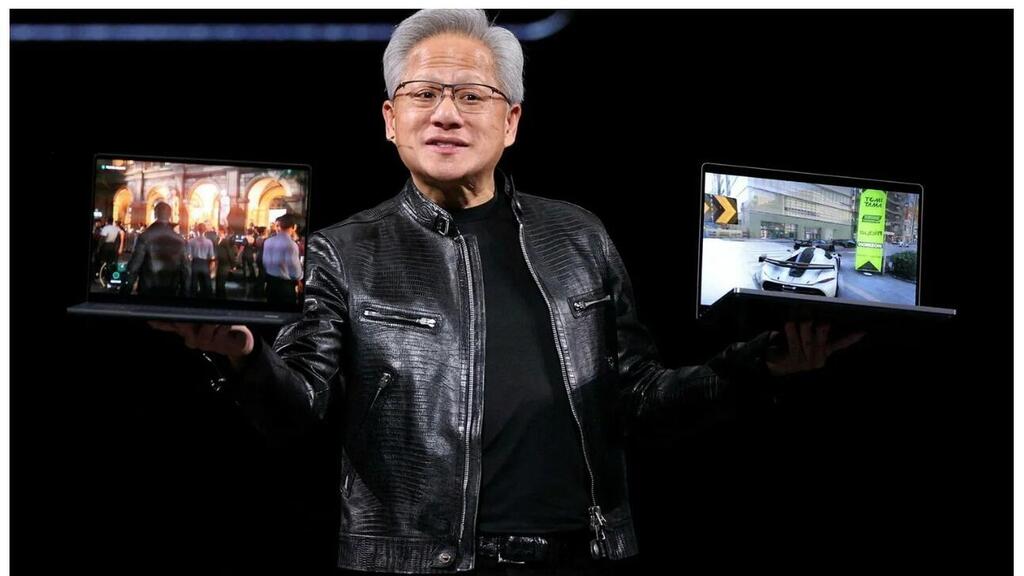
Nvidia CEO Jensen Huang at Computex 2026
(Photo: AFP)
A good example emerged in Macau in recent days. During an anti-smuggling operation carried out over the past several weeks, local customs authorities seized, among other items, two Nvidia GeForce RTX 5090 graphics cards. They were found alongside about 126,000 cigarettes, 75,000 e-cigarettes, hundreds of headphones and about 47 kilograms of silver.
It may sound strange that a gaming graphics card now appears on a smuggling seizure list alongside cigarettes and precious metals, but the RTX 5090 has long since moved beyond gaming alone. Its 32 gigabytes of GDDR7 memory and computing power also make it useful for running AI models and other AI workloads, and in some markets it can sell for thousands of dollars.
In China, it is in demand for another reason. The standard RTX 5090 is not officially sold there. Instead, a more limited version is marketed to comply with U.S. export restrictions. The result is a parallel market for cards that reach the country through other channels.
At the same time, the U.S. Justice Department recently uncovered a smuggling network that authorities say was involved in transferring or attempting to transfer at least $160 million worth of Nvidia H100 and H200 chips to China between October 2024 and May 2025.
In one case described by authorities, the chips were moved to warehouses in the United States, Nvidia markings were removed and shipping documents listed them as other computer components in an effort to conceal both the cargo and its destination.
Alongside smuggling, thefts of expensive computing equipment are also increasing inside the United States. In recent months, two incidents were reported in California in which thieves attacked vehicles carrying data center equipment and stole millions of dollars’ worth of hardware.
Tesla batteries and Bitcoin mining equipment also have been stolen during the past year.