

One of artificial intelligence’s founding figures has abruptly left Meta, sounding a stark warning that the tech industry’s blind pursuit of giant language models — such as OpenAI’s ChatGPT and Google’s Gemini — is steering the field toward a dead end.
Dr. Yann LeCun, a Turing Award winner and former chief AI scientist at Meta, exited the company months ago in what industry insiders describe as a dramatic professional split that resonated from California to Beijing. LeCun says the current focus on large language models will never yield a human‑level artificial intelligence.
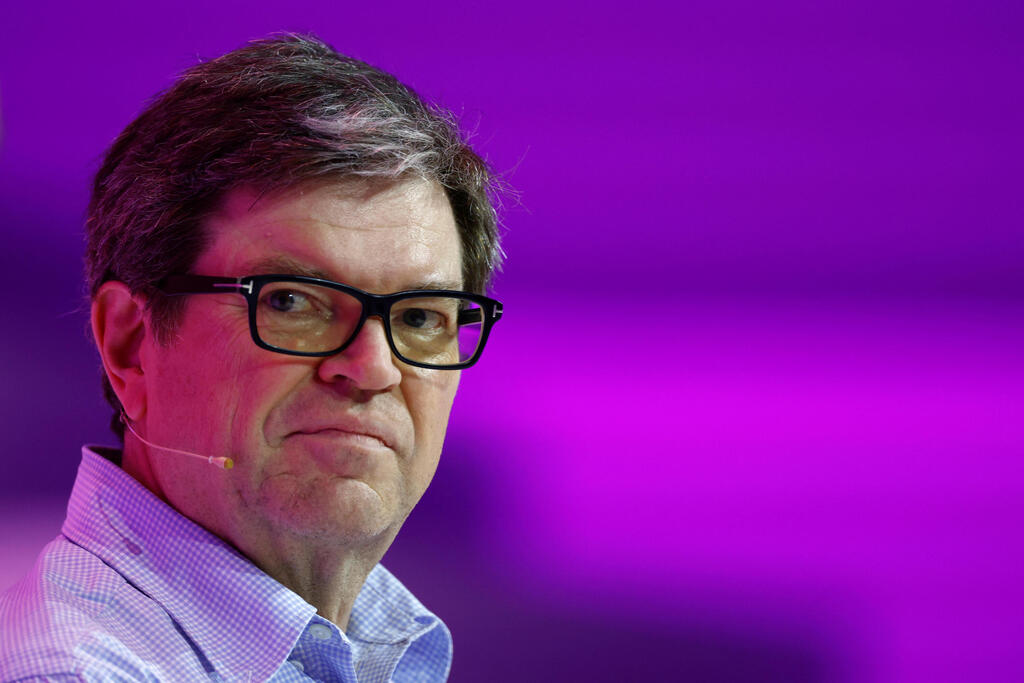
Yann LeCun
(Photo: Gonzalo Fuentes / Reuters)
“Tech has gone ‘LLM‑pilled,’” LeCun said in interviews, using a slang term to describe what he sees as a narrowly fixated industry. While Silicon Valley is gripped by what he calls a “superiority complex,” he argues, creative Chinese firms may eventually outpace the West in developing true AI.
LeCun’s critique comes at a sensitive moment for Meta. The company has faced sharp criticism over its Llama 4 model, which researchers say underperformed relative to the vast investments poured into its development. In response, CEO Mark Zuckerberg established a new “super‑intelligence” lab and committed significant funding to high‑performance hardware, largely from Nvidia.
A longtime advocate of open‑source development, LeCun calls Meta’s strategic shift a mistake. He says today’s language models are statistical machines that predict the next word and lack basic understanding of physics, planning or causality.
After leaving Meta, LeCun founded AMI Labs (Advanced Machine Intelligence) in Paris. The startup is focused on “world models,” technology that aims to mimic how humans and animals learn — not by reading billions of pages of text, but by observing the world and understanding interactions among objects. LeCun notes that while a typical large language model may require the equivalent of 400,000 years of human reading to learn, human children grasp the world through thousands of hours of visual experience.
LeCun’s comments about Chinese innovation echo broader geopolitical concerns highlighted at the recent World Economic Forum in Davos, where analysts noted the technology gap between the West and China has narrowed to about six months. Efforts by the United States to throttle China’s access to high‑end Nvidia chips, aimed at slowing Beijing’s AI progress, have instead pushed Chinese firms to innovate around hardware constraints.
Companies such as DeepSeek have gained attention with models like R1, which leverage efficient architectures such as mixture‑of‑experts (MoE). These models activate only portions of the neural network for each task, enabling faster and more efficient performance even on less advanced chips — a development that has surprised some Silicon Valley researchers accustomed to abundant hardware resources.
LeCun’s willingness to buck prevailing trends is not new. In the 1980s, when much of the scientific community dismissed neural networks, he continued developing convolutional neural networks (CNNs). His breakthroughs at Bell Labs showed computers could read handwritten checks — technology that later became foundational for facial recognition and autonomous vehicles.
The current debate reflects an enduring fault line in AI research: whether progress will come through brute computational force — more processors and more data — or through more sophisticated architectures. Silicon Valley leaders such as Google’s Demis Hassabis and OpenAI’s Sam Altman are accelerating infrastructure build‑outs out of concern about being overtaken by Chinese advances. LeCun, however, likens this to building a modern Tower of Babel destined to collapse.
In China, AI development is increasingly focused on practical integration in real‑world industries such as manufacturing and automotive systems rather than replicating ChatGPT‑style conversational agents. For many observers, LeCun’s track record — having predicted the deep learning revolution when others saw science fiction — makes his warnings hard to ignore.
The race for artificial intelligence has become more than a technological contest; experts say it is now a strategic struggle over the future of global economic and security leadership.