

In the world of wearables, it is easy to get lost. Watches, bracelets and rings all count steps, measure sleep and deliver a daily score that promises insight into our overall health.
Ultrahuman’s new ring, which entered Israel in recent weeks through importer Bug, promises something slightly different. It is less concerned with how many hours you slept and more with what happened in your brain during sleep. It cares less about how many steps you took or how many calories you burned and more about offering insight into your biological age. On paper, it is intriguing. In practice, the picture is more complicated.
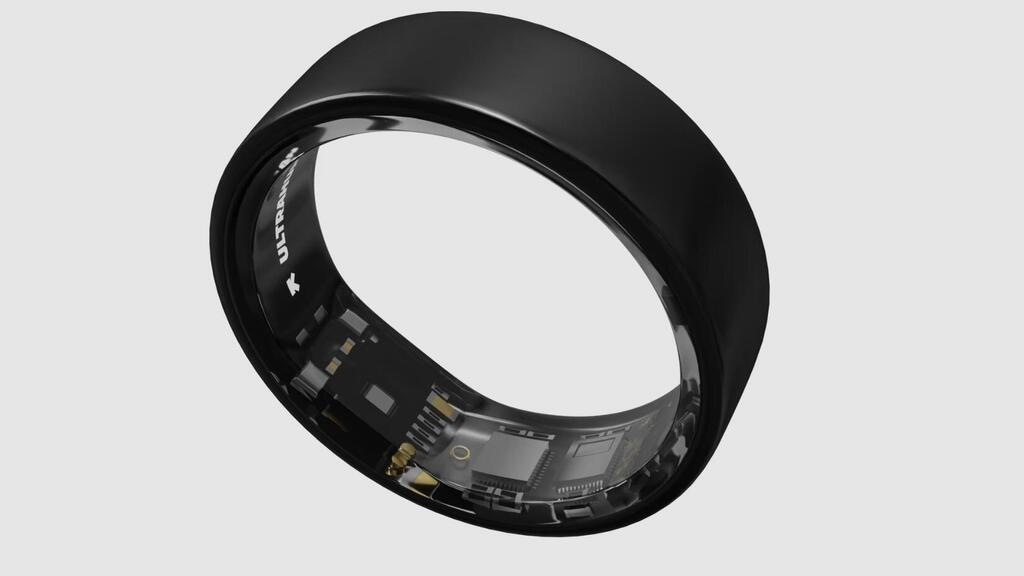
The ring was launched in 2022 through Kickstarter and has since become a favorite among smart ring enthusiasts, alongside the well-known and established company Oura. I received the Ring Air model for review and wore it day and night for more than a month — on walks, while sleeping and throughout my daily routine.
It is a thin and very lightweight ring, weighing about 2.4 grams. Although it is thicker than a regular ring, it is barely noticeable on the finger and comfortable to wear even during sleep, unlike a smartwatch. The body of the ring is made of titanium and is water-resistant up to 100 meters.
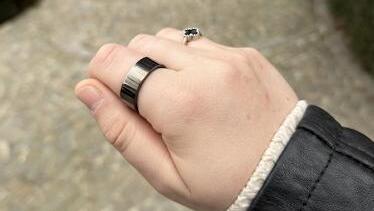
Ultrahuman Ring Air
(Photo: Daniela Ginzburg)
Metrics you will not find on a watch
The Ring Air does not try to be a ring for everyone. It is designed primarily for those who live and breathe health metrics. Alongside standard heart rate and sleep tracking, it also provides data on brain activity and your circadian rhythm. The ring even offers information about your “caffeine window,” in other words, when you should, or should not, drink coffee.
For those who thrive on metrics, it is paradise. For others, all this data can feel like a crash course in physiology. The system offers little explanation of the information it collects, assuming you already understand why the timing of light exposure matters and what it means to shift your biological clock. More than once, I found myself stopping to reread the data to understand what it was telling me.
One of the ring’s more intriguing features is its attempt to assess how effectively the brain’s glymphatic system, the nighttime “waste clearance” mechanism, functioned. This is a metric rarely found in other wearable devices.
That said, the feature does not yet feel fully developed. On one hand, I woke up to see I had received a score of 60 for brain activity. On the other, the only guidance the ring offered was “sleep better tonight,” without further detail or practical advice, such as trying breathing exercises or reducing smartphone scrolling before bed.
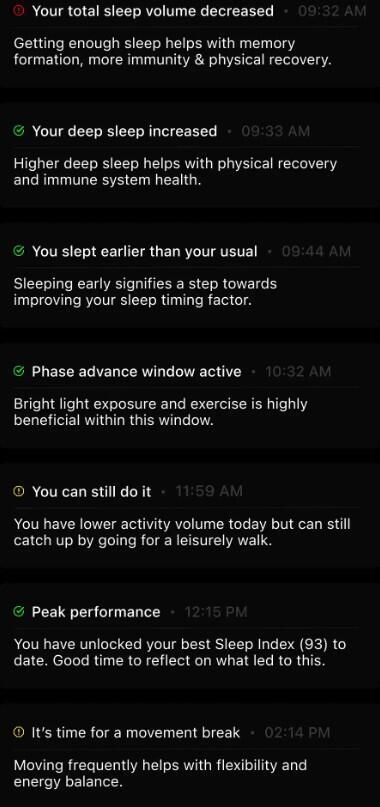
When the ring does offer tips, they are generally useful
(Photo: Ultrahuman)
When the ring does provide useful tips, particularly around sleep, they are good — short, practical and covering areas such as late workouts, meal timing and, as noted, caffeine timing. I was surprised to discover how significant my wake-up time was in determining the hour of my last cup of coffee, and I became much more aware of the issue.
Another notable advantage is the investment in women’s health. The ring includes menstrual cycle and ovulation tracking, with a dedicated algorithm and the option to log symptoms and moods. The expanded version requires an additional fee, but it is a solid option for those who want to monitor these metrics.
A sleek but cluttered app
At first glance, the app is clear, minimalist and visually appealing. In practice, however, it feels somewhat cluttered and disorganized. There is a great deal of text but not enough clear hierarchy. It was not always clear which metric required my attention and which was marginal. Everything felt equally urgent.
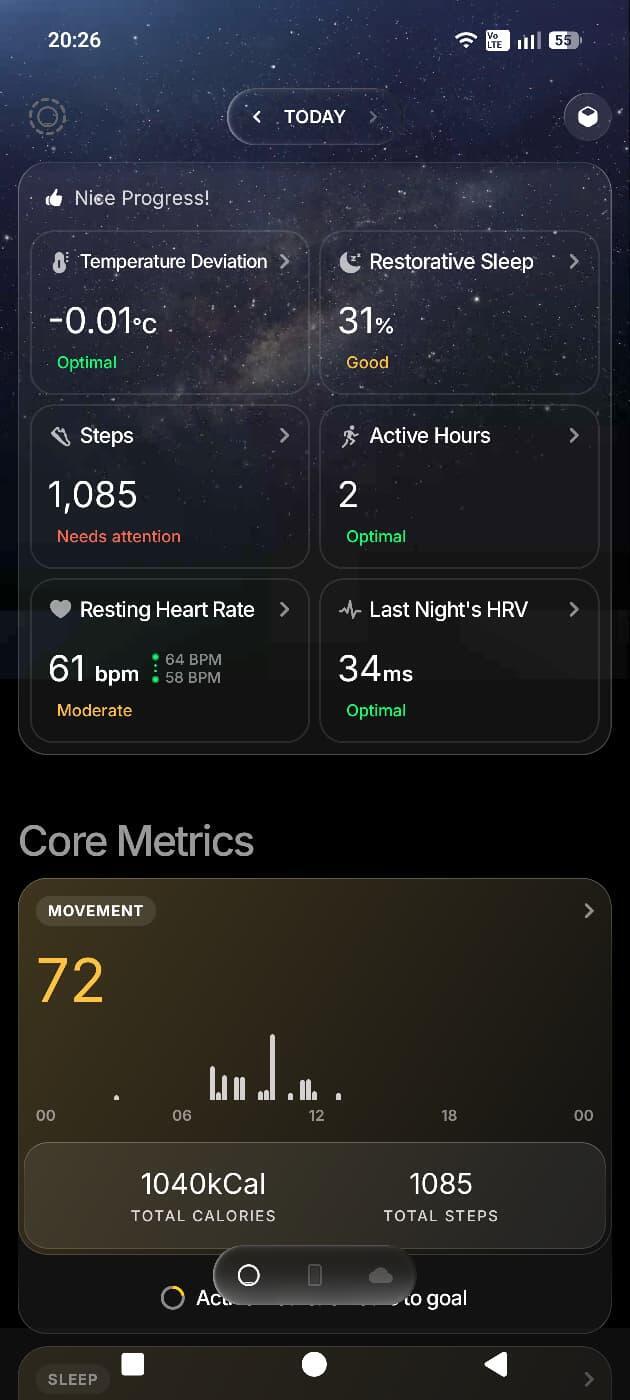
A sleek app, but somewhat cluttered
(Photo: Screenshot)
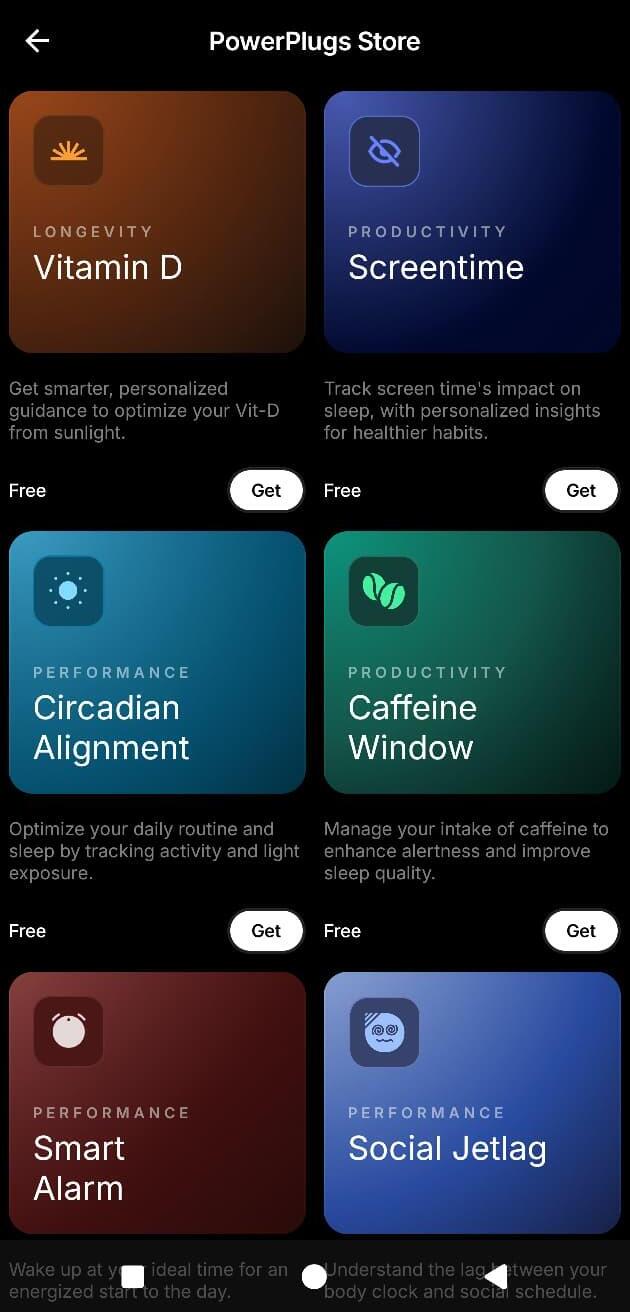
Although the ring comes with a fairly wide range of preinstalled features, the Ultrahuman in-app store offers additional tools such as optimizing sun exposure hours, tracking “social jet lag,” or even a smart alarm clock based on your sleep goals. These tools further enhance the experience, and some are free, making them worth exploring and installing according to your interests.
(Photo: Screenshot)
There's room for improvement
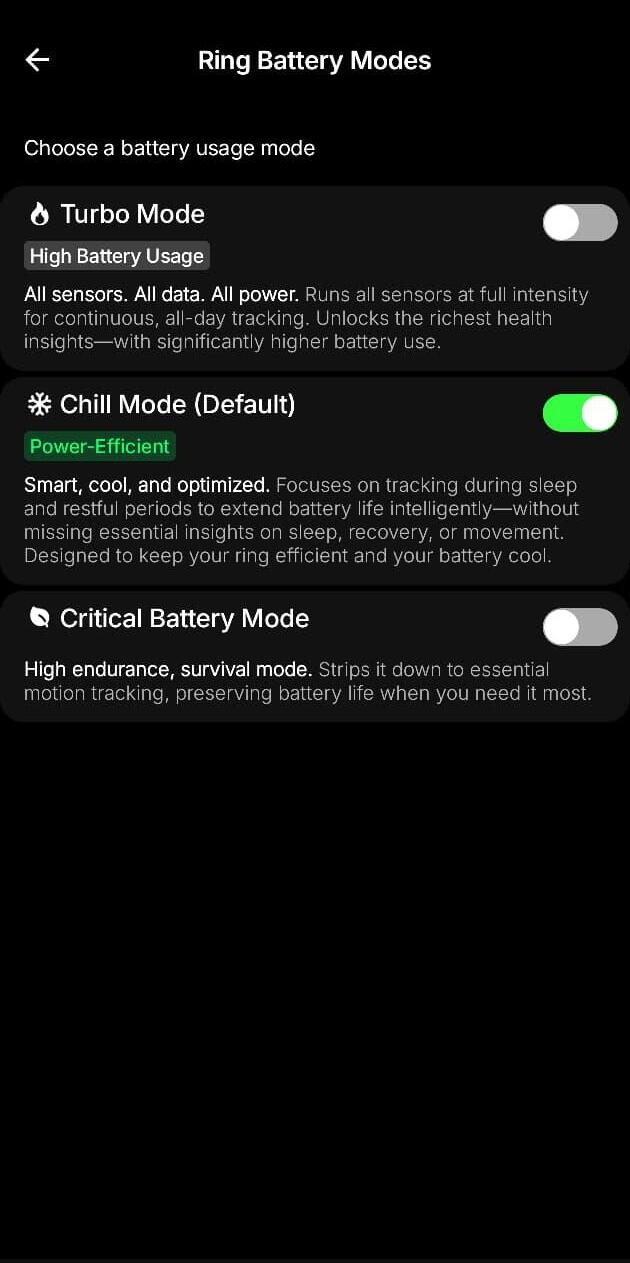
The ring does not particularly excel in battery life. The app offers three modes: “Turbo,” which measures everything continuously; “Chill,” a smart optimization mode that tracks key metrics while conserving battery; and “Power Saver,” which measures only the most critical metrics to extend battery life.
Battery duration varies accordingly. In Turbo mode, the battery lasted about four days. In Chill mode, it lasted up to six days without charging. For a smart ring that claims to measure my brain data, that feels somewhat limited. Between a smartphone, smartwatch and earbuds, remembering to charge yet another wearable device every few days can be frustrating.
In terms of accuracy, I noticed a gap between the steps counted by the ring and those recorded by my Apple Watch. In my case, the difference was not dramatic — a few hundred additional steps in favor of the ring.
In any case, step counting is inherently imprecise, whether measured by a watch or a smart ring. I treated the figure as a general indicator and nothing more.
The ring’s operating modes
(Photo: Screenshot)
The bottom line
The Ultrahuman Ring Air is not just another step-counting ring. It is a gadget that seeks to provide a deeper biological snapshot. It ventures into areas most wearable devices avoid — the brain, the circadian clock and longevity.
In other words, it is not designed for those focused on hitting 10,000 steps a day. It is for people curious about what happens in their brain at night, what their body temperature says about recovery and why their biological age is what it is. It offers a glimpse into a very different world.
“The ring is priced at 1,399 shekels (about $450). It is not cheap, but it is not expensive relative to competitors. The app is also available in Hebrew. For sizing, customers can measure in the importer’s stores or order a sizing kit for home delivery at a cost of 20 shekels (about $6.50).