

Israeli-founded cybersecurity companies account for nearly half of Fortune's newly released Cyber 60 list for 2027, with 29 of the 60 selected startups founded or co-founded by Israelis, underscoring the country's prominent role in the global cybersecurity industry.
Now in its fourth year, the annual ranking recognizes venture-backed cybersecurity startups based on revenue, growth and business performance. More than 300 companies were evaluated for this year's list, which is divided into three categories: growth, early growth and early stage.

Israeli-founded companies accounted for six of the 20 growth-stage selections, 11 of the 20 early-growth companies, or 55%, and 12 of the 20 early-stage startups, representing 60% of that category.
The companies span a broad range of cybersecurity technologies, from established enterprise security platforms to emerging startups developing artificial intelligence systems designed to detect threats, protect sensitive information and secure increasingly autonomous software.
Among the most prominent Israeli-founded companies on the list is Cato Networks, which combines enterprise networking and cybersecurity services through a global cloud platform.

Cato Networks co-founder Shlomo Kramer
(Photo: Cato Networks)
Founded by Shlomo Kramer and Gur Shatz, Cato allows organizations to apply consistent security policies across offices, remote employees, cloud applications and AI services, providing security teams with centralized visibility and control.
The company reported more than 4,800 customers and annual recurring revenue exceeding $415 million in the second quarter of 2026, placing it among the more established companies recognized in the growth-stage category.
Another growth-stage selection, Island, has built its business around the enterprise browser, a technology designed to give organizations greater control over how employees access applications and handle corporate information.

Island co-founder Dan Amiga
(Photo: Island)
Founded by Dan Amiga and Mike Fey, Island has expanded its platform to govern work performed by both employees and AI agents. Its technology connects application access, identity management, data protection and network security, allowing organizations to monitor and control actions as they occur.
In September 2026, the company announced a $400 million funding round that valued it at $6.4 billion.
The ranking also highlights a growing group of Israeli-founded startups focused specifically on the security challenges posed by artificial intelligence.
Among them is Noma Security, an early-growth company founded in 2023 by Niv Braun and Alon Tron.
Noma develops technology to protect enterprise AI applications and autonomous agents throughout their operational lifecycle. Its platform combines discovery, security testing, access controls and real-time protection, allowing organizations to evaluate what an AI agent has permission to do, what it was instructed to do and how it actually behaves.

Noma Security co-founders Niv Braun and Alon Tron
(Photo: Omer Hacohen)
The technology is designed to help security teams identify potentially dangerous actions and intervene before sensitive information or systems are compromised.
Noma has raised $132 million in funding.
Several other Israeli-founded companies recognized in the early-stage category are developing technologies aimed at addressing vulnerabilities in cloud infrastructure and enterprise systems.
Act Security, founded in 2025 by Jonathan Langer, Itay Kirshenbaum, Stephan Goldberg and Ilai Fallach, focuses on excessive access permissions in cloud environments.
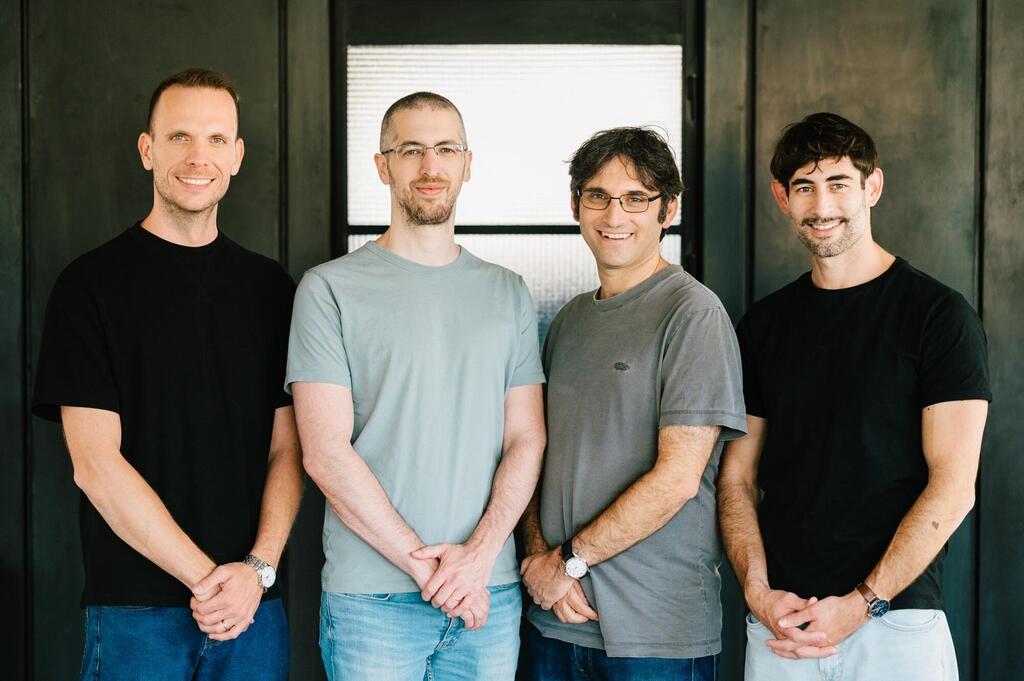
Act Security founders
(Photo: Netanel Tobias)
Its platform analyzes identity permissions, network connectivity and application context to determine which systems and resources users or applications can actually reach. It then helps organizations eliminate unnecessary access and close potential attack paths without disrupting legitimate operations.
Act emerged from stealth in July 2026, announcing $60 million in funding.
Astelia, founded by Alon Noy, Nadav Ostrovsky and Roy Rajwan, takes a different approach to vulnerability management by examining which security weaknesses attackers could realistically exploit within a particular organization.
Rather than treating every identified vulnerability as equally urgent, Astelia maps network paths, system configurations and existing security controls to determine whether the conditions necessary for an attack are present.

Astelia founders
(Photo: Astelia)
The technology allows security teams to prioritize vulnerabilities that pose a genuine risk and identify alternatives to software patches, including changes to network controls.
The company announced $35 million in funding in February 2026.
Another early-stage selection, Bold Security, focuses on protecting sensitive corporate information on employee computers.

Bold Security founders
(Photo: Omer Hacohen)
Founded by Nati Hazut, Hadar Krasner and Omri Mallis, Bold uses AI models that operate locally on devices to analyze both the content employees handle and the context of their actions.
Its technology is designed to distinguish legitimate business activity from potentially dangerous behavior, such as transferring confidential information to personal accounts or unauthorized AI tools.
The platform addresses data loss prevention, insider threats and risks associated with workplace AI adoption.
Bold launched publicly in March 2026 with $40 million in funding.
Other companies are using artificial intelligence not only as something to protect, but also as a tool for conducting cybersecurity operations.
Corma Labs, founded in 2025 by Alon Pluda, develops foundation models specifically designed for cyber defense.
The company uses those models to power AI agents that work alongside security teams within their existing software environments, analyzing security data and carrying out defensive tasks.

Corma Labs founder Alon Pluda
(Photo: Avishag Shaar-Yashuv)
Organizations can determine which actions the agents are permitted to perform independently and which require human approval.
Corma emerged from stealth in August 2026 with $60 million in seed funding led by venture capital firm Sequoia Capital.
Neo, another early-stage company, focuses on controlling software as applications increasingly incorporate autonomous capabilities.
Founded by Nick Warner, Shlomi Salem and Eran Shirazi, Neo develops technology that identifies AI agents, software extensions and other components operating within enterprise applications.

Neo founders
(Photo: Netanel Tobias)
Its platform evaluates their configurations and monitors their actions, allowing security teams to approve, block or require human authorization before potentially sensitive operations take place.
Neo announced $100 million in funding when it launched publicly in July 2026.
AI security emerges as a major focus
The prominence of AI-related companies reflects a broader shift in cybersecurity as businesses increasingly deploy autonomous agents capable of accessing sensitive information, interacting with software tools and making changes to corporate systems on behalf of employees.
Unlike conventional software, these agents can perform sequences of actions with limited human supervision, creating new security challenges involving permissions, data access and accountability.
Several Israeli-founded companies on Fortune's list are developing tools to monitor and restrict those actions, while others focus on preventing sensitive information from leaving corporate environments or reducing unnecessary access to critical systems.
A separate group is developing AI-powered defensive systems capable of identifying vulnerabilities, investigating suspicious activity and carrying out cybersecurity tasks that traditionally required human analysts.
The technologies reflect two parallel developments in the industry: the growing need to secure AI-powered business operations and the increasing use of AI itself to strengthen cyber defenses.
The 29 Israeli-founded companies on Fortune's Cyber 60 list
The Israeli-founded startups selected for the 2027 ranking are divided into three categories according to their stage of development.
Growth stage (6 companies): Cato Networks, Cyera, Eon, Island, Torq and Upwind Security.
Early growth (11 companies): Blink Ops, Clutch Security, Descope, Irregular, Linx Security, Noma Security, Ocean, Onyx Security, Reco, 7AI and Vega.
Early stage (12 companies): A Security, Act Security, Air Security (AIR), Artemis Security, Astelia, Bold Security, Corma Labs, Cylake, Frontier Security, Glow, Neo and Oz Security.
Together, the 29 companies represent approximately 48% of the entire Cyber 60 ranking.
Their presence across all three categories illustrates the breadth of Israeli involvement in the cybersecurity industry, from established companies serving thousands of enterprise customers to newly launched startups attracting substantial venture capital investment.
The particularly strong representation in the early-growth and early-stage categories also points to a pipeline of Israeli-founded companies developing technologies for emerging cybersecurity challenges, particularly those associated with AI adoption and increasingly autonomous enterprise systems.