

A database containing personal information on nearly every Israeli citizen is available online to anyone willing to pay a nominal fee of up to a few dozen dollars. According to information obtained by ynet, the database is accessible through a well-known social chat platform and a dedicated website. It is based on a combination of the Agron database and data from the Elector app. Agron itself was leaked in 2006, after earlier databases had already been exposed.
All of these databases are based on various versions of Israel's voter registry. The registry was initially distributed to candidates and political parties on CD-ROMs, and illegal copies soon began to leak.
Gallery
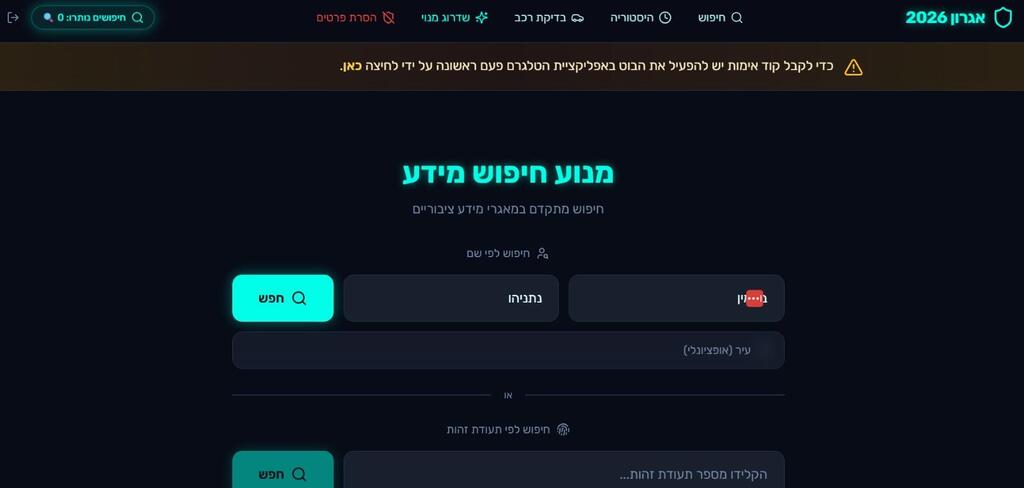
From the Agron database, which contains information on nearly every Israeli citizen
(Photo: Screenshot)
The Agron database appeared on file-sharing services in 2006. The Elector app’s voter database was the latest in a long line of such databases. It was leaked online in 2020 after the app was hacked due to the company's poor data security.
The current website draws on all these databases, and its operators offer the ability to cross-reference the information with additional services, such as identifying a vehicle by its license plate number or disabled parking permit. Although these additional services are also available to the public, the Agron and Elector databases, however, are designated for use by political parties during elections under Israel’s Privacy Protection Law.
A serious threat
The danger this time is more serious than ever. The database, which has likely already fallen into the hands of hostile actors and may even be operated by them, allows users to cross-reference information in ways previous databases did not. The "Agron 2026 Bot," as it is called on the website, can also identify connections among immediate family members. We found, for example, that entering a single ID number can reveal the person's immediate relatives, including siblings.
The combination of easy access to the data and the ability to cross-reference it makes the database a powerful and dangerous tool in the hands of malicious actors, whether criminals or those motivated by nationalist aims. Simple searches and cross-referencing can reveal home addresses, updated as recently as six years ago, as well as ID numbers, phone numbers and vehicle registration details — information that could be used, for example, to threaten virtually anyone.
It is easy to imagine this information being used for criminal purposes. Combining the data with artificial intelligence capabilities could pose an even greater threat than what has been available to date.
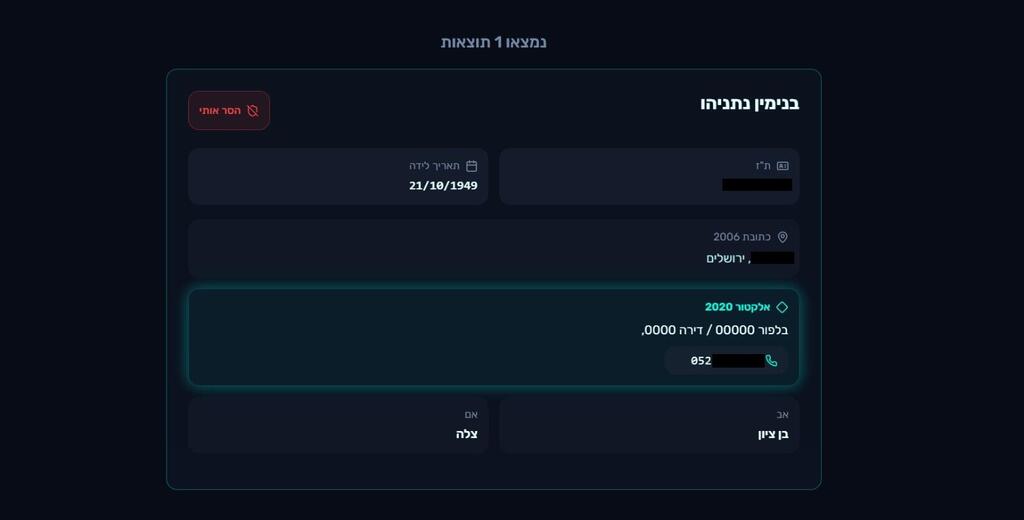
From the Agron database, which contains information on nearly every Israeli citizen
(Photo: Screenshot)
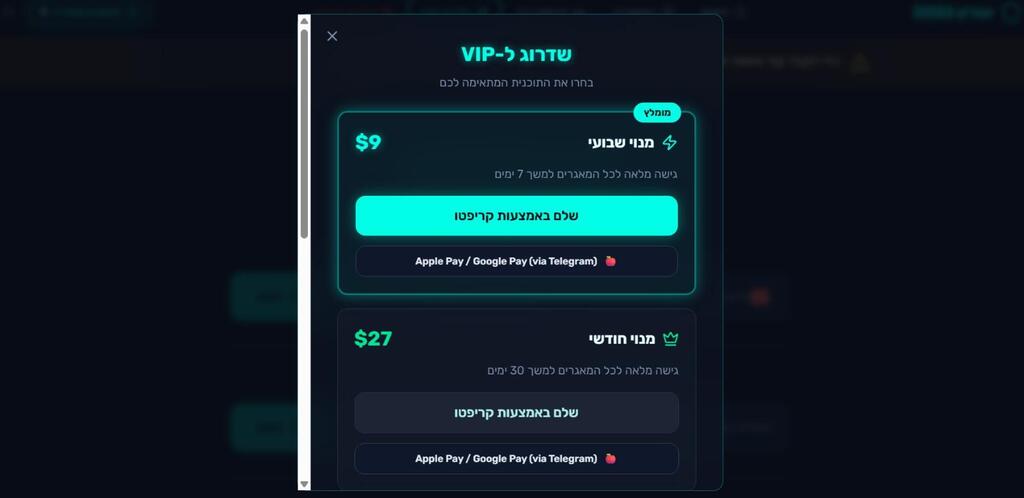
From the Agron database, which contains information on nearly every Israeli citizen
(Photo: Screenshot)
This leak is yet another warning sign of the death of privacy in the internet age in general and the social media era in particular. It also demonstrates just how easily information can be obtained about anyone, including people in sensitive positions. One need only imagine what could happen if someone tried to blackmail the head of the Mossad, the head of the Shin Bet or senior military officers, particularly at a time like this.
A red flag amid blatant disregard
This blatant disregard for the privacy of Israeli citizens' personal data, along with the willingness of various actors to use it for political purposes without oversight, should raise a glaring red flag for the authorities responsible for privacy protection and cybersecurity.
Moreover, according to information obtained by ynet, it is not uncommon for political actors to attempt to use cyber tools to target political rivals. A source in the cybersecurity field confirmed to ynet that the phenomenon is particularly widespread in local government, largely because of poor information security at institutions such as municipalities and local councils.
In any case, it is unclear why political parties or candidates have access to the voter registry. The creation of the current database may be connected to a High Court of Justice ruling barring the use of the Elector app on Election Day to encourage potential voters to cast ballots.
Using the bot could circumvent that restriction because the database is clearly illegal and operates without oversight. After discovering the database, ynet contacted the relevant authorities, but as of the publication of this article, the bot and the website linked to it still appeared to be available online.
The Privacy Protection Authority said in response: "The matter is being examined by the Privacy Protection Authority in order to consider the use of various tools at the authority's disposal or cooperation with other law enforcement agencies on the matter."