

The problem that inspired Flair will be familiar to almost anyone who has tried shopping for clothes online: hundreds of products, endless possibilities and, after scrolling through all of them, sometimes nothing to show for it.
For seven Israeli teenagers, that frustration became a technology project. Talia Ohana, Michal Yegudayev, Noa Korchka, Gaya Ashad, Noy Abramov, Hili Datshi and Maayan Wodja developed Flair, a digital stylist that attempts to assemble an outfit for a user based initially on just five details: clothing size, shoe size, skin tone, hair color and eye color.
Gallery
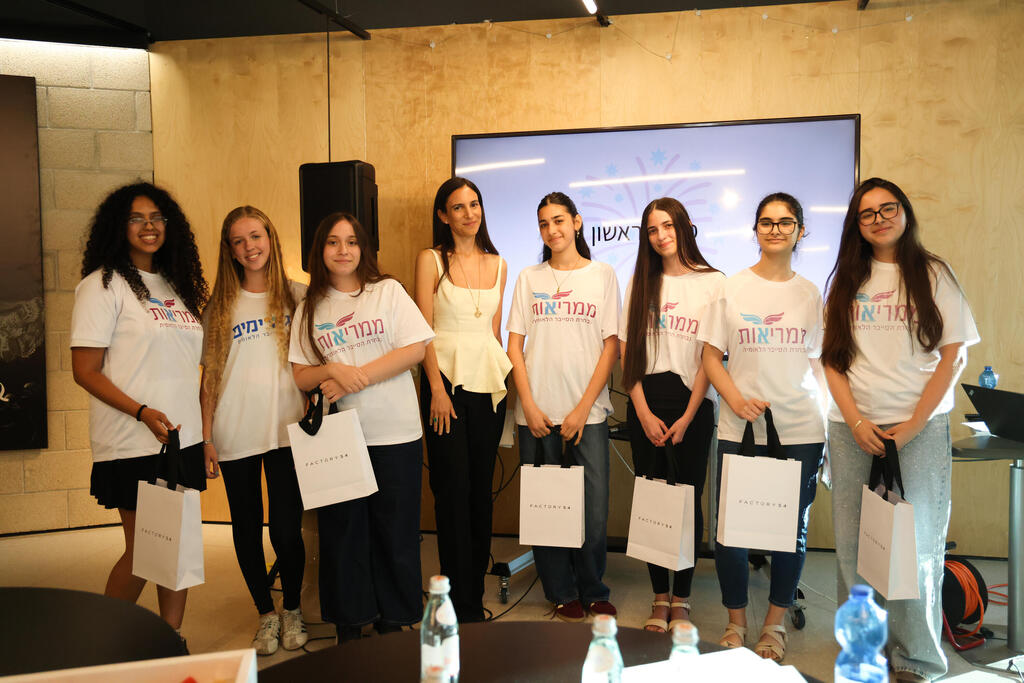
From right: Talia Ohana, Michal Yegudayev, Noa Korchka, Gaya Ashad, Factory 54 co-owner Yifat Irani, Noy Abramov, Hili Datshi and Maayan Wodja
(Photo: Noa Eckhaus)
Flair does not rely only on physical characteristics. Users can also enter an event they are preparing for, and the system considers the type of occasion, season and relevant period of the year, including holidays and special events.
In other words, the goal is to shorten the process of choosing clothes and help users reach suitable items more quickly.
How do you teach a computer what looks good?
Behind the interface is a clothing database built by the developers. Each item is classified according to attributes including category, color, size, style and season.
The algorithm, written in Python and JavaScript, takes the information entered in the questionnaire, filters out unsuitable items and then attempts to construct a complete outfit from what remains. The more complicated challenge was teaching the computer which pieces should actually go together.
Unlike clothing size or season, style is subjective. The developers therefore began with relatively simple rules. The system knows, for example, which categories of clothing can reasonably form an outfit together, with additional rules later added for colors, styles and trends.
To do that, the team researched color combinations and fashion trends and attempted to translate what they found into rules the algorithm could process. “When we built the algorithm, we kept it relatively simple,” they explain.
The initial goal, they say, was to generate outfits whose components “fit together logically,” before adding rules that could also match different styles.
Although the project has been presented as AI-based, the developers’ own technical description suggests that, at least in its current form, Flair is primarily a rule-based recommendation algorithm operating on a structured database rather than a generative AI system.
One of the main challenges, the developers say, was combining all those variables in a single system. The algorithm must consider the user’s characteristics on one side and fashion trends and compatibility rules on the other.
And what happens if the user still dislikes what it chooses? She can simply try again. The developers created several possible outfit combinations, meaning another click can produce a different arrangement from among the items the system has already identified as suitable.
Alongside the algorithm, they built a demonstration website that simulates how the product would work. The user completes the questionnaire and then receives a visual recommendation showing the outfit selected for her.
From cyber to fashion
Flair was developed as part of a collaboration between Israeli fashion retailer Factory 54 and Magshimim, an organization run by the Rashi Foundation. Participants in the Mamriot and Magshimim Cyber and AI programs were given business challenges from the retail world and asked to develop technological solutions.
Other teams worked on projects including demand forecasting and inventory management systems, platforms combining online shopping with social features, gamification tools for the shopping experience and models designed to predict trends and consumer preferences.

(Photo: AI)
The seven teenagers behind Flair reached the project through Mamriot, a technology program for girls.
They say their studies included Python, C++, assembly language, computer networks, operating systems and cybersecurity principles, alongside teamwork, time management and creative problem-solving.
For some, that training has already influenced what comes next. One of the developers, who opted to perform national service, says the program helped her secure the position she wanted.
“Mamriot didn’t teach me only technology,” she says, adding that it also strengthened her ability to tackle complicated tasks and trust her own capabilities.
Some members of the team did not even know one another when the project began. They met, brainstormed ideas and divided work on different parts of the system.
The point at which Flair began feeling like an actual product, they say, came when they finally managed to connect the different pieces of code and saw a result appear on the screen for the first time.
For now, Flair remains a demo. It certainly has not solved one of fashion’s oldest problems: determining what genuinely looks good on a particular person.
But for its seven developers, that was not the only point. They took an ordinary frustration from everyday life and tried to break it down into a database, a set of rules and code that actually works.