

Was the rush to adopt artificial intelligence in business, including widespread layoffs, really supposed to bring major savings to the tech industry?
According to a new survey by accounting giant KPMG, one of the world’s four largest accounting and consulting firms, many international corporate executives are now facing what could be called “invoice shock” over their growing use of AI.
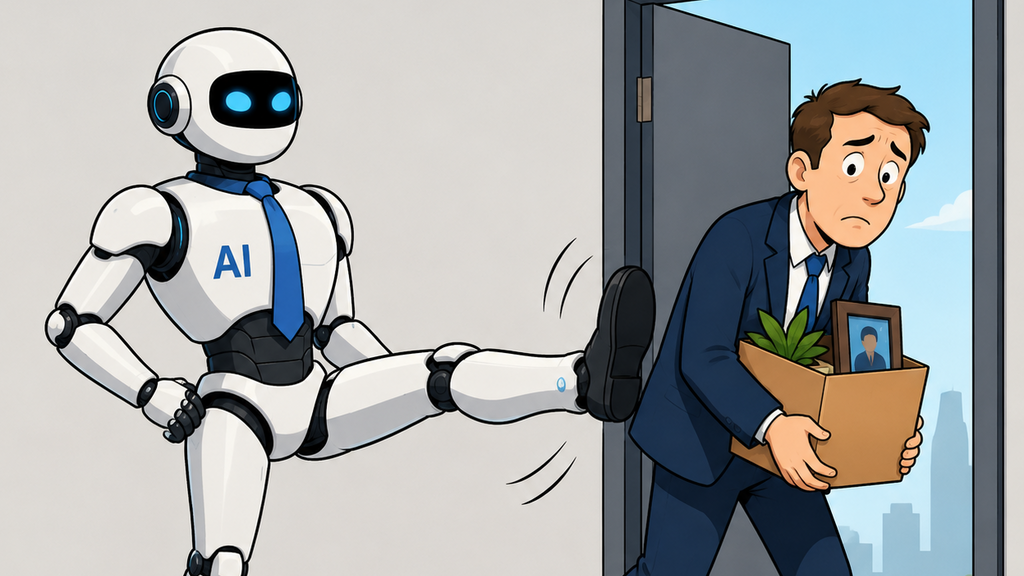
It turns out that while AI companies once subsidized the cost of their large language models through contracts with preset prices, the rising cost of the massive computing power needed to run AI systems is now reshaping the technology sector and driving sharp price increases.
Just a few months ago, CEOs were still pushing employees to maximize AI use for tasks such as coding, in a trend that was even nicknamed “token-maxxing.”
Amazon reportedly began ranking workers by the number of AI “tokens” they used, as though they were competing in a video game, until it discovered that some employees were running AI agents on useless tasks just to boost their numbers. Meta also encouraged heavier AI use by factoring it into employee performance reviews.
Now, companies are starting to hesitate. After workers became hooked on AI-based coding tools, the cost of using them is proving increasingly hard to control.
The KPMG report, first published by the British technology news site The Register, surveyed 2,145 senior executives in 20 countries. It found that 29% of them were surprised by the rising costs associated with AI.
In other words, nearly a third of senior executives around the world were swept up in the AI hype without planning in advance how to use it efficiently and responsibly. That reality is becoming clearer now that the meter is running.

Replacing human capital with AI may prove more expensive than keeping workers
(Photo: Shutterstock)
An Nvidia executive recently acknowledged that he spends more on AI costs for his research team than he pays the employees themselves.
Axios reported on an unidentified company that spent $500 million in a single month on Claude usage fees because it had not placed limits on employee licenses. Another recent study found that the most AI-based businesses spend about $7,500 per employee each month on artificial intelligence.
The findings reinforce the suspicion that a worrying number of corporate leaders have treated AI as a “replacement solution,” including for workers, without careful planning, a full understanding of the implications or much connection to reality.
According to The Register, executives’ limited understanding of “AI economics,” a new field that still lacks years of accumulated experience, has become a major obstacle to successful AI adoption in workplaces.
“As usage-based pricing models become more common, organizations are now starting to build the capabilities needed to forecast, monitor and manage AI spending effectively,” the report’s authors wrote.
The bad news, according to the site, is that this situation has helped create a global financial market that, by some measures, looks worse than the period before the Great Depression.
AI, or more precisely the myth surrounding it, is also being used around the world as a disciplinary tool in the workplace. Because many employees fear losing their jobs to AI, they are less likely to negotiate over pay and benefits.
Many managers are using the technology not only as a justification for mass layoffs, but also as a way to intimidate workers.
For companies that believed replacing human capital with AI would automatically cut costs, the emerging lesson may be uncomfortable: automation can be expensive, especially when no one is watching the bill.