

Generative artificial intelligence systems used by hundreds of millions of people around the world may preserve and spread stereotypical representations of Jews, even when they do not produce explicitly antisemitic content, according to a new Israeli study.
The study was conducted by Prof. Michael Gilead of Tel Aviv University’s School of Psychological Sciences and Dr. Gal Gutman of Ben-Gurion University of the Negev’s Faculty of Management. It was published in the journal American Psychologist.

The researchers set out to examine how Jews are represented inside advanced language models, including ChatGPT, DeepSeek and Mistral. They noted that such models are trained on enormous quantities of human-written text, including books, websites, articles, social media posts and other material, and therefore may reflect cultural patterns and biases already present in human society.
To expose hidden bias, the researchers developed a method that avoided asking the models directly about Jews. Instead, they asked the models to generate hundreds of short biographies of fictional characters with Jewish and non-Jewish names. They then removed all identifying details, including the names themselves, and asked the models to assess the characters’ personality traits, social status and psychological characteristics.
This allowed the researchers to examine which traits had been embedded in the fictional characters from the outset based solely on the names assigned to them.
The results were consistent: characters with Jewish names were described as more intelligent, more efficient, more assertive and as having stronger leadership abilities. At the same time, they were perceived as less likable, less socially warm and more privileged, powerful and influential. They were also assigned higher tendencies toward obsessiveness, order and self-control.
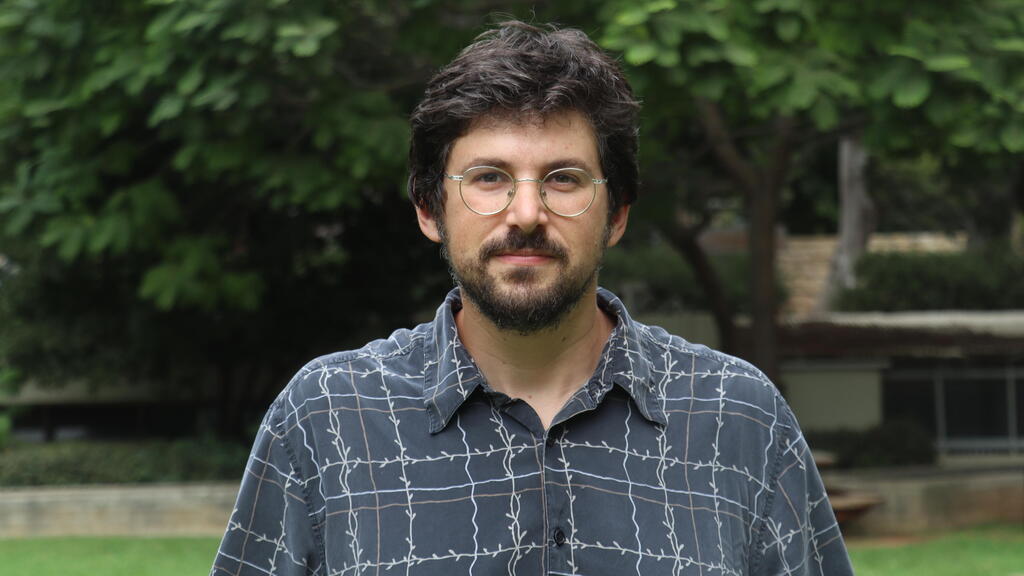
Prof. Michael Gilead
(Photo: Tel Aviv University)
According to the researchers, the problem does not lie in any one of these traits on its own. Intelligence, efficiency and long-term thinking are positive characteristics. But when combined with perceptions of power, social distance, control and rigidity, they form a stereotypical figure that resembles familiar antisemitic representations from the past.
To illustrate this, the researchers asked the models to translate the cluster of traits into familiar fictional characters. Several figures appeared repeatedly, including Sherlock Holmes, Dr. House, Walter White from Breaking Bad, Tony Stark, also known as Iron Man, Michael Corleone from The Godfather, and other characters marked by exceptional intelligence, extreme independence, moral complexity and often social alienation.
“These characters are not Jewish, of course,” Gilead said. “But they represent a certain cultural stereotype: a brilliant, powerful, calculated person who is highly focused on his goals, but is also socially distant and sometimes perceived as someone who operates by his own rules. This is exactly the kind of image that appeared when the models were asked to describe characters with Jewish names.”
The researchers said none of the traits identified in the study is antisemitic by itself. But when they converge into a shared vector of characteristics, including intelligence, capability, assertiveness, dominance, self-control, obsessive tendencies and social distance, they create a complex representation layered with meaning.
That representation, they said, is translated into characters marked by high ability but low emotional accessibility, as well as power and social influence. In this way, it reflects a deeper structure of historic stereotypes about Jews.
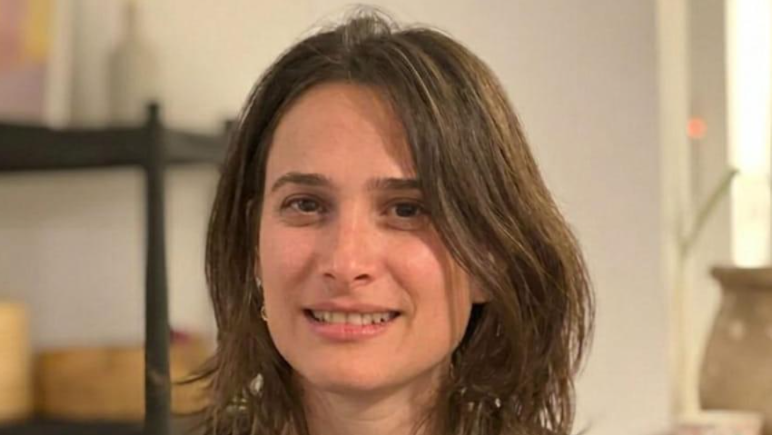
Dr. Gal Gutman
(Photo: Noam Locker Zombak)
The findings were further reinforced when tested both through other artificial intelligence models and with hundreds of human participants in the United States. People who read the biographies, without knowing whether they originated from Jewish or non-Jewish names, identified similar patterns.
“Artificial intelligence systems do not express antisemitism in an intentional or conscious sense, but they may reproduce patterns of representation and cultural stereotypes embedded in the data sets on which they were trained,” Gutman said.
She said AI systems largely reflect the content and cultural structures found in human society, meaning historic biases do not simply disappear. Instead, they may be preserved at the deeper structural level of the knowledge that models learn.
One important finding, the researchers said, is that these patterns may appear even in models that have undergone alignment and bias-reduction processes. In other words, even when mechanisms are designed to prevent offensive or discriminatory outputs, some biases may still remain embedded in the system.
The researchers said that as artificial intelligence becomes increasingly integrated into education, employment, public services and decision-making, it is important to examine not only overt expressions of hate, but also the hidden cultural assumptions and stereotypes that may be encoded deep within the systems themselves.