

A new web series titled “Not an Innocent Game” has been launched by the Lebanese newspaper Al-Akhbar, known for its affiliation with Hezbollah, featuring short episodes on the paper’s YouTube channel and X platform.
Launched on October 18, the series aims to “expose the political idea hiding behind video games produced by the West — especially the U.S.” The outlet behind the series is associated with one of the region’s most controversial terror‑linked organizations.
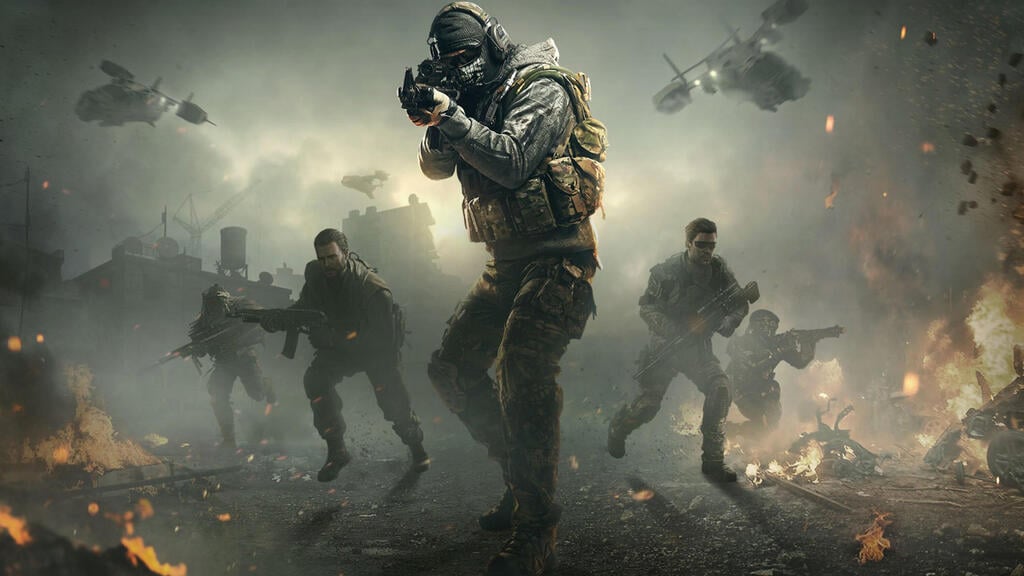
In a promo video released before the series aired, the host — identifying himself as gamer Mohammad Karkhi — asked, “Why are we always the evil Arabs and they the heroes?” He addressed viewers directly: “The controller is in your hands, but who wrote the picture in your head?”
He emphasized that “Not an Innocent Game” is not against video games per se — he is, after all, a gamer — but against the “lies” they present. He cautioned viewers to watch for the “cunning” embedded within them. The series is released each Saturday; in every multi-minute episode, Karkhi selects a game and analyzes it as part of what he calls “Western brainwashing.”
The games discussed are not necessarily recent. In the most recent episode, Karkhi examined "Medal of Honor," once popular in the early 2000s during the U.S. war in Afghanistan. He criticized it for always portraying Americans as heroes, and casting the problem as always coming from the Middle East. He argued that young audiences are taught to believe every war America fights in the region is a just war, a war of freedom — when in reality wars leave destruction, displacement and millions of civilian victims.
Anti-US messages and the Middle East
Anti‑U.S. messages also appeared in earlier episodes. In the fifth installment (out of seven so far), Karkhi discussed "Spec Ops: The Line," set in the Emirates.
"The game may look exciting from the outside, but inside it conceals propaganda more dangerous than bullets," he claimed. "The story takes place in Dubai. The city is drowning in chaos after a sandstorm — and here come the Americans as if they are the saviors, arriving to fix the situation. The game tells you: ‘See how difficult the American soldier’s decision is, how much he bears on his shoulders.’”
Karkhi added: “The game never shows you that the East is capable of dealing with its problems alone — instead it suggests America must intervene and save the situation. Dubai, with its famous skyscrapers, suddenly becomes just a backdrop. The truth is, the game plants the idea that the West equals hope and the East equals disaster.”
In episode three, he criticized "Homefront," a game depicting a hypothetical U.S. occupation by North Korea. According to Karkhi, the game conveys that everything outside America — from East Asia to the Middle East — is a threat. He argued that when “resistance” doesn’t come from the American side it’s immediately labeled as terrorism, but when Americans fight, it’s hailed as heroism. “If resistance rises in Lebanon, Palestine or Iraq it is immediately terrorism,” he said. Hezbollah and similar groups refer to themselves as “resistance,” framing their actions in this way.
Concern over 'brainwashing' young people in Lebanon
A review of Al‑Akhbar’s recent publications shows growing alarm about what the paper sees as the “brainwashing” of Lebanon’s youth — not only through gaming but across media consumption. The paper has recently published critical articles about Lebanese and other Arab media outlets, accusing them of broadcasting the “enemy narrative.”
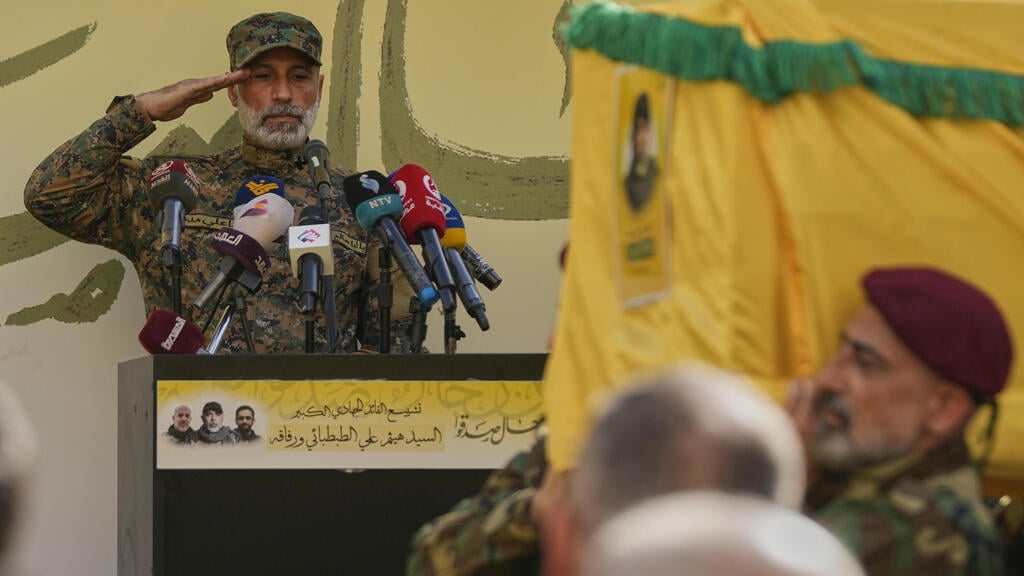
Funeral of Hezbollah’s military chief, Haytham Ali Tabatabai
(Photo: Hussein Malla/AP)
Following last week’s assassination of Hezbollah’s military chief, Haytham Ali Tabatabai, Al‑Akhbar published pieces claiming that Lebanese media coverage uncritically relayed the Israeli narrative. The paper argued that reporting on the assassination was marked by unverified claims, spurred by haste rather than professional journalistic standards.
Critiques were directed at channels like Al-Jadeed and MTV Lebanon, with Al‑Akhbar accusing them of switching overnight — after the killing — to live coverage and constant updates, whereas they had routinely ignored attacks in southern Lebanon and the Bekaa Valley.