

When students return to the classroom at the end of the summer break, one of the biggest changes will already be waiting for them on their phones and computers. Students are using AI to summarize material, solve problems, prepare presentations and write assignments. According to a survey by Israel’s National Authority for Measurement and Evaluation in Education, 57% of Israeli students already use AI tools, while only 36% say their school teaches them how to use them. The question, then, is no longer whether AI will enter the education system, but what schools should do now that it is already here.
The central challenge is that AI is blurring the line between completing an assignment and actually learning. A student can submit a better paper without improving their writing skills, chose the correct answer without understanding how to get there, or turn in an excellent summary without reading the material. “The debate over whether AI will be part of children’s lives is already over,” says Chen Bareket, an expert in social and technological innovation in education. “The responsibility of the education system is to teach children when to use it and, more importantly, when not to let it do for them what we want them to learn to do on their own.”
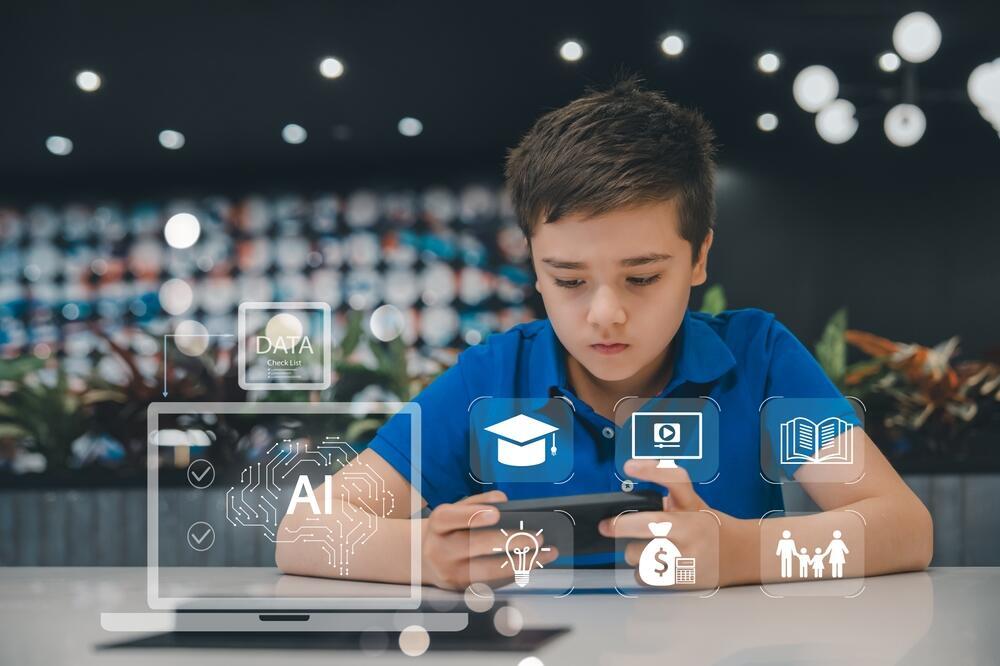
(Photo: Shutterstock)
For parents, that boundary is becoming less clear as well. On the one hand, they know their children will need to understand and use these tools in the future. On the other, there is growing concern that convenience could quickly become dependence. Nadav Rose, a father of 2 Kids from Ra’anana in the school system, says: “My concern isn’t the use of AI itself. It’s obvious to me that this is a tool that will be part of their lives. What worries me is the point at which a child no longer tries to do things on he’s own. If the first reaction to every question, assignment or exercise is to open an AI tool, how do we know they have actually learned something rather than simply received an answer?”
That concern is not unique to Israeli parents. Around the world, parents describe a similar tension between preparing children for a technology-driven future and worrying that these tools may remove precisely the activities through which students learn to think, write and cope with difficulty. The question, therefore, is not simply how many students use AI, but how they use it and which parts of the learning process remain their own responsibility.
The solution may not be to ban AI, but to redesign assignments. Instead of asking a student to write another 1,000-word paper, teachers could give them an AI-generated answer and ask them to identify errors, verify sources, compare claims and explain what they would change. Rather than assessing only the final product, schools could evaluate the process as well. The question then shifts from “What is the answer?” to “How do you know the answer is correct?”
Paradoxically, in an era when answers can be generated within seconds, knowledge and critical thinking become more important, not less. To spot an error, students need to understand the subject. To verify a source, they need to know what they are looking for. And to ask a good question, they need to know enough to recognize what is missing. “In a world where answers have become cheap, judgment becomes more valuable,” Bareket says. “Students need to know how to use AI, but also how to challenge it, verify it and question it.”
 Chen Bareket Photo: Courtesy
AI can be an excellent educational tool. It can explain material in a different way, provide personalized practice and help a student who is stuck. But its proper use should begin with the learning objective. If the goal is to teach creative writing, the student may need to explain which version works better and why. If the goal is critical thinking, an AI-generated text may actually be an ideal starting point for analysis.
“The more AI is able to do,” Barkat concludes, “the clearer the education system needs to be about what it expects children to know how to do on their own. Not in order to compete with technology, but so that children know when to use it, when to challenge it and when to simply think for themselves.”
This may not be the school year in which AI enters the classroom. It may be the school year in which schools are forced to redefine what learning actually means.