

Fifteen meters (50 feet) beneath the traffic, skyscrapers and crowded streets of Tel Aviv lies a largely unseen network of concrete tunnels carrying some of the communications infrastructure on which Israel's digital economy depends.
Built more than six decades ago to accommodate thick copper telephone cables, the underground passages now carry thin fiber-optic lines capable of transmitting data for tens of thousands of households. Their entrances are secured, monitored around the clock and designed to trigger an immediate security alert if someone attempts to open them.
Gallery
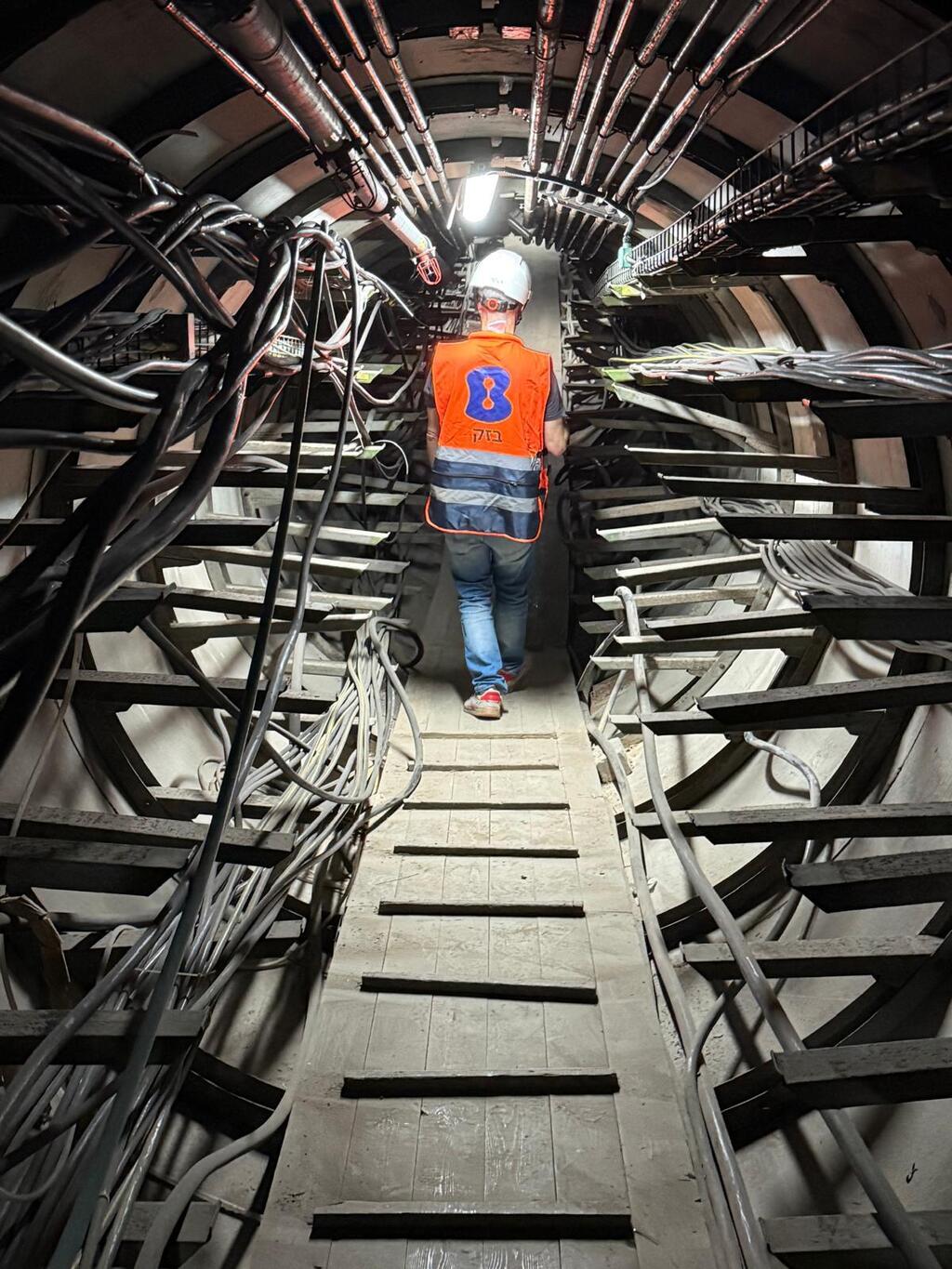
Bezeq personnel work inside the company's decades-old underground communications tunnels, 15 meters beneath the streets of Tel Aviv
(Photo: Bezeq)
On Sunday, Israeli telecommunications giant Bezeq gave journalists a rare look inside the longest of its four underground communications tunnels, offering a glimpse of the aging infrastructure supporting an increasingly connected country.
The tunnels, excavated during the 1950s and 1960s, extend a combined 10 kilometers (6.2 miles) beneath Tel Aviv and connect the company's main service areas.
Their continued importance comes as artificial intelligence drives a sharp increase in internet activity, placing growing demands on the networks that connect homes, businesses and data centers.
A Cold War-era network beneath a modern city
When the tunnels were constructed, Israel's telecommunications infrastructure relied on bulky copper cables that required considerable underground space.
The arrival of fiber-optic technology transformed the system.
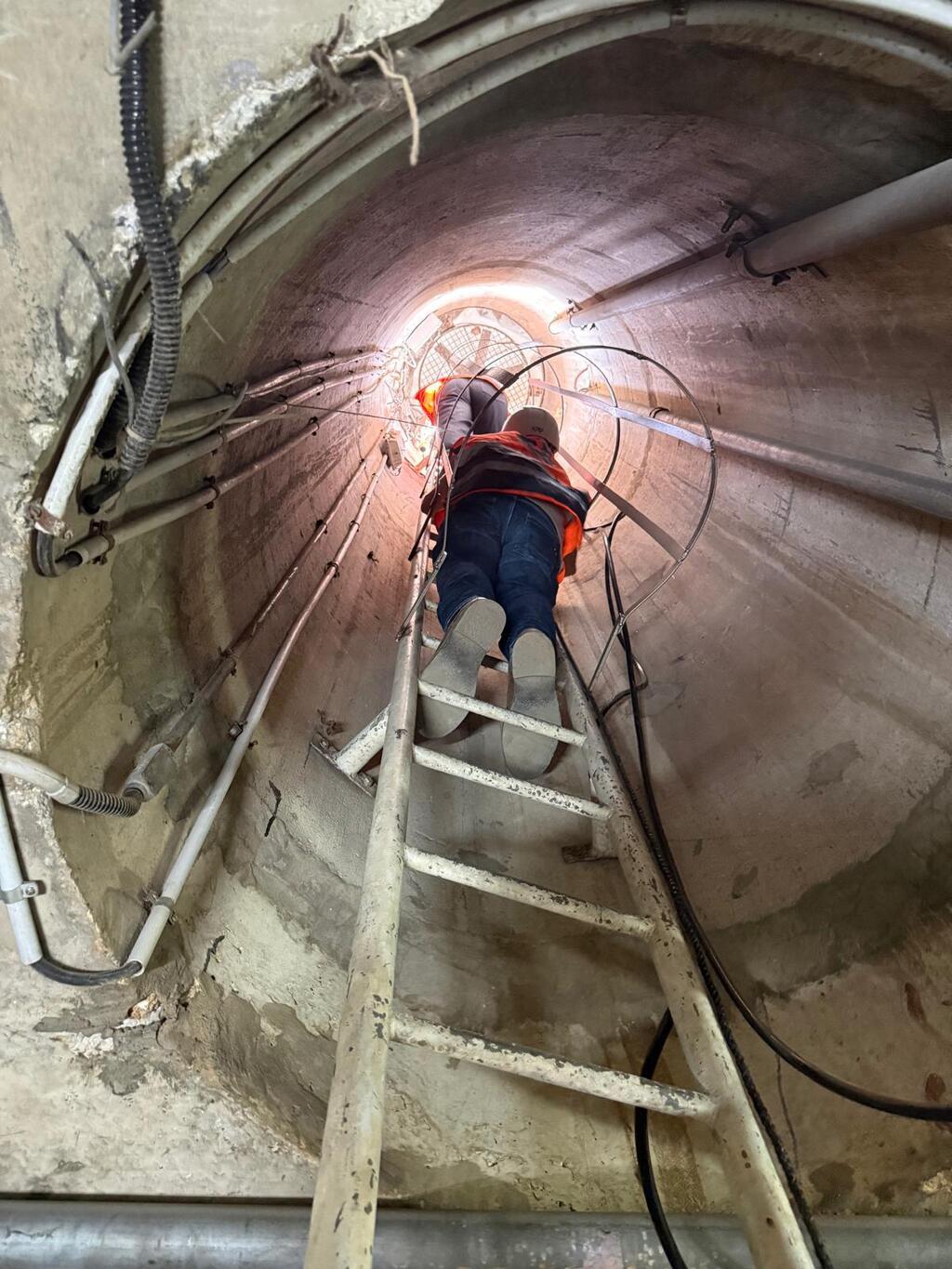
(Photo: Bezeq)
Today, the tunnels carry comparatively thin fiber-optic cables belonging to Bezeq and other telecommunications providers. Each cable can handle communications traffic serving tens of thousands of households, allowing far greater volumes of data to travel through substantially less physical infrastructure.
The technological shift has also made the tunnels something of a relic.
Bezeq has not excavated similar underground passages for years, relying instead on conventional underground cable installation. Modern trenching methods allow technicians to access communications lines more quickly and conveniently when faults occur, eliminating the need to construct large, walkable tunnels.
Yet the old passages retain an important advantage: protection.
Located approximately 15 meters underground and enclosed in concrete, the tunnels are considered by Bezeq to be Israel's most protected and resilient underground communications infrastructure.
The longest tunnel has eight entrances, all secured with specialized locking systems and monitored 24 hours a day, seven days a week, by the company's security operations center.
Any attempt to open an entrance immediately generates an alert, prompting a real-time security response.
The combination of depth, concrete construction and continuous surveillance makes the network particularly valuable at a time when reliable communications are considered essential during both routine operations and national emergencies.
AI traffic triples in just three months
The underground tour coincided with Bezeq's announcement of a dramatic increase in artificial intelligence activity among its residential internet customers.
According to the company, AI-related activity on its network has tripled over the past three months, with annual growth reaching thousands of percent — an unprecedented rate for its fiber-optic infrastructure.
The increase reflects growing use of AI-powered chatbots, educational applications, task-planning tools and personal assistants accessed through home internet connections.
As consumers increasingly incorporate artificial intelligence into their daily routines, the communications networks linking users to remote computing systems are becoming more important.
Bezeq executives said the sharp rise in AI activity, combined with growing dependence on the technology, underscores the need for secure and resilient communications infrastructure that can operate reliably in both normal conditions and emergencies.
The company's figures illustrate the speed at which AI is changing internet usage patterns, adding new demands to networks already carrying streaming video, online gaming, remote work and other data-intensive services.
The invisible backbone of Israel's AI economy
Bezeq CEO Nir David said the growing use of artificial intelligence was drawing renewed attention to the physical infrastructure connecting computing facilities, technology companies and consumers.
"Behind the artificial intelligence revolution is a communications infrastructure that connects data centers, technology companies and users," David said.
"As AI use expands, so does the importance of the infrastructure that enables information to move," he added. "It's infrastructure that isn't always visible, but it is part of the foundation on which Israel's digital economy rests."