

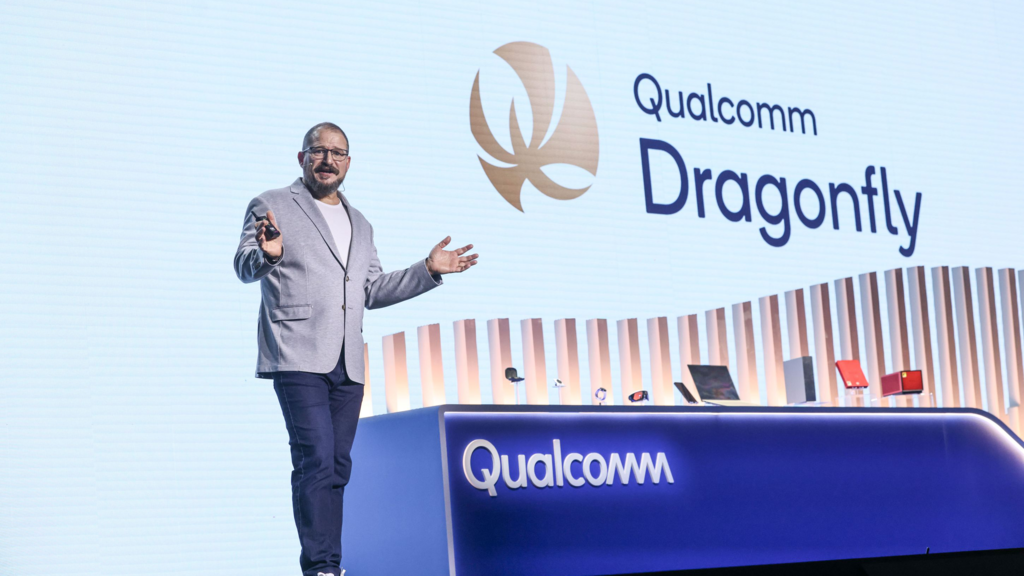
In a dramatic keynote at Computex 2026 in Taiwan, Qualcomm CEO Cristiano Amon declared that 2026 is “the year of agents,” marking what the chip giant sees as the end of the passive chatbot era and the beginning of autonomous AI systems that act on users’ behalf.
According to Amon, the next stage of artificial intelligence will not be defined by chatbots waiting for human prompts, but by “agentic AI”: independent systems that operate in the background, make decisions and carry out complex tasks without constant human supervision.
If Qualcomm’s vision proves correct, the smartphone will lose its long-standing position as the center of our digital lives.
In a historic strategic shift, Qualcomm also used the global stage to announce Dragonfly, its dedicated chip brand for data centers. The move directly challenges the dominance of Nvidia and Intel in servers and cloud infrastructure, and positions Qualcomm as one of the few companies developing silicon and computing architecture from end to end, from tiny wearable devices to massive server farms.
The company’s move into a field traditionally dominated by Intel and AMD also signals a major evolution for ARM-based processors. After proving they can power personal computers, Qualcomm is betting they can also run servers in data centers. Their main advantage is especially low energy consumption, a benefit that data center operators are eager to adopt.
Devices become endpoints, the agent becomes the center
According to Qualcomm’s forecast, the digital ecosystem is about to change beyond recognition. Today, the smartphone is the central hub around which services and apps revolve. In the near future, the company believes autonomous AI agents will become the true center.
Different devices, including smartphones, personal computers, cars and wearables, will become endpoints through which the digital agent communicates with us and moves with us from place to place, without being dependent on one closed operating system.

Is the smartphone era ending?
(Photo: PeopleImages/ Shutterstock)
Amon said future hardware will effectively have “two personalities”: one operated directly by the human user, and another running independently in the background through the AI agent. That change will create an unprecedented engineering challenge in energy and battery management.
Amon said future devices will face a major battery and energy-management challenge as AI agents begin operating in the background alongside the user, requiring more powerful, distributed and efficient computing architecture.
The token economy and the battle over server farms
The shift to autonomous AI agents carrying out countless background actions is expected to create an unprecedented surge in demand for tokens, the basic units of information used by language models. According to Qualcomm, global token demand is expected to jump 40-fold by 2030.
To handle those enormous computing volumes without overwhelming power grids or harming user privacy, the company presented a model it calls a distributed compute continuum, which intelligently divides data-processing workloads between the local device, or edge, and the cloud.
That is where Dragonfly comes in.
Under the new brand, Qualcomm is developing three main product categories for data centers: central server processors based on its advanced Oryon cores; AI accelerators from the AI200 series, set to launch this year, and the AI250 series planned for 2027, designed for large-scale server-level processing; and custom chips that combine ultra-fast data-transfer capabilities, some of them gained through strategic acquisitions in the industry.
Qualcomm’s main selling point against rivals, especially Nvidia, is extreme energy efficiency. Dragonfly accelerators are expected to cut energy consumption by 35% to 70% compared with traditional graphics processors currently used in the market, potentially lowering operating costs dramatically for cloud giants.
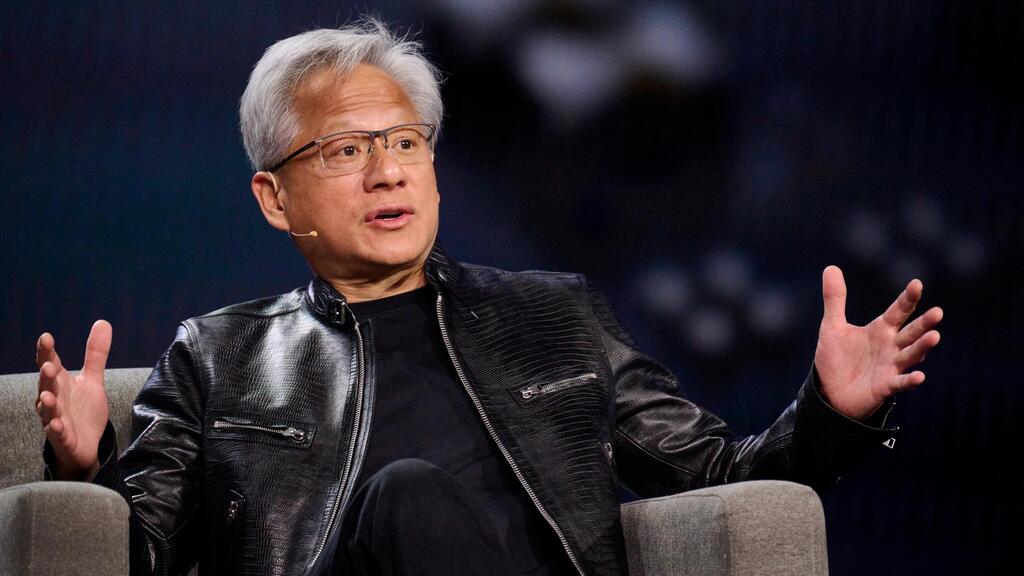
Nvidia CEO Jensen Huang. Qualcomm wants to challenge Nvidia’s server monopoly
(Photo: Bloomberg)
From AI-defined cars to new 6G networks
Qualcomm’s agent vision does not stop at computers and smartphones. The company also presented what it sees as the next stage in the evolution of the auto industry: AI-defined vehicles.
In these cars, two parallel layers of intelligence will operate at the same time. One will be personal intelligence inside the cockpit, serving the passenger experience. The other will be external physical intelligence, based on cameras and sensors that navigate and manage driving and safety independently.
The infrastructure for this system is expected to come from the next generation of cellular communications, 6G networks. Qualcomm describes 6G as the first wireless network designed from the ground up for the AI era. Beyond fast connectivity, these networks will include built-in distributed computing and sensing capabilities.
The radio signals of 6G networks will effectively function as civilian radar systems, enabling the creation of real-time “digital twins” of entire cities for autonomous traffic management, obstacle detection and advanced security.
The evolution of a silicon giant
Qualcomm was founded in the mid-1980s by two Jewish-American computer scientists, and built its fortune and reputation by inventing and establishing early cellular communications standards such as CDMA. It later became the undisputed modem supplier of the global smartphone industry.
In the previous decade, with the rise of its Snapdragon processor brand, Qualcomm became the beating heart of most Android devices worldwide.
But like its competitors in the chip market, Qualcomm understood that relying exclusively on the volatile smartphone market was a strategic risk. Its first attempts to move beyond mobile included laptop processors that did not always deliver the required high-end performance.
Now, in 2026, with its Oryon cores and new NPU accelerators reaching maturity, Qualcomm is completing a full transformation: from a mobile-focused company into a comprehensive computing company capable of challenging the technology chain on every front, from the smallest wearable device to the most powerful servers in the cloud.