

Microsoft on Monday unveiled Maia 300, a powerful new artificial intelligence chip developed in-house, along with a complete computing system designed to support it, as the technology giant steps up efforts to reduce its dependence on Nvidia and secure greater control over the infrastructure powering its AI services.
The company says the new chip and the system built around it can deliver 40% more AI output at the same level of electricity consumption as competing systems based on graphics processing units, or GPUs. Microsoft plans to begin deploying Maia 300 in 2027, when it is expected to become a central platform for running AI models across its products.
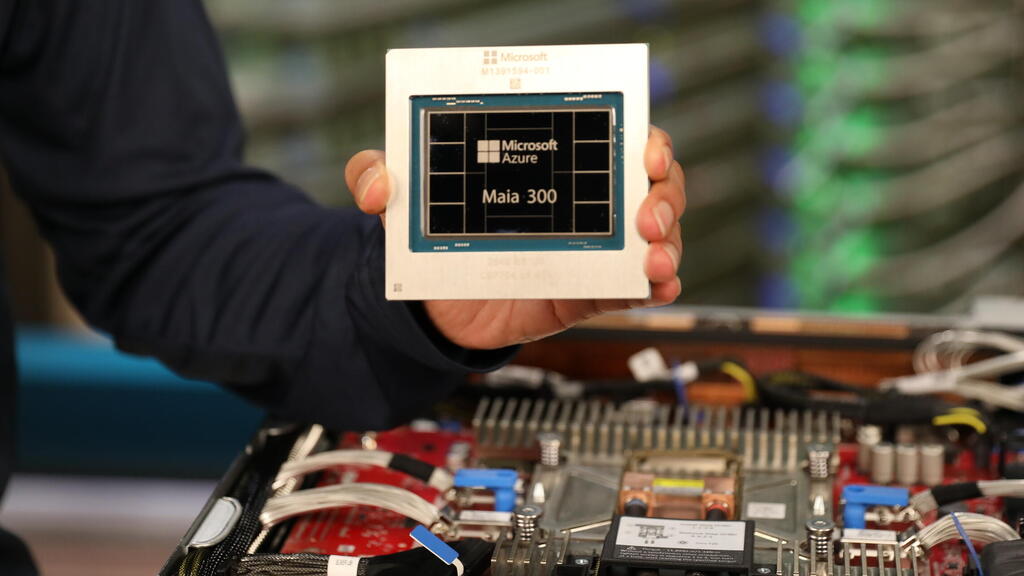
The announcement marks another step in the intensifying competition among technology giants to develop their own AI processors rather than rely heavily on Nvidia, whose chips continue to dominate the market for training advanced AI models.
Maia 300 is a specialized data center processor known as an AI accelerator. It was designed by Microsoft to run AI workloads in the massive data centers supporting its Azure cloud platform, with an emphasis on processing information quickly while using as little electricity as possible.
Microsoft is following a path already taken by Google, which developed its own Tensor Processing Units, or TPUs, and Amazon, which created its Trainium chips. All three companies are seeking to gain greater control over the hardware powering their growing AI operations.
For Microsoft, developing its own processors is also a way to prepare for surging global demand for AI computing power, reduce supply chain bottlenecks and secure a reliable supply of chips without depending entirely on external suppliers.
Built for the age of AI agents
One of the main reasons behind Maia 300 is the rapid rise of AI agents, systems capable of carrying out complex tasks involving multiple steps rather than simply answering individual questions.
These agents require computing infrastructure capable of handling enormous amounts of information, responding quickly and operating efficiently over extended periods. Microsoft says Maia 300 was designed specifically for these increasingly demanding workloads.
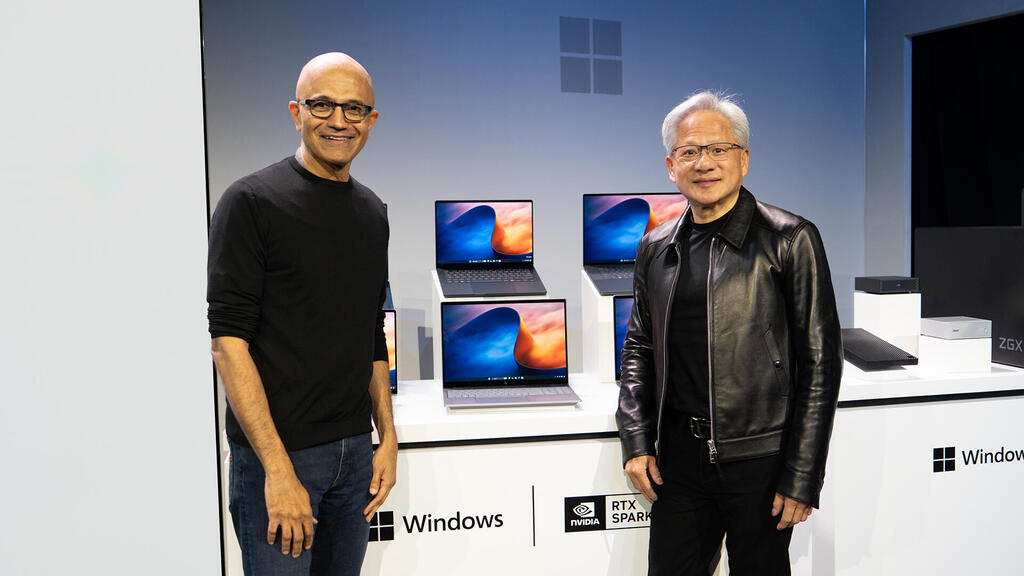
From right: Nvidia CEO Jensen Huang and Microsoft CEO Satya Nadella. The companies remain close partners even as Microsoft works to reduce its dependence on Nvidia's chips
(Photos: Nvidia, Microsoft)
Unlike chips primarily used to train AI models, Maia 300 focuses on a process known as inference. This is the stage at which an already trained model processes a user's request and generates a response.
Training involves teaching a model to recognize patterns and develop capabilities using vast amounts of data. Inference is what happens afterward, when that model is put to work answering questions, analyzing information or completing tasks.
Nvidia's processors still dominate the training market, but Microsoft is positioning Maia 300 as a more efficient alternative for inference, particularly as AI agents become more capable and their computing requirements grow.
According to Microsoft, the new accelerator and its supporting system can produce 40% more tokens at the same power consumption as competing GPU-based platforms. Tokens are the basic units of text that AI models process and generate, making token throughput a key measure of performance for AI services.
Faster data movement, less wasted computing power
Another major focus of Maia 300 is reducing the time needed to move data between the different components of an AI computing system.
In large AI models, information must constantly travel between memory and processors, as well as between multiple accelerators working together. These transfers can create bottlenecks that limit performance even when the processors themselves are extremely powerful.
Microsoft says Maia 300 addresses this problem with an architecture designed to speed up data movement and improve efficiency across the entire system.
The chip provides memory bandwidth of 18 terabytes per second, allowing it to feed large volumes of information to AI models at high speed and support workloads that require substantial memory capacity.
The company says these capabilities will be particularly important for the next generation of AI agents, which will increasingly need to analyze extensive information, maintain context across long interactions and complete complex, multistep assignments.
Can Microsoft loosen Nvidia's grip?
Maia 300 is not Microsoft's first attempt to develop its own AI hardware. The company already operates an earlier system, Maia 200, which supports its Copilot AI assistant and the team developing its next generation of AI models.
Microsoft plans to expand the earlier system's use to additional services by the end of 2026, before beginning deployment of Maia 300 in 2027.
The transition reflects a broader shift in the AI industry. As artificial intelligence becomes embedded in everyday software and AI agents take on more demanding tasks, the cost of running models is becoming increasingly important alongside the computing power required to train them.
For Microsoft, the potential benefits extend beyond performance. Developing its own chips could reduce reliance on Nvidia, ease pressure on hardware supply chains and give the company more control over the costs and availability of computing resources.
The two companies remain major partners, with Nvidia's technology playing an important role in Microsoft's AI infrastructure. But Maia 300 highlights Microsoft's determination to build an increasingly independent hardware ecosystem.
Whether the new chip can meaningfully alter the balance of power in the AI semiconductor market will depend on how it performs once deployment begins in 2027.