

Apple has finally launched its first foldable iPhone, marking one of the biggest design changes in the device's nearly 20-year history. But just as the iPhone Duo reached stores in more than 70 countries over the weekend, one of Silicon Valley's most influential investors delivered a brutal assessment of the company: Apple has spent the past 15 years perfecting its business rather than inventing anything genuinely new.
Peter Thiel, the billionaire co-founder of PayPal and an influential technology investor, made the remarks in an interview with author Walter Isaacson, who wrote the acclaimed biography of Apple co-founder Steve Jobs. The conversation was featured on Isaacson's podcast, The Builders, released Thursday.
Gallery
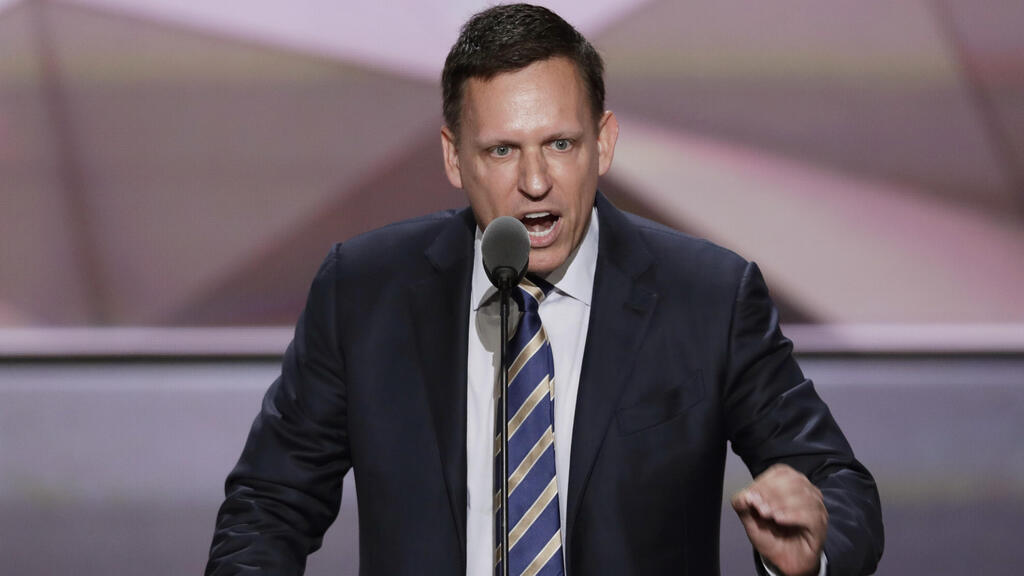
Peter Thiel, the PayPal co-founder and influential Silicon Valley investor, argues that Apple has lost its innovative edge since Steve Jobs' death
(Photo: AP/ J. Scott Applewhite)
Thiel argued that Apple had lost its innovative edge following Jobs' death from cancer in 2011. In his telling, the company "did nothing new after Jobs," despite becoming one of the world's most successful technology businesses.
The original iPhone, he acknowledged, was a revolutionary invention that transformed the mobile phone industry. But Thiel suggested that the breakthrough was so significant that there was relatively little left to reinvent. Instead, Apple spent the following decade and a half expanding its operations, strengthening its brand and refining an already successful product.
He was particularly critical of Tim Cook, who led Apple for 15 years before handing the chief executive position to John Ternus in September 2026. Thiel described Cook as the "anti-Jobs," an exceptionally efficient manager who lacked the visionary qualities of his predecessor.
While acknowledging that Cook's approach had delivered considerable value to shareholders, Thiel argued that entrepreneurs such as Jobs and Elon Musk had contributed substantially more to society.
The comments come at a sensitive moment for Apple, which faces mounting criticism over its ability to remain a technological leader, particularly in advanced smartphone hardware and artificial intelligence.
A $1,999 foldable iPhone, years after Samsung and Huawei
Apple's new iPhone Duo represents its most significant departure from the familiar iPhone design since Jobs introduced the original model in San Francisco in 2007.
The device features a 5.4-inch external display that opens into a 7.6-inch OLED screen, offering a tablet-like experience in a format that folds to approximately the size of a passport.
Powered by Apple's A20 Pro processor, the Duo uses a titanium construction, an advanced hinge mechanism and software adapted specifically for its folding display.
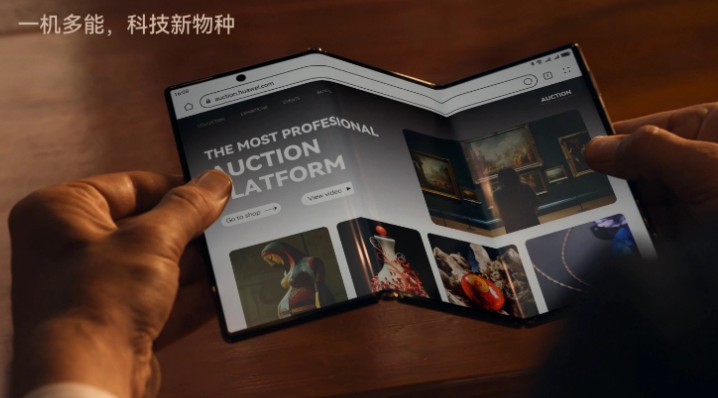
Huawei Mate XT Ultimate, a smartphone featuring a three-part folding display
(Photo: Huawei/Screenshot)
The starting price is $1,999 in the United States, while official Israeli pricing exceeds 8,500 shekels, placing it firmly in the premium smartphone category.
However, achieving the device's folding design required compromises. Apple abandoned its familiar Face ID facial recognition system in favor of a Touch ID fingerprint sensor integrated into the side button.
The Duo also lacks the dedicated telephoto camera found in Apple's Pro models, although its main camera offers a 2x optical-quality zoom option.
For critics, these trade-offs are especially difficult to ignore because Apple is entering a market in which its competitors have already spent years improving similar products.
Samsung began selling foldable smartphones commercially in 2019 and has since developed multiple generations of its Galaxy Z Fold series, refining the design, durability and software experience.
Chinese manufacturers have moved even further in some areas. Huawei already markets its Mate XT series, which features a three-part folding display, while competitors including Honor and Xiaomi have introduced increasingly thin and lightweight foldable devices.
Huawei recently reported that cumulative shipments of its foldable smartphones had exceeded 20 million units. Industry estimates also placed the company at roughly half of worldwide foldable smartphone shipments in the second quarter of 2026.
At 254 grams, the iPhone Duo is not among the lightest devices in its category. Its design is sophisticated, but the folding concept itself is no longer revolutionary.
This creates an uncomfortable question for Apple: Is the company once again redefining how people use smartphones, or has it simply arrived late with a more polished version of an existing product?
Artificial intelligence exposes another weakness
The criticism extends beyond hardware.
As OpenAI, Anthropic and Google compete to develop increasingly powerful artificial intelligence systems, Apple has faced questions about its ability to keep pace, particularly with Siri, its longtime voice assistant.
For years, Siri was criticized for struggling with complex requests and offering a more limited conversational experience than newer AI assistants.
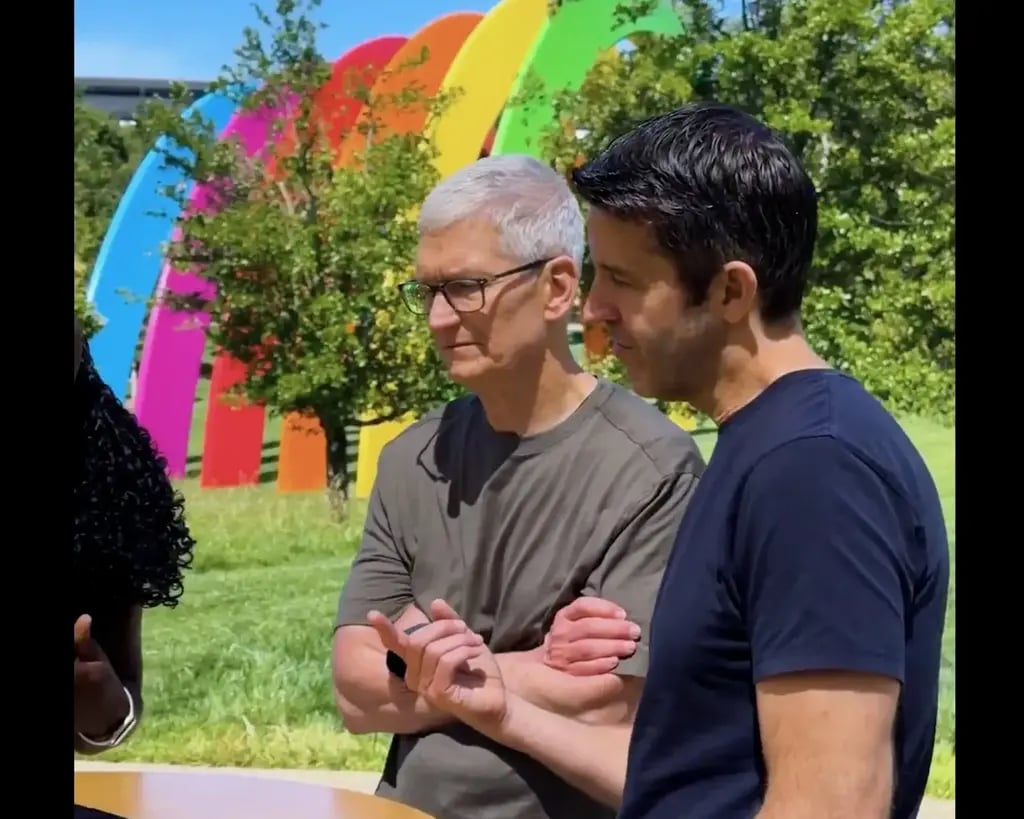
Tim Cook alongside John Ternus, who succeeded him as Apple CEO in September 2026
(Photo: Apple)
Apple has since introduced a substantially redesigned version of Siri, built around a new generation of Apple Intelligence models. But its strategy has also highlighted its dependence on outside technology.
In January, Apple and Google announced a multiyear partnership under which the next generation of Apple's foundation models would be developed using Google's Gemini technology and cloud infrastructure. Those models now form part of the architecture behind Apple's more personalized Siri experience.
Apple continues to integrate the technology into its own operating systems and privacy-focused computing infrastructure. Nevertheless, the decision to rely on a major competitor for foundational AI capabilities illustrates the challenge facing a company once associated with setting the industry's direction rather than following it.
The irony is particularly striking because Google's Android operating system is Apple's principal competitor in the smartphone market, and Gemini also plays a central role in Google's own AI ecosystem.
Apple is still an extraordinary business
Despite his harsh criticism, Thiel does not consider Apple a business failure.
On the contrary, he described it as a "pure, well-run value stock," acknowledging that the company has excelled at generating shareholder returns even without the kind of technological breakthroughs he associates with Jobs.
That distinction is central to his argument: A company can be exceptionally successful financially while losing the ability to transform an industry.
It is also not the first time Thiel has questioned Apple's future. In a 2017 interview with The New York Times, he argued that the era of transformative innovation around the iPhone had effectively ended.
Yet Apple's share price continued to climb in the years that followed, demonstrating that Thiel's skepticism about innovation did not translate into an accurate prediction of the company's financial trajectory.
There are also strong arguments against his assessment.
MacBooks remain widely used by software developers, including professionals working in artificial intelligence, as well as ordinary consumers. Apple's computers continue to benefit from the company's integration of hardware, software and custom-designed processors, even as competitors such as Microsoft and Nvidia challenge its position in different parts of the technology market.
The AirPods, introduced in 2016 under Cook's leadership, helped transform wireless earbuds into a mainstream consumer electronics market worth tens of billions of dollars.
Apple's ecosystem, combining smartphones, computers, accessories, software and services, also remains one of the strongest competitive advantages in the industry.
None of these achievements necessarily matches the impact of the original iPhone, but they complicate the claim that Apple has produced nothing meaningful since Jobs.
Failed bets and the question of what comes next
Thiel's remarks reflect a broader debate within Silicon Valley about whether Apple has become too cautious to take the kinds of risks that once defined it.
Critics point to the company's abandoned autonomous electric car project, which consumed years of development before Apple canceled it in 2024. Some employees were subsequently reassigned to artificial intelligence initiatives.
Another example is the Vision Pro mixed-reality headset. Although technically ambitious, the product struggled to achieve the mass-market impact of Apple's earlier successes.
Together, the projects have reinforced perceptions among critics that Apple increasingly reacts to emerging technological trends rather than creating entirely new markets.
There is an important distinction, however, between failing to invent a product category and failing to innovate within it. Apple has often entered markets after competitors and then used its design, software and distribution capabilities to make those products more appealing to mainstream consumers.
The iPhone Duo could follow that pattern. Its arrival may not represent the birth of foldable smartphones, but Apple will be judged on whether it can improve the experience enough to persuade consumers to adopt them on a much larger scale.
The change in leadership also adds another dimension. Ternus, who previously oversaw Apple's hardware engineering, has inherited a company that remains financially powerful but faces growing pressure to demonstrate its technological ambition.
The ultimate test will not be whether Apple's first foldable iPhone is thinner, faster or more attractive than its competitors. It will be whether the company can turn an established technology into something consumers did not previously realize they needed.
That was the defining achievement of the Jobs era. Whether Apple can repeat it remains the question behind Thiel's attack.