

Google DeepMind CEO Demis Hassabis predicts that artificial general intelligence, or AGI, AI capable of performing tasks that rival human abilities and the goal toward which all AI companies are working, will be achieved by 2030.
‘A new human era’
Hassabis, considered one of the more cautious and measured voices in the field, previously took a more conservative approach. But in a recent interview at Stanford Graduate School of Business, he said: “I believe that we’re only a few years away from that, maybe like 2030 plus or minus a year, which is astounding to think really.”
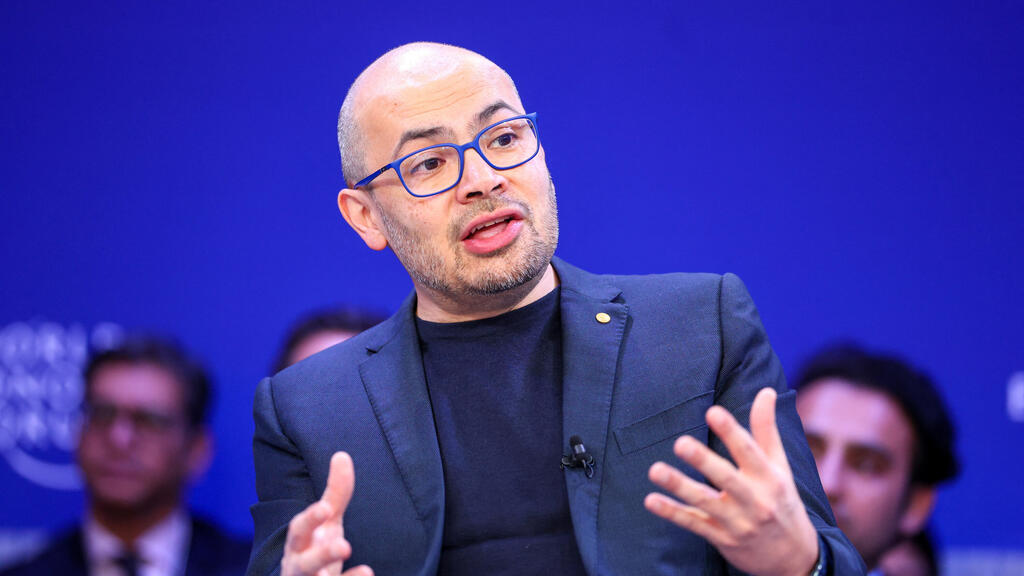
He added: “I think that will be such an enormous transformative technology, it’s going to effectively be a new human era.”
According to Hassabis, whose view aligns with the broader trend among his peers, in 10 years “we’ll realize that we were standing in the foothills of the singularity now,” meaning a point in time when the usual “rules” cease to apply and artificial intelligence surpasses human intelligence and continues improving beyond our control.
“I still think there’s a lot more work and it’s just the beginnings,” Hassabis said. “But I think society needs to hear that because we don’t have long to prepare for what that means and it’s going to be enormously profound.”
In another interview last month, Hassabis said certain human traits will still distinguish people from machines. Over the next five years, he said, people with taste, design sensitivity, original thinking and the ability to synthesize ideas across different fields will be especially well positioned, describing those as skills worth developing.
He added that he expects remarkable new things to be created, expressing strong faith in human resourcefulness. He pointed to everything humanity has built with brains originally shaped for hunter-gatherer life, saying that achievement is extraordinary and there is no reason for human creativity to stop there.
The world’s brain
Hassabis is only one of the world’s leading figures in artificial intelligence to address the issue. Last year, OpenAI CEO Sam Altman wrote in a post that he would be “very surprised” if by 2030 there were not AI systems capable of performing tasks at a level higher than humans in most major fields.

Artificial intelligence
(Photo: Shutterstock)
Altman wrote that humanity is nearing the creation of digital superintelligence, referring to the future stage after AGI, when artificial intelligence surpasses even the smartest human minds. He added that the entire AI industry, not just OpenAI, is effectively building a brain for the world.
By contrast, Anthropic CEO Dario Amodei predicted in an essay published in 2024 that powerful artificial intelligence could arrive as early as late 2026 or early 2027. He sees 2026 as a turning point, when we will see a dramatic leap in the capabilities of AI agents.
His colleague, Anthropic co-founder Jack Clark, and another senior company official, Marina Favaro, wrote in a joint essay published last month that as early as 2027, artificial intelligence systems could complete within minutes tasks that would take humans weeks.
On the other hand, Yann LeCun, a former vice president and chief scientist of Meta’s AI division and a pioneer in neural networks, the visual processing technology behind facial recognition and autonomous vehicles, recently dismissed the idea of general intelligence as baseless. LeCun also believes that today’s familiar large language models are not expected to achieve general or human-level intelligence capable of producing high-value work.
It is important to note that there is no single scientific definition of AGI. While some CEOs refer to it as a system that is smarter than humans in every field, others use more modest definitions, such as “minimum AGI” — systems that can perform human cognitive tasks effectively.