

How often do you really need to upgrade and replace your smartphone? That question has been around for years, and it is not clear there is one definitive answer. Some people feel they have to replace their device every year, while others manage just fine with a model that is several years old. In recent years, the differences between generations have narrowed, and it seems that an upgrade cycle of at least two years is perfectly reasonable.
Google recently launched the Pixel 11, the latest generation of its flagship smartphone, and it reinforces the idea that there is no need to rush to upgrade. As with previous models, most of the new features are in the software.
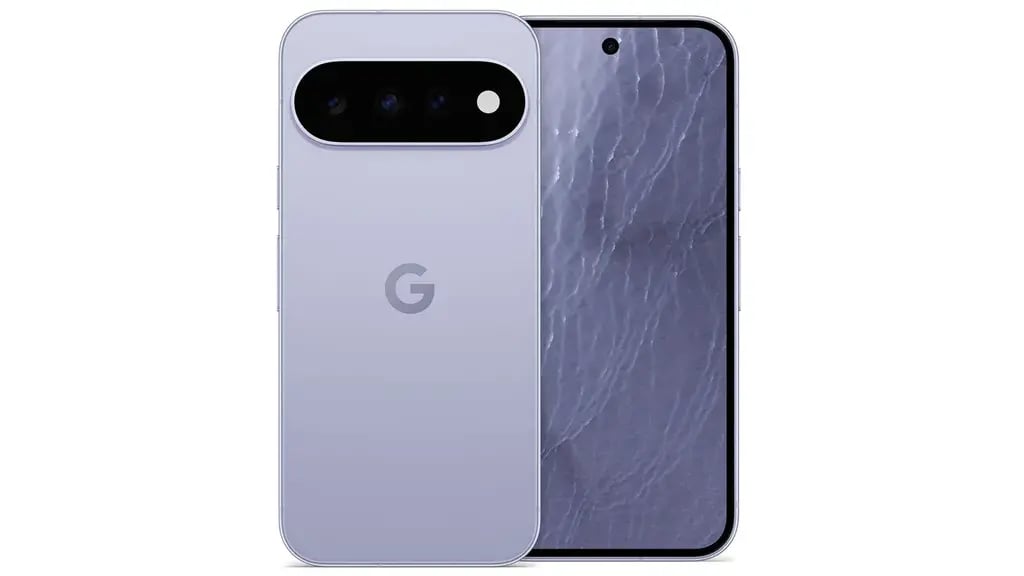
One change does affect availability in Israel: After years in which the Pixel arrived through private importers, including relatively small retail chains, Electra Consumer Products, which owns Mahsanei Hashmal and Shekem Electric, has begun importing Google’s smartphone lineup. We tested the base model.
Design and build: More of the same
Externally, the Pixel 11 is completely identical to the previous model, with exactly the same dimensions. It is slightly lighter, however, shedding 7 grams and now weighing just under 200 grams. That comes after the Pixel 10 itself changed very little from the model before it.
The Pixel 11 feels like one solid piece. It is a little thick and, despite losing some weight, still feels somewhat heavy. The display remains 6.3 inches, and the slightly confusing button arrangement is unchanged: The power button sits on the right side above the volume controls.
The camera bar stretching across the back of the device is still here and protrudes only slightly from the body. When placed on a table or other flat surface, the phone remains stable thanks to the long camera bar and rises only slightly off the surface.
Since everything else remains the same, protection has not changed either. The front and back are covered with Gorilla Glass Victus 2, and the smartphone carries an IP68 rating, meaning it is protected against dust and should survive immersion in water for up to 30 minutes at a depth of 1.5 meters.
Hardware: A little more powerful, and still gets warm
As usual, there is an expected upgrade here: The Pixel 11 is powered by Google’s Tensor G6 processor, compared with the Tensor G5 last year, alongside 12GB of RAM.
There is another welcome and obvious upgrade: Minimum storage has doubled from 128GB on the previous model to 256GB.
The specifications deliver good performance. The phone feels quick, apps open rapidly and it handles every everyday task, and more. But it still tends to heat up somewhat, both when running relatively demanding games and during charging.
That warmth is noticeable even after a relatively short gaming session, another trait inherited from the previous generation.
The display delivers excellent colors, reaches high brightness levels and shows relatively little glare, making it easy to use even in direct sunlight.
Battery capacity has increased slightly to 4,985mAh, enough for about a day and a half to two days of use. The device supports 30-watt charging, although no charger is included in the box.
With a fast charger, charging from 15% to 50% took 20 minutes, while a full charge took about one hour and 20 minutes.
Software and interface: New tools for content creators
This is supposed to be the Pixel 11’s main attraction. Google uses the Pixel line to demonstrate what Android can do, including exclusive features initially available only to buyers of its own devices. Over time, many such upgrades make their way to other manufacturers as well.
Removing objects from photos? Google introduced that back in 2021 as an exclusive feature on the Pixel 6. Today, it is almost standard on smartphones.
So what is new this time?
The Pixel 11 ships with a clean version of Android 17, meaning without additional manufacturer software layered over Google’s operating system. Naturally, it comes with a long list of Google apps, including Drive, Docs, Notebook, Files and more.
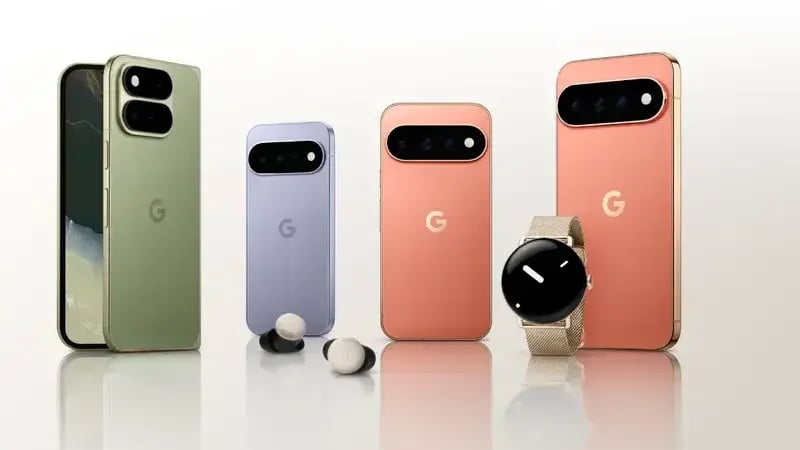
The Pixel series
(Photo: Google)
By default, navigation is gesture-based, without dedicated home or back buttons.
Google is also introducing several additions aimed at content creators. In the camera app, there is a separate “Creator” tab that, among other things, lets users preview how part of the frame will appear on social media so they can plan the shot in advance.
There is also a built-in teleprompter in the camera, allowing users to read text while filming. Photos and videos can also be organized by project so all the relevant material is kept in one place.
Beyond the creator-focused features, there is a shooting mode called “Magic Shot.” The idea is that you simply keep the camera open in video mode and Gemini automatically identifies moments worth saving as still photos, so you do not miss a shot because you were too slow to pull out the phone or press the shutter button.
I found it a little difficult to give up control in favor of automatic photo selection, but the feature does work and generates still images in real time while video is being recorded.
I am still not convinced that the automatic selections are always successful. That is partly a matter of personal preference, and in any case, it means you need to choose video recording every time, which naturally leaves you with more video files taking up storage space.
In short, it is an idea that takes some getting used to.
There is also a tool that was already available on the previous model called “Camera Coach.” Gemini analyzes the image before the photo is taken, breaks it down into different elements and suggests what to focus on to create a better shot.
It still requires some patience and waiting for Gemini’s recommendations to appear instead of simply taking the photo you want immediately.
Gemini is also available in the background in other areas, but some of its newer capabilities are limited to English and/or certain countries.
Google, for example, announced that Gemini would be able to carry out certain tasks in selected apps, such as booking a ride or ordering groceries, but those features are not available in Israel.
Google also introduced a new tool called Rambler, designed to clean up audio recordings by removing unnecessary pauses such as “uh” or “um” and to produce an accurate transcript.
That tool also is unavailable in Hebrew. When I tested it in English, the transcription was not always accurate, and on one occasion it actually left the small, unnecessary pauses in the transcript.
In any case, these innovations, or at least some of them, will presumably reach other devices later, both from Google and from other manufacturers. That makes it difficult to rely on them as features compelling enough to persuade customers to buy a new phone.
Cameras: Excellent in low light
Even without the special shooting modes, and despite the lack of a major camera upgrade compared with the previous model, the Pixel 11 produces very good photos, including at night and in low-light conditions.
The Pixel 11 has three rear cameras: a 48-megapixel main camera, a 10.8-megapixel telephoto camera with 5x optical zoom and a 13-megapixel ultrawide camera.
There is also a 10.5-megapixel selfie camera.
As noted, the cameras produce very good images in daylight and under favorable lighting conditions, while the relatively powerful optical zoom is useful.
The digital zoom is also dependable as long as you stay at around 10x magnification or below. Beyond that, it can still be useful, but image quality may suffer.
In night photography, the images came out significantly brighter than the actual surroundings in which they were taken, while still appearing sharp.
Bottom line
Overall, it feels as though Google could almost have settled for a software update instead of launching the Pixel 11.
The exterior has not changed, and most of the new features come from Android updates and deeper Gemini integration, things that can also be added to existing devices.
The Pixel 11 costs about 3,200 shekels (about $1,000), although there is also a more expensive Pro model. At that price, for example, you can buy a base Galaxy S26 with twice the storage.
The new Pixel also reinforces the conclusion that there is little reason to upgrade every year. If you have an older Android phone, the difference may certainly be significant. But if your current phone is only one or two years old, you can probably wait for the next upgrade.