

The Ramat Gan municipality on Tuesday launched a groundbreaking pilot aimed at transforming accessibility in public transportation, unveiling an artificial intelligence–based system that enables passengers with disabilities to travel independently and safely from bus stop to destination.
The pilot, developed in partnership with Israeli accessibility technology company Step-Hear, has been implemented along Dan Bus Line 67 and is the first project in Israel to deploy a fully integrated, end-to-end accessibility solution across an entire urban route.
Gallery

Ramat Gan launches AI-powered pilot to make public transportation fully accessible
(Photo: Ramat Gan Municipality)
The system uses AI, Bluetooth communication and a smart mobile application to guide passengers through every stage of the journey, from locating the correct bus stop to real-time communication with the driver and alerts during the ride until arrival at the chosen destination. The goal, officials said, is to provide full independence and confidence for people with a wide range of disabilities, including visual, physical, cognitive and hearing impairments.
“True accessibility is not measured by slogans, but by the ability of every resident to move through the city with confidence and full independence,” Ramat Gan Mayor Carmel Shama-Hacohen said. “This pilot on Line 67 reflects our deep commitment to making Ramat Gan a leader in social and technological innovation, a city that sees every person, listens to their needs and works to reduce gaps in practice, not just in words.”
The project is being carried out in cooperation with the Dan public transportation company, part of the Dan Bus Company group. Dan CEO Ofir Karni said the initiative represents “another step in setting a new standard of service and accessibility in public transportation,” adding that accessible transit is a core value for the company.

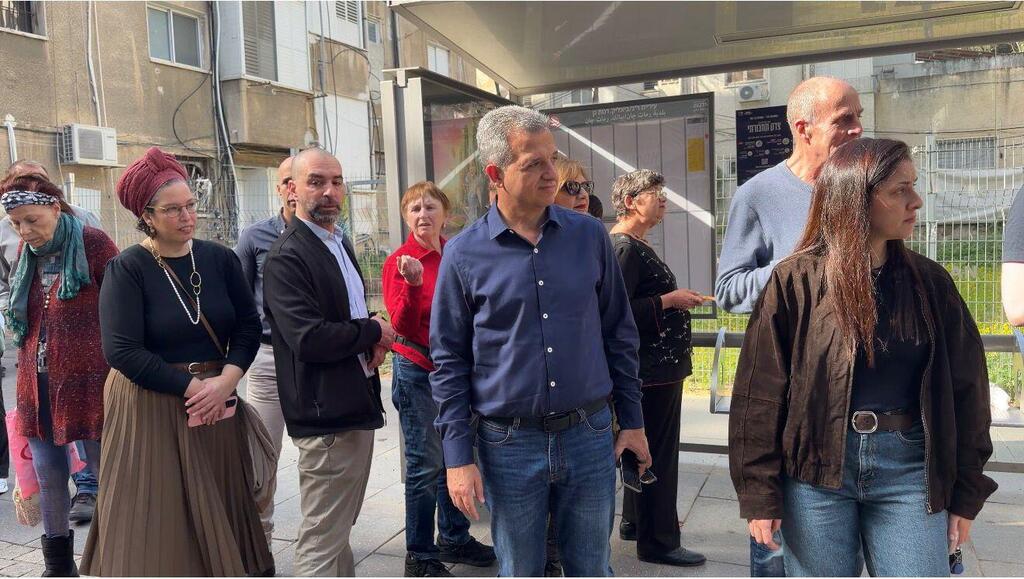
Ramat Gan Mayor Carmel Shama-Hacohen, center, at the launch of the pilot
(Photo: Ramat Gan Municipality)
(Photo: Ramat Gan Municipality)
According to data from the Central Bureau of Statistics, about 20% of the country’s population lives with some form of physical disability. Many avoid public transportation altogether due to inadequate accessibility solutions. City officials say the new system addresses those barriers through a holistic, “all-under-one-roof” approach.
Step-Hear’s platform, which already operates at thousands of accessibility points and public institutions in Israel and abroad, is protected by patents in the United States, Europe and Israel. For the Ramat Gan pilot, the technology was installed along the entire route by the municipality’s information systems department, allowing for a comprehensive real-world test in a dense urban environment.
The innovation spans three critical stages of the journey. At the bus stop, Bluetooth-based identification triggers audio guidance and real-time information on arriving buses. Before boarding, a digital notification is sent directly to the driver’s display, alerting them that a passenger with a disability is waiting at the next stop and allowing time to prepare, for example, by deploying a ramp or stopping closer to the curb. During the ride, personalized alerts notify passengers of progress along the route and signal — via sound, vibration or visual cues — when their destination is approaching.
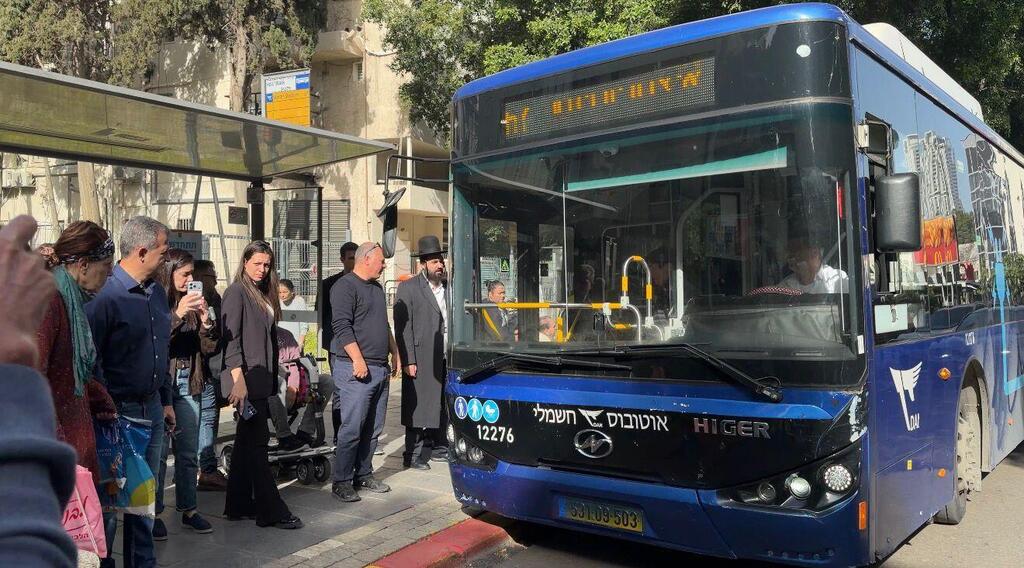
Line 67 in Ramat Gan
(Photo: Ramat Gan Municipality)
The system is tailored to multiple user groups. For people who are blind or visually impaired, it functions as “digital eyes,” providing continuous audio orientation. For passengers with physical disabilities, early driver notification ensures safer boarding and disembarking. For those with cognitive disabilities, simplified, real-time information reduces anxiety and uncertainty. Elderly passengers benefit from a user-friendly interface designed for limited digital literacy, while passengers with hearing impairments receive visual and vibration-based alerts instead of audio announcements.
Orit Benvenisti, CEO of Tigbur Group, which partners with Step-Hear through its “Mehalev” subsidiary, said the pilot marks “a genuine breakthrough” in accessible transportation. “This is not just an advanced technological solution,” she said. “It is a reality-changing tool that grants freedom, independence and security to people who until now avoided public transportation.”
City Council member Edna Weidel, who oversees innovation and information systems, called accessibility “a moral obligation and a social commitment,” noting that its importance has only grown in the wake of the war. Fellow council member Tel Aviv Viderich Didio, who holds the special needs portfolio, said the ability to know in advance which bus is approaching — and that the driver is prepared — “changes the daily reality of many residents.”
Municipal officials said that if successful, the Ramat Gan pilot could pave the way for broader adoption by the Transportation Ministry and other cities, positioning the project as a national model for inclusive, accessible public transit.