

It is happening slowly, but the pace is steadily accelerating. Civilian technologies adopted in recent years for military use in Gaza, Lebanon, Iran and Ukraine are now ‘returning to civilian life’ and becoming a central part of the toolbox used by police and internal security agencies in the fight against crime.
Over the past two years, many police forces have shifted from foot and vehicle patrols to an era of algorithms, autonomous drones and artificial intelligence. Where the patrol car once stood at the heart of policing, that heart now beats inside computer servers and the electronic systems of unmanned aerial vehicles.
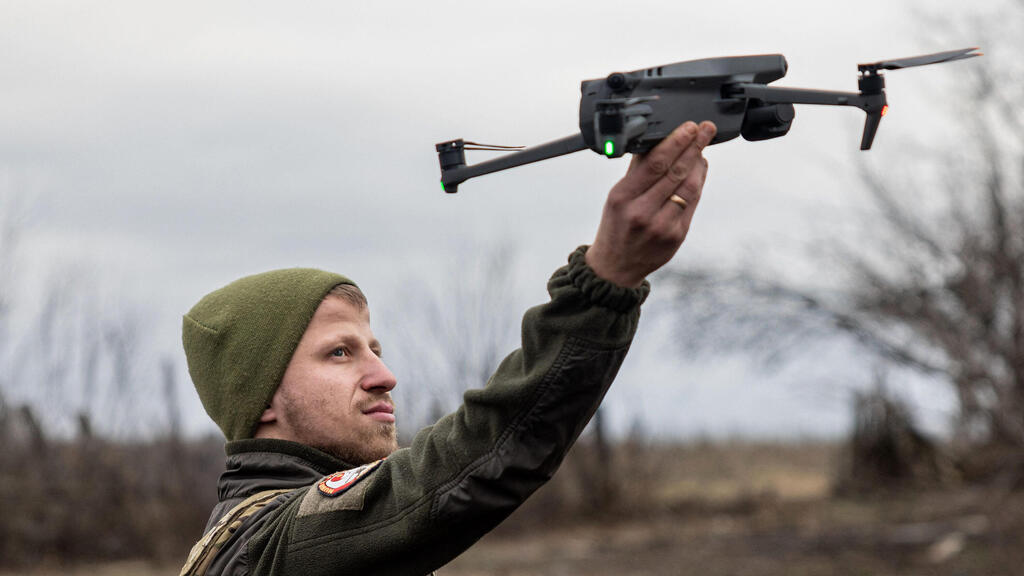
The United States is currently experiencing a boom in startups developing technologies designed to combat crime. At least 24 such companies have already joined the trend, operating in major cities including New York, Atlanta, Los Angeles, Las Vegas and San Francisco, as well as dozens of mid-sized cities and hundreds of small towns. Venture capital investors have poured more than $2 billion into these companies over the past two years, more than five times the amount invested in the previous two-year period.
Drone units
At the New York Police Department, the program is known as DFR, short for ‘drones as first response.’ Instead of waiting for an officer to fight traffic in a patrol car to reach a crime scene, police dispatch an autonomous drone the moment a report is received by the emergency call center.
The drones are launched from five hubs across the city’s boroughs and are remotely operated. Equipped with thermal cameras for night vision, they provide a live situational picture of the scene even before the first officer arrives. In Israel, seven new drone units were established this year under the strategic ‘Bereshit’ program, one in each police district. Their drones are fitted with thermal cameras and loudspeaker systems and can fly long distances and remain airborne for hours, supporting pursuits or monitoring demonstrations.
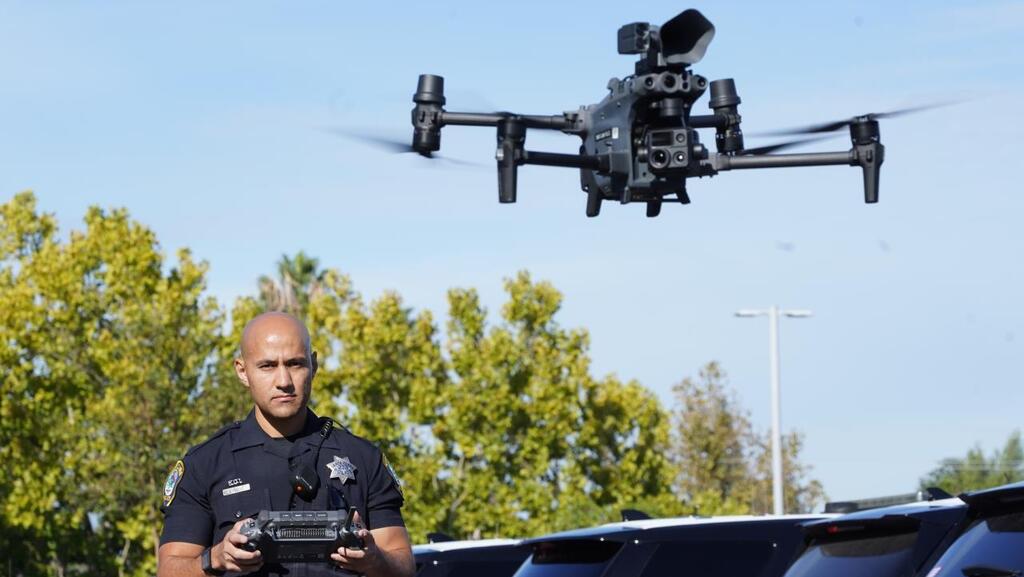
A police drone operated by the Santa Clara Police Department
(Photo: Santa Clara Police Department)
And no discussion would be complete without AI. Artificial intelligence is not only a data analysis tool. It can also function as a kind of police investigator, capable of processing volumes of information that a human could not realistically read or analyze over many years. The Redmond Police Department, in the city that hosts the headquarters of Microsoft and Amazon, began using a system called Longeye this year. The platform can rapidly scan and process recordings of phone calls, images from crime scenes and security camera footage.
According to the technology news site GeekWire, the tool has already helped investigators solve cases, including cracking a cold murder case after scanning 60 hours of prison phone calls in just minutes, a task that would have required hundreds of hours of human labor.
In New Orleans, police use an AI-based analytics system that allows rapid searches of records and data in a Google-style format
In New Orleans, police use another AI-based analytics system developed by Peregrine. It allows fast searches of records and data using simple, Google-style prompts. Peregrine employs former police officers who help its technologists understand what customers actually need. Its software can analyze structured data, such as spreadsheets and databases, as well as unstructured data including images, PDFs and video. It can also, for example, create a three-dimensional map of a fire, predict how it will spread, warn that schools lie in its projected path and provide a real-time view of ambulances and police vehicles in the area.
Facial recognition on body cameras
Facial recognition technologies have drawn fierce criticism over the past decade because of the ethical and legal questions they raise, particularly regarding privacy violations and concerns about racial bias. In the meantime, police and security bodies around the world, backed by local legal systems, have significantly improved their accuracy in recent years and expanded the massive databases on which they rely, including through data drawn from social media.
The Metropolitan Police in London, for example, implemented a real-time facial recognition tool this year that is integrated not only into street cameras but also into officers’ body cameras. The system compares the faces of passersby against watch lists of wanted suspects in a fraction of a second. In Israel, the Association for Civil Rights petitioned the High Court of Justice last year against the use of a similar system at Ben Gurion Airport, designed to predict which returning travelers might be drug couriers.
Does the enlistment of technology in the name of public safety represent a slippery slope toward turning democracies into police states? The affair surrounding the Military Advocate General’s smartphone exposed the use by Israel Police, like many police forces and security agencies worldwide, of a system developed by Cellebrite of Petah Tikva to break into and extract data from locked smartphones, including encrypted messages and deleted information.
In the United States, the company drawing the most criticism in this arena is Flock of Atlanta. Its main product is license plate reader cameras installed in large numbers on poles in areas such as busy intersections. Police officers in each city can remotely access the footage through the company’s software, which also issues real-time alerts when it detects a wanted license plate. Officers can search the system using natural language prompts. In Israel, police use a similar system known as ‘Ein HaNets,’ a network of Chinese-made smart cameras deployed on intercity highways and at city entrances. The system can read license plates in real time and cross-check them, using dedicated software developed by the police technology division, against databases of stolen or wanted vehicles.

Former Military Advocate General Yifat Tomer-Yerushalmi
(Photo: Shalom Shalev)
Live video analysis can also be effective beyond violent crime, including in automated traffic management. In Hanoi, the capital of Vietnam, about 1,800 AI-powered cameras were installed just this month for that purpose. Israel Police’s traffic division has also begun using AI-based cameras this year that can ‘look into’ the driver’s cabin to determine whether the driver is holding a mobile phone or not wearing a seat belt.
The taboo is broken
Less ethically controversial is the system developed by ZeroEyes, which analyzes images and video feeds from security cameras or drones in real time and can issue alerts within seconds when it detects any type of weapon. ZeroEyes was founded in 2018 by a group of U.S. military veterans aiming to shorten response times in active shooter situations and save lives. Had their system been installed at Bondi Beach in Sydney last week, local police could have responded more quickly.
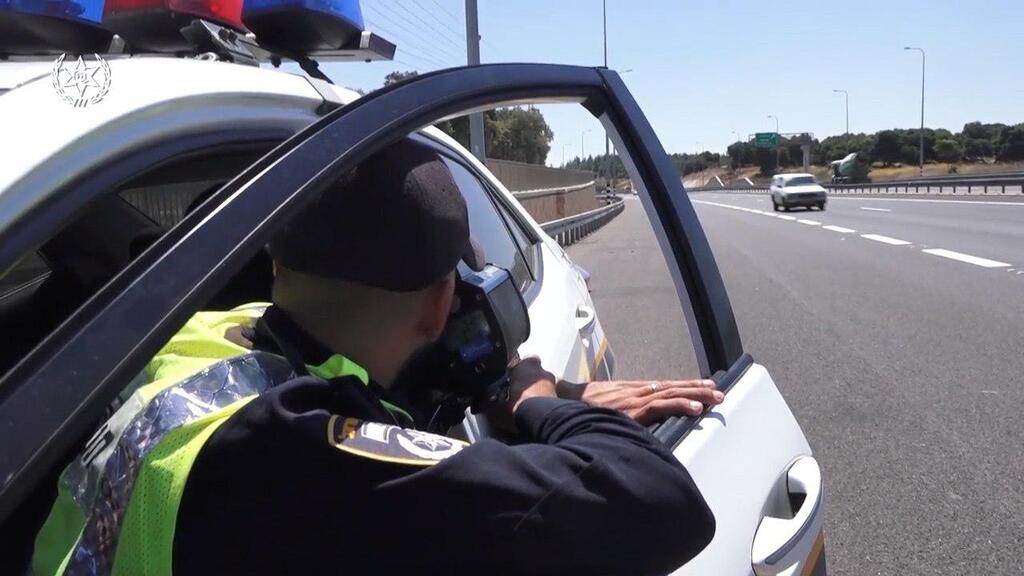
Traffic police officers enforcing traffic laws on highways
(Photo: Israel Police )
This is a market that Silicon Valley once ignored entirely. Today, companies in the field are multiplying across the Valley. Some argue the reason is fear among the tech elite that crime is creeping closer to home, as violence and drug use have surged dramatically in San Francisco in recent years. Not long ago, drones helped capture a suspect who stole merchandise worth $15,000 from a Burberry store in Union Square.
‘There was a broad social stigma against supporting the police, and people also did not think these were large markets,’ David Ulevitch, a partner at the major venture capital firm Andreessen Horowitz, told ‘The Information,’ which recently devoted an in-depth report to the subject. ‘But now the taboo is broken. Everyone understands these are enormous markets.’