


As Big Tech cuts tens of thousands of jobs to fund a costly artificial intelligence race, Apple has largely stayed on the sidelines, avoiding the mass layoffs that have hit Meta, Amazon, Microsoft and Oracle.
Apple’s last round of layoffs came in November 2025, when it cut several dozen jobs, mostly in account management, education and training. That stands in sharp contrast to the broader tech sector, where more than 92,000 workers have been laid off globally since the start of 2026.
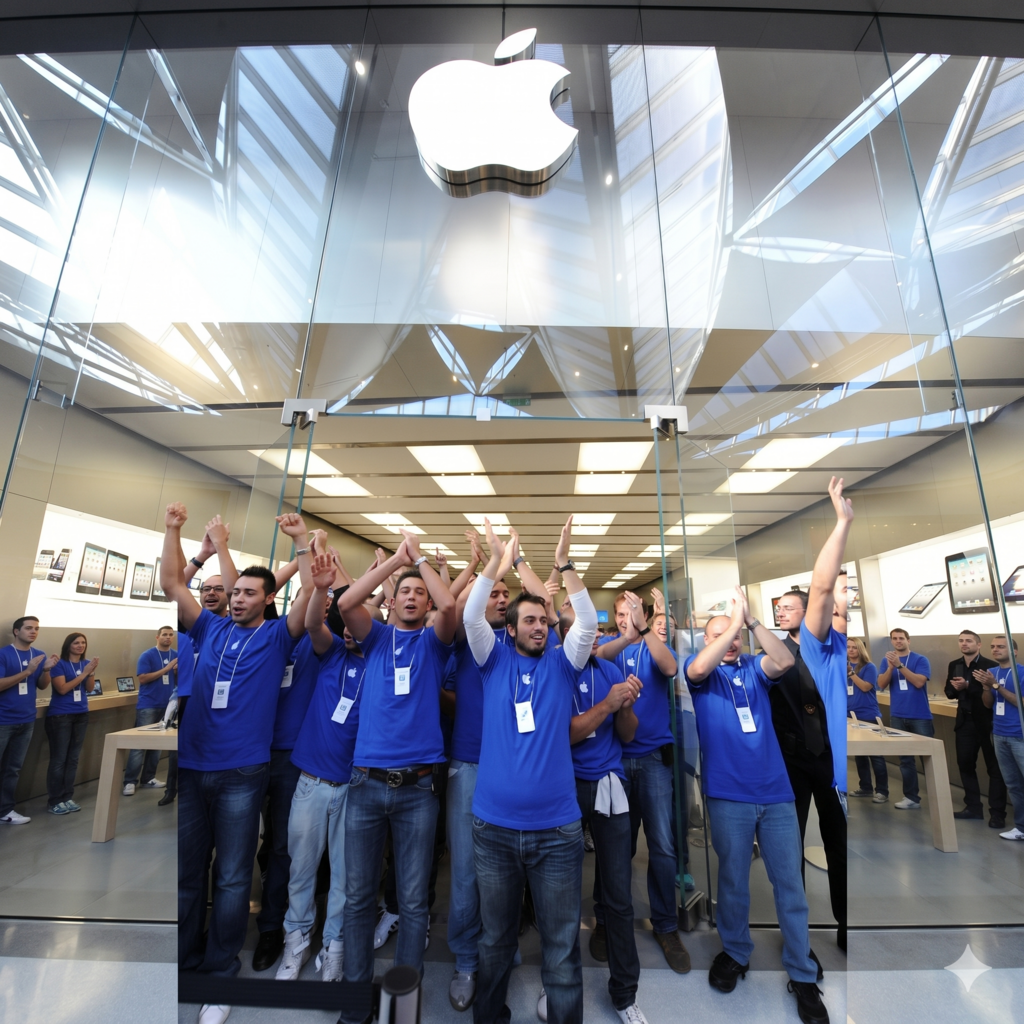
Meta has announced broad cuts affecting about 8,000 employees, while Microsoft has introduced a retirement plan for thousands of workers. Other tech giants have also been trimming staff aggressively.
In Cupertino, the California city where Apple is headquartered, mass layoffs are not part of the company’s playbook. Analysts and industry executives say Apple’s relative stability reflects a combination of disciplined hiring, an internal culture that favors retraining and moving employees between teams and the fact that the AI boom did not push the company into the same massive spending spree as its rivals.
The main driver behind the current wave of Big Tech layoffs is not that AI has replaced large numbers of workers, despite claims by some companies in a trend critics call “AI-washing.” In most cases, AI is not yet reliable enough to fully replace employees or carry out complex tasks without mistakes.
Instead, the industry has been swept up in fear of missing out. The biggest tech companies, the hyperscalers, are pouring hundreds of billions of dollars into AI infrastructure, including data centers, AI chips and large language models.
Meta alone raised its capital expenditure forecast to $135 billion, and the four leading companies in the field are expected to spend more than $700 billion this year on AI infrastructure. To finance those investments while preserving profits and investor confidence, companies are cutting the most accessible cost: workers.
 Yael Belgrai Cohen, head of high-tech at Dun & Bradstreet IsraelPhoto: Arbel Vaknin
Yael Belgrai Cohen, head of high-tech at Dun & Bradstreet Israel, said layoffs are only part of a broader picture. “Many technology companies use AI as a justification for layoffs, but I think the story is much more complex,” she said. “Is this really about efficiency, or mainly investor pressure?”
In some cases, she said, the cuts are a correction after overhiring during the COVID-19 pandemic. “Companies hired at a massive pace, and since then we have seen many corrections,” she said. “But some companies, as part of a broader policy, do things quietly and responsibly. They provide severance packages, adjustment time and try to place employees in other departments. There is respectful dialogue, and at those companies we really see less damage to the employer brand.”
Rinat Buchholz, founder and CEO of the recruitment and outsourcing company Global Teams, said Apple was far more conservative in hiring during the pandemic than Amazon and Meta. “Apple’s structure is much leaner, and it hired much more conservatively, so it has less need to lay people off today,” she said.
The employment data reflects that. While Amazon nearly doubled its workforce and Meta and Alphabet increased staffing by about 60%, Apple grew its workforce by only about 20% during the same period.
“A company that does not hire wildly during growth does not have to fire wildly during a slowdown,” Belgrai Cohen said. “Employment policy generally begins long before layoffs, when a company plans how it manages risk, how it treats employees and whether it sees them as a long-term or short-term asset.”
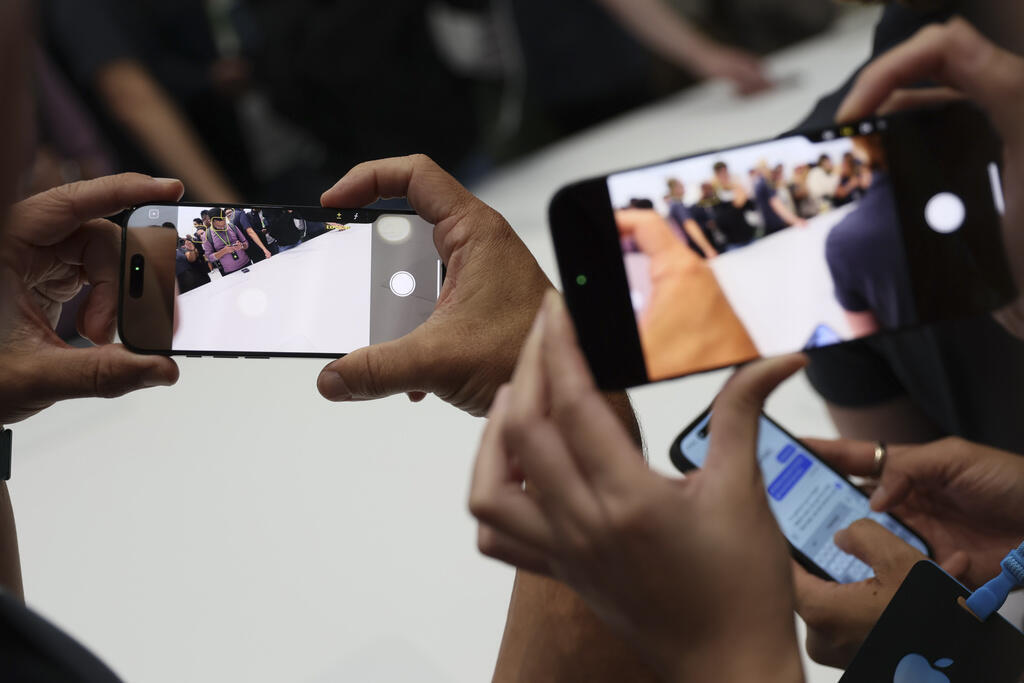
The launch of Apple's iPhone 16
(Photo: Juliana Yamada / AP)
The AI spending frenzy that has hit Meta, Microsoft, Google and Amazon has not reached Apple in the same way. Apple has pursued a leaner AI strategy, one that is not centered on cloud infrastructure or massive large language models.
Its model, Apple Intelligence, is based largely on AI processing carried out locally on iPhones, iPads and MacBooks. Apple relies on its own chip development rather than expensive Nvidia chips. For more complex tasks that require cloud processing, the company uses a hybrid model involving partnerships with OpenAI and Google. Its capital expenditure is far lower than that of its rivals, reducing the pressure for mass layoffs.
Apple fell behind in the AI race
Still, Apple’s AI strategy was not necessarily the result of smooth planning. The company’s AI division has faced major challenges.
In late 2025, Apple was shaken by the departure of John Giannandrea, its senior vice president for AI. Giannandrea was seen as responsible for long delays and problems surrounding the rollout of an AI-powered Siri, which ultimately led to the launch of the iPhone 16 without the promised AI features. Apple fell behind in the AI race.
CEO Tim Cook’s response to the crisis highlighted the difference between Apple and competitors such as Meta, led by Mark Zuckerberg. Rather than impose broad cuts across development and engineering teams, Apple parted ways with Giannandrea and brought in Amar Subramanya from Microsoft, and previously Google, to replace him. Subramanya was appointed vice president for AI, reporting to Craig Federighi, Apple’s senior vice president of software engineering.
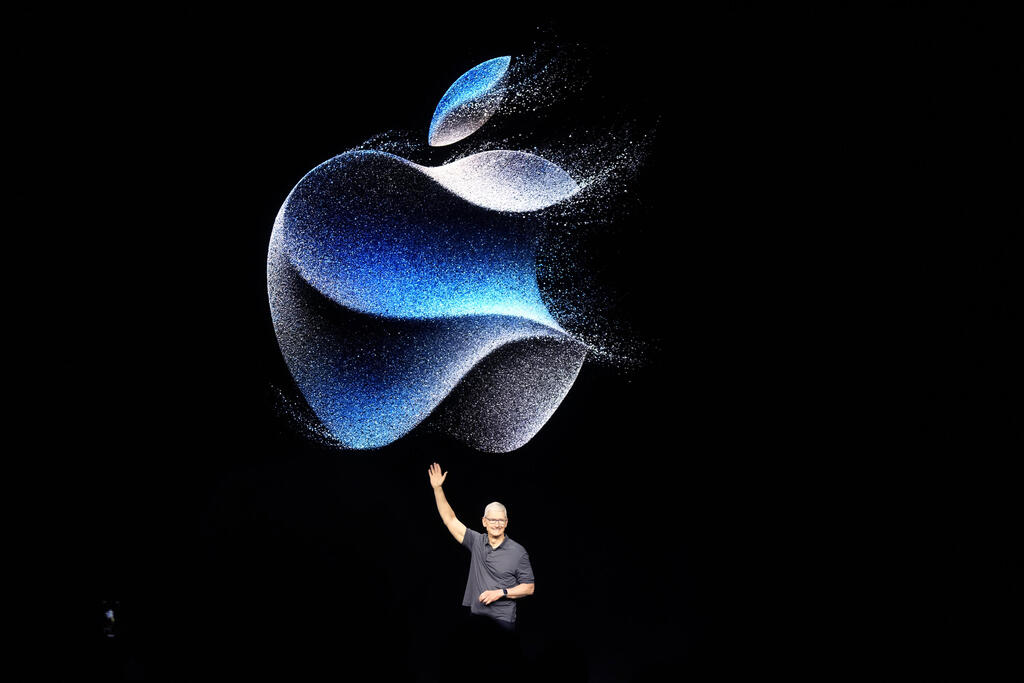
Apple CEO Tim Cook
(Photo: Jeff Chiu/AP)
Management of the Siri project was transferred to Mike Rockwell, who oversees the Vision Pro headset. Media reports said Apple chose to break up parts of its Vision product division because of declining demand, but employees were not laid off. Instead, they were reassigned to other projects, mostly Siri. That allowed Apple to preserve professional talent and avoid negative headlines on Wall Street.
The fundamental difference between Apple and its competitors lies in how it manages human capital. Many technology companies lay off workers in slowing divisions and hire new talent for growing ones. Apple treats its workforce as an asset to retain.
“Apple has always prioritized training and internal transfers over hiring from outside,” Buchholz said. “If the market changes, whether in terms of products or job requirements, they prefer to move excellent employees through internal processes, train them for the changed reality and keep them in the organization rather than fire them and hire someone new.”
Does that mean Apple is selective in hiring?
“They think much more before firing, and they also think much more before hiring,” Buchholz said. “Getting into Apple is very, very difficult. But once you are inside, the decision is basically, ‘We are going with you all the way. We will grow together and change together.’”
She said that even if a talented engineer has spent years in roles unrelated to AI and the company’s focus shifts to AI, Apple is more likely to train that worker internally and keep her in the organization.
 Global Teams founder and CEO Rinat BuchholzPhoto: Rami Zerenger
Apple is also highly efficient and generates high revenue per employee. Its powerful brand, full control of the iOS ecosystem and rapid growth in its services division, including Apple Music and Apple Pay, give it a financial cushion that allows it to absorb macroeconomic shocks that might push other companies into layoffs.
People familiar with Apple say that when cuts do happen, they are handled quietly, with an effort to minimize damage to the company’s brand and organizational culture. That can include natural attrition, such as not filling vacancies after employees leave, or ending contracts with external contractors.
Apple’s global approach has a direct impact on Israel’s high-tech sector. While local development centers of giants such as Meta have experienced painful layoffs, and other global companies such as Intuit and ZoomInfo have reduced or closed operations, Apple’s Israeli R&D center in Herzliya and Haifa remains stable and is still hiring.
The main reason is the unique role of Apple’s Israeli operation, led for nearly a decade by Rony Friedman. The center is closely associated with Johny Srouji, Apple’s Israeli-born senior vice president of hardware technologies. It is Apple’s largest chip development center outside the United States and develops many of the company’s central chips.
That makes the Israeli center strategically important for Apple, especially because the company’s AI strategy relies heavily on processing directly on devices. Engineers in Israel are building the physical infrastructure on which Apple’s global strategy depends.
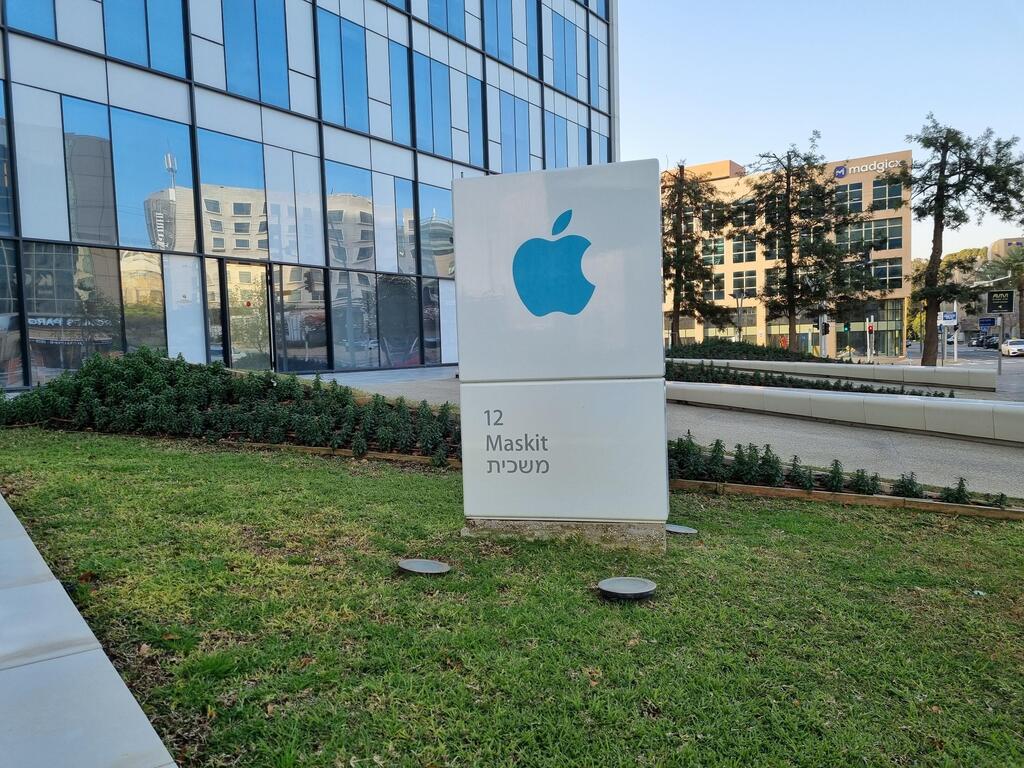
Apple’s Israeli R&D center in Herzliya
(Photo: Yuval Mann)
Apple Israel also avoided the operational and managerial layers in marketing, headquarters and support that other companies added aggressively during the 2021 boom. Its center maintained a clear research-and-development engineering profile.
Apple is not only avoiding layoffs in Israel. It currently has 140 open positions it is seeking to fill — a detail likely to interest chip engineers who have recently lost jobs elsewhere.