

As climate volatility, aging housing stock and rising reconstruction costs reshape the global insurance market, insurers are turning to new technologies that can provide clearer, property-level assessments of risk.
One company drawing growing interest is Israel-based GeoX.AI, which develops artificial intelligence models capable of extracting detailed structural information from aerial, satellite and street-level imagery.
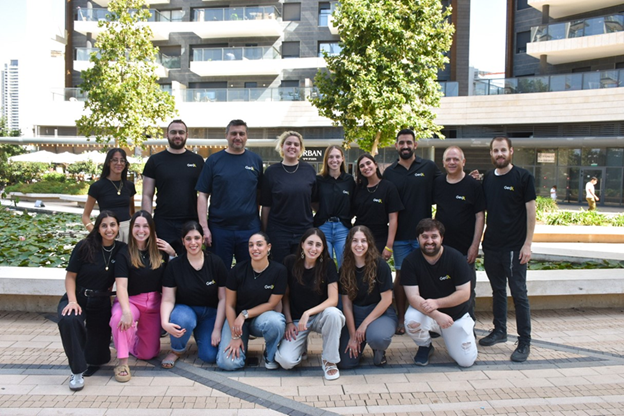
Founded in 2018 by Itzhak Lavi, Eli Lavi and Guy Atar, GeoX uses multiple forms of remote sensing — high-resolution aerial photography, commercial satellites and 3D reconstruction from ground-level images — to generate detailed representations of individual buildings. The system identifies roof aging, exterior deterioration, vegetation encroaching on structures, debris accumulation, damaged fencing and other conditions known to increase vulnerability to fires and storms.
While similar tools exist in the geospatial and insurtech sectors, GeoX says it differentiates itself by fusing datasets that are typically analyzed separately, giving insurers a more complete picture of a property and its surroundings. The output is not a replacement for traditional underwriting but a structured, visual dataset that insurers can use to assess exposure, price policies or evaluate portfolio risk.
GeoX has since expanded into the United States, Europe, Japan and Australia. Its technology is used by insurers and reinsurers such as Munich Re and Sompo, as well as banks and public agencies. In the United States, the company’s data has supported post-disaster assessments conducted by FEMA, where rapid identification of property conditions is critical for relief and reconstruction planning.
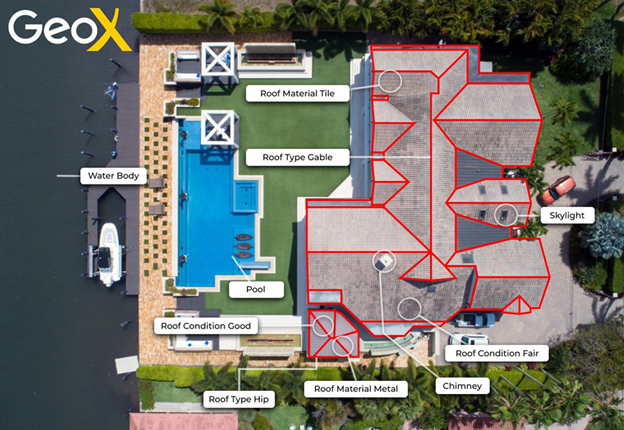
GeoX.AI
(Illustration: Courtesy)
The company recently entered a partnership with Mitsui Sumitomo Insurance, part of the MS&AD Insurance Group, Asia’s largest insurance group. The firms plan to analyze tens of thousands of homes across Japan, beginning with a pilot project in Hokkaido.
Japan poses a particularly difficult environment for property insurers, facing frequent typhoons, rising wildfire exposure, millions of aging structures and a sharp increase in vacant homes driven by demographic decline. These trends have contributed to higher losses and rising premiums. Under the new initiative, homeowners will receive visual reports documenting conditions that could affect fire spread or structural resilience, while Mitsui Sumitomo will use the information for risk-based pricing and to identify opportunities for preventive maintenance.
Globally, demand for granular, building-level intelligence has risen as climate-related losses grow and traditional underwriting — reliant on regional hazard maps and historical claims data — is increasingly seen as inadequate. GeoX is among several companies trying to fill that gap by standardizing property-condition data across markets for use in underwriting, risk scoring or claims management.
GeoX has raised $23 million and employs 33 people across several regions. While the broader insurtech sector has faced volatility, the company’s collaboration with Mitsui Sumitomo reflects how geospatial AI is moving into mainstream insurance operations. For insurers, these tools underscore a broader shift toward improving visibility into property conditions as a way to manage climate-driven risks and build more resilient portfolios.