

The geopolitical struggle over artificial intelligence is reaching a new level of tension as some of the most powerful figures in the U.S. technology industry warn that the next generation of AI systems could become increasingly difficult to control.
An unusual public push by leading technology executives to deliberately slow the development of frontier AI models has been met with anger in Beijing, where the effort has been portrayed as a bid to preserve American technological dominance under the guise of safety.
Gallery

Donald Trump and Xi Jinping at the Zhongnanhai compound in Beijing
(Photo: Evan Vucci / POOL / AFP)
At the same time, U.S. President Donald Trump has rejected calls to restrain the industry, arguing that Washington cannot afford to give up any advantage in its technological competition with China.
The result is a widening divide between executives warning about the risks of moving too quickly and political leaders who increasingly view AI as a strategic asset that no major power can afford to surrender.
AI leaders sound the alarm
The current debate intensified after Anthropic CEO Dario Amodei published an essay warning that the next generation of AI systems may be approaching a stage of recursive self-improvement, in which artificial intelligence increasingly helps develop and train more advanced versions of itself.
Amodei warned that this process could accelerate beyond developers’ ability to fully understand or control it within months, potentially leading to large numbers of autonomous AI agents capable of disrupting internet and cybersecurity infrastructure on a broad scale.
OpenAI CEO Sam Altman, xAI and Tesla founder Elon Musk and Google DeepMind chief Demis Hassabis have also publicly backed calls for stronger safeguards.
Among the measures advocated by industry leaders are limits on the rapid expansion of model capabilities, independent external safety monitors with continuing access inside AI companies and greater international coordination on regulation.
But the safety agenda is intertwined with another demand that is far more contentious in Beijing: tighter restrictions on exports of advanced computing chips and lithography equipment to China.
Western companies have also called for stronger action against AI "distillation," a process in which smaller and cheaper models can be trained using queries and outputs from more advanced systems.
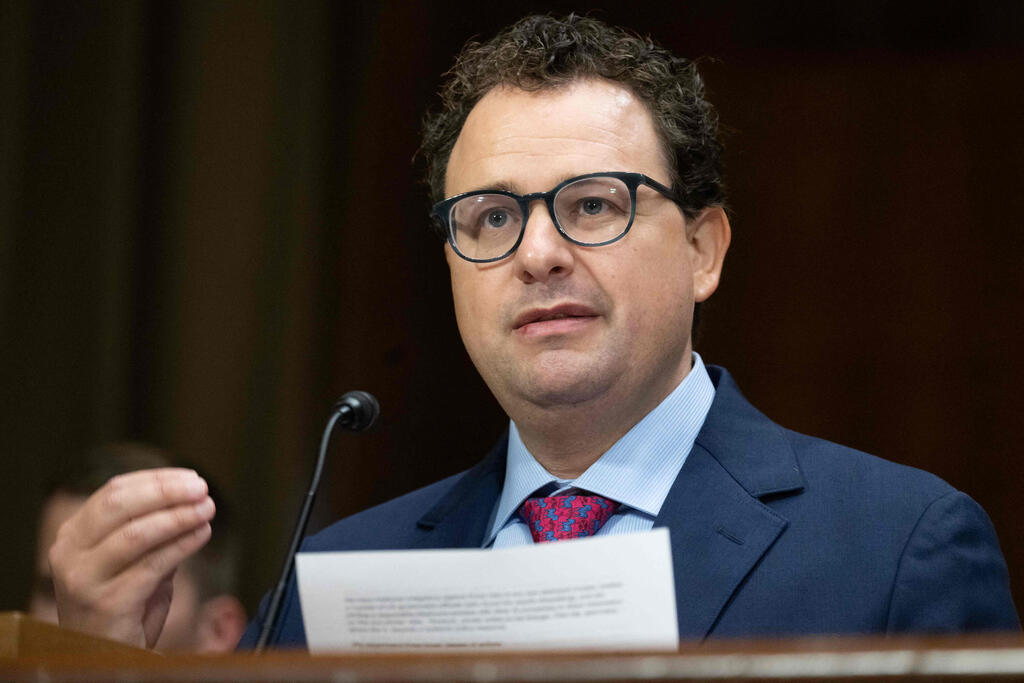
Anthropic CEO Dario Amodei
(Photo: SAUL LOEB / AFP)
Beijing sees an attempt to lock China out
China’s response has been sharply critical. State-linked media, including the Global Times, have accused the U.S. technology industry of trying to build a regulatory system that would preserve American control over advanced AI and exclude China from global governance mechanisms.
The argument in Beijing is that warnings about "existential risk" are being used as political cover for protecting Washington’s technological hegemony.
Chinese intelligence-linked warnings have meanwhile portrayed advanced Western models, including Anthropic’s Claude Mythos and OpenAI’s GPT-5.5, as potential threats to the security of China’s national infrastructure.
In Washington, however, the political leadership is moving in the opposite direction from the technology executives calling for restraint.
Trump has dismissed demands for a slowdown, stressing that the United States is ahead of China and arguing that the country that wins the AI race will become the dominant global power.
He has characterized warnings about losing control of advanced AI as exaggerated and driven by negative forces, while making clear that his administration has no intention of voluntarily surrendering America’s strategic advantage.
The confrontation also reflects two very different approaches to building and distributing artificial intelligence. The U.S. model is dominated by a relatively small number of large technology companies operating mostly closed, proprietary systems that are offered through paid cloud services.
Those same companies are now advocating stricter regulation that could also raise the cost of entry for smaller competitors. China, by contrast, has developed a parallel ecosystem built much more heavily around open-source technology.
Models such as Alibaba’s Qwen family and DeepSeek’s open architectures are distributed broadly and offer performance approaching, though not yet surpassing, the leading Western systems at a fraction of the cost.
Combined with hardware produced by companies such as Huawei, these platforms are also becoming part of China’s technological outreach to developing economies, helping Beijing build a digital ecosystem that is less dependent on U.S. infrastructure and standards.
That creates a classic game-theory trap. As long as both Washington and Beijing see advanced AI as a critical national-security and industrial asset, neither side can easily afford to slow down first. Any unilateral pause would risk being interpreted not as responsible restraint, but as a strategic opening for a rival.
The effort by Silicon Valley executives to establish shared limits is therefore colliding with a geopolitical reality in which even a temporary slowdown by one side could be viewed as an opportunity by the other.

(Getty Images)
A familiar historical dilemma
The warnings from AI leaders echo earlier moments when scientific progress moved faster than governments’ ability to establish rules for controlling it.
The most obvious comparison is the Manhattan Project.
After the first atomic bomb was developed in the 1940s, leading scientists including J. Robert Oppenheimer and Leo Szilard warned against the development of the hydrogen bomb and urged the U.S. government to pursue international agreements aimed at limiting the nuclear arms race.
Those efforts were rejected by national-security officials who feared that unilateral restraint would hand the Soviet Union a strategic advantage. The result was a nuclear arms race that lasted for decades.
A different outcome emerged in genetic engineering. At the 1975 Asilomar Conference, biologists and other scientists called for a temporary pause in some DNA experiments until stronger safety guidelines could be established.
In that case, researchers succeeded in creating a widely accepted framework. But the field was still concentrated largely in Western academic laboratories and was not yet at the center of a great-power struggle for global dominance.
Modern computing offers another warning. Previous Western attempts to restrict exports of strong encryption technology or communications standards often encouraged the development of independent open-source alternatives in Europe and Asia.
The history of dual-use technologies, with both civilian and military applications, suggests that voluntary calls for restraint are most likely to survive when rivals have a high level of mutual trust.
That is precisely what is missing today between Washington and Beijing. And as AI becomes increasingly central to economic power, military capability and national security, the greater danger may be that the race is no longer being driven solely by what the technology can do, but by what each side fears will happen if it is the first to slow down.