

The unrest in Nepal, which within days led to the resignation of the prime minister, erupted in early September but had been simmering long before. Members of Generation Z carried the weight of years of disappointment: high unemployment, a lack of job opportunities, a political system dominated by old elites and a sense of disconnect between young people and the children of politicians, who were derisively nicknamed NepoKids. Against that backdrop, the government’s sudden decision to block 26 major social media networks, including Facebook, YouTube and X, became the immediate spark for widespread protest.
Instead of weakening, the demonstrations grew stronger. Almost overnight, protesters migrated to Discord, a platform many already knew from gaming communities. The relative anonymity and flexibility of Discord fit the new reality of nightly curfews, internet blackouts and government attempts to monitor online activity. Within days, more than 140,000 people had joined the main protest servers.
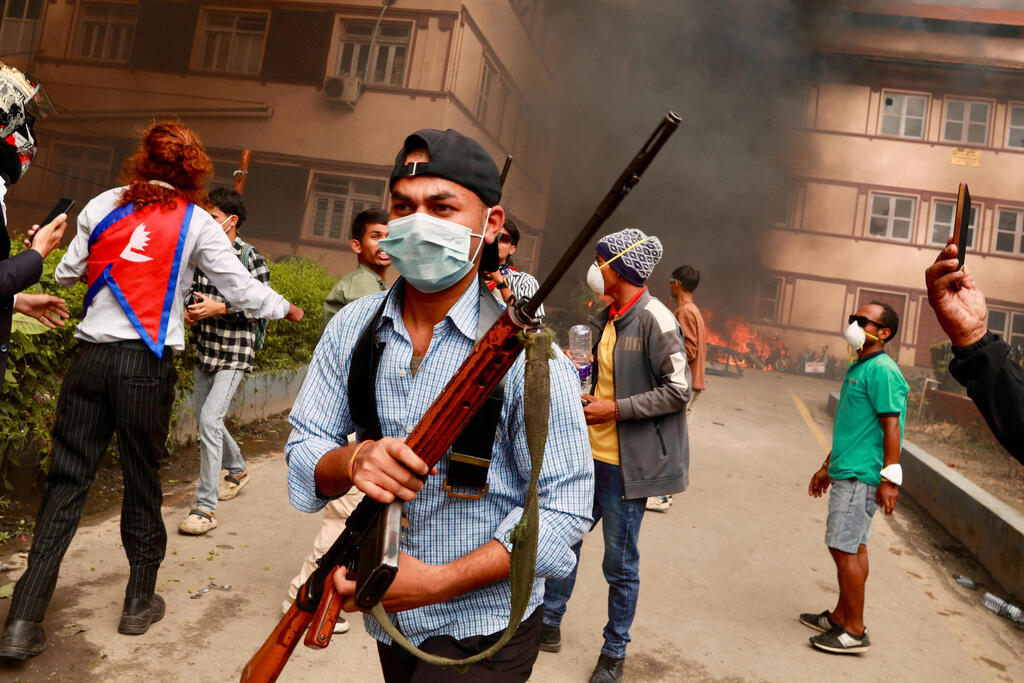
The internal organization was meticulous: dedicated text channels guided marches, provided safety tips and shared real-time updates; voice and video channels hosted open discussions with hundreds of participants; and bots ran quick polls to decide urgent matters. One of the most striking innovations was the creation of fact-checking channels where rumors and reports were verified to prevent the spread of fake news.
The political climax came after the prime minister stepped down. The main protest server turned into Nepal’s “virtual parliament.” More than 100,000 young people joined debates and votes, eventually selecting former Supreme Court Justice Sushila Karki as the transitional leader. The very fact of a political figure being chosen through a gaming app was unprecedented, not only in Nepal but globally, and the development was widely covered in local and international media.
The social and political implications were twofold. On the one hand, Discord gave young people an equalizing tool: for the first time, youth from rural areas, women and anonymous activists could take part in national decision-making without fear of retribution. On the other hand, the platform was not without risks. Authorities warned of hostile infiltration, vote manipulation through multiple accounts and even channels where extreme tactics such as vandalism or sabotage were discussed.
Despite the risks, the outcome was revolutionary: Discord debates were broadcast on television, votes were documented and made public, and an app once dismissed as a kids’ pastime became a political instrument that changed the country’s course.
From gamers’ hub to activist arena
Discord was launched in 2015 by entrepreneurs Jason Citron and Stan Vishnevskiy in San Francisco as a simple and cheaper alternative to Skype and TeamSpeak. It was built mainly for gamers, with strong voice quality and the ability to set up community servers with text, voice and video channels.
Since then — especially during the COVID-19 pandemic — Discord has expanded far beyond gaming. Teachers and students used it for remote learning, companies held meetings on it and activists discovered its value for organizing, thanks to its anonymity, flexibility and ability to host closed communities.
Its business model is based on a free version and a paid premium subscription, Discord Nitro, which allows larger file uploads, higher-quality calls and custom emojis. By 2023 the company had more than 150 million active monthly users and about 560 million registered accounts. It had raised over $1 billion, was valued at about $15 billion and reported annual revenue of more than $600 million. Analysts expect a Wall Street IPO that would place it among the ranks of major social media companies.
Murder of Charlie Kirk
On Sept. 10, Charlie Kirk, a conservative activist and founder of Turning Point USA, was killed during an event at Utah Valley University. The murder, carried out in broad daylight, immediately reverberated across the American political and media landscape. Shortly afterward, the FBI released surveillance images of the shooting suspect and launched an intensive manhunt.
Just 33 hours later, police arrested 22-year-old Tyler Robinson of Utah, partly because family members recognized him in the images and alerted authorities. But what drew even greater attention were the messages Robinson left on Discord, where he regularly chatted with a small group of friends from high school.
After the FBI released the photos, his friends teased him in their chat. One tagged him with “wya” — internet shorthand for “where you at” — with a skull emoji. Robinson jokingly denied involvement, saying, “That’s my double trying to frame me.” When another friend joked, “Tyler killed Charlie!!!!” Robinson replied, “Only if I get a cut,” referring to the FBI’s reward money.

Charlie Kirk
(Photo: AP)
The joking continued, with dark humor about other crimes. Robinson’s own posts were a mix of denial, deflection and grim jokes. But investigators also uncovered more disturbing evidence: his roommate presented messages in which Robinson discussed practical steps for “after the act,” such as retrieving the rifle, changing clothes and handling ammunition with engravings. These, prosecutors said, pointed to the concealment of evidence after a murder.
Robinson’s use of Discord after the killing highlighted a cultural gap between the gravity of real-world violence and the way some young people process it online. In digital spaces, dark humor and cynical denial can feel like natural responses even to murder. For investigators and the public, it raises hard questions: How much does online culture blur the line between entertainment and reality? And should platforms like Discord develop stronger monitoring tools to detect signs of criminal involvement earlier?
A platform with dual faces
The mass protest in Nepal and the murder in the United States are vastly different events, yet they share one common thread: both proved Discord is no longer just a niche app for gamers. In Nepal, it became an alternative arena where young people organized, debated and made historic political decisions. In the U.S., it became the chilling chatroom of a suspected political killer.
That duality underscores Discord’s power as a digital space — one that can drive civic change but also reveal dangerous alienation. It also forces the company to confront weighty questions: how to remain an open, equal platform for discussion without becoming fertile ground for violence, extremism and crime, and whether it can bear the public and legal responsibility that comes with it.