

The world of foldable smartphones has long promised a revolution, but until now, it hasn’t fully delivered. This year, however, we’re finally seeing real progress, with several new models from Chinese manufacturers and the much-anticipated Google Pixel Fold 10 expected soon. Rumors also suggest Apple may join the race in 2026 with its first foldable iPhone.
Samsung, the company that essentially invented the foldables category, isn’t sitting idle either. Earlier this month, it unveiled the new Galaxy Fold 7 at a splashy event in New York, and after spending a few weeks with the device, it’s clear this isn’t just another incremental update. This time, Samsung has made a real and significant leap forward.
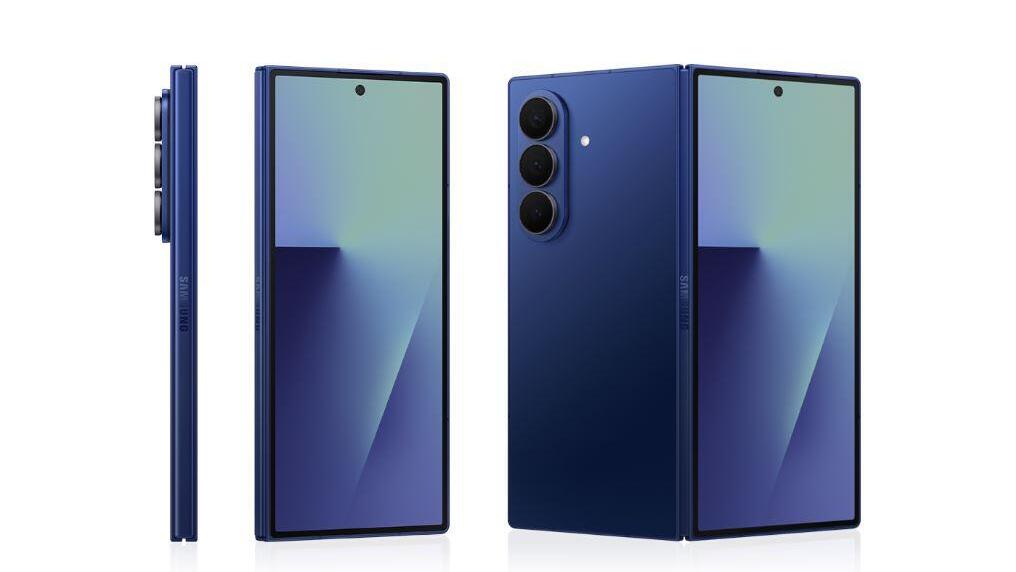
Design and build: Thin as a notebook, tough as a tank
The most noticeable upgrade this year is the design. When folded, the Fold 7 feels like a premium, ultra-durable smartphone. Samsung has equipped it with Gorilla Glass Victus Ceramic 2, a fancy name that translates to better resistance to scratches and drops.
Importantly, durability has been significantly improved. Samsung claims that the outer glass is tougher, while the inner display receives a dual-layer protective coating due to the added thickness. The device also retains its IP48 rating for dust and water resistance, meaning it can withstand dust ingress and immersion in up to 1.5 meters of water for 30 minutes. That’s still a step ahead of most competitors, which offer weaker protection.
(Photo: Raphel Kahan)
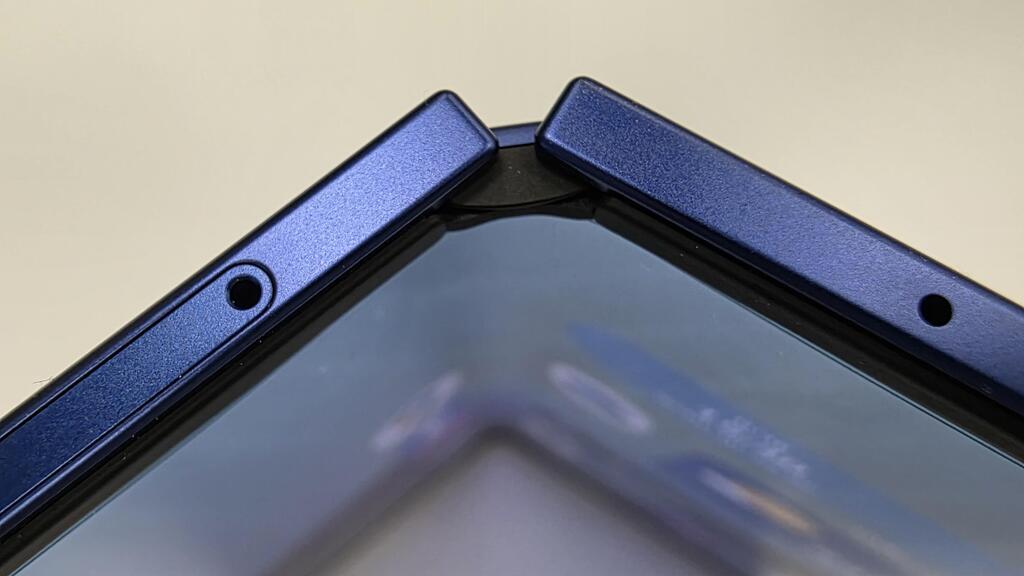
The Fold 7 also features a new hinge mechanism and an upgraded Advanced Armor Aluminum frame, which includes a titanium support layer beneath the screen. Compared to the fragile early generations of the Fold, this one feels far more solid. Samsung has learned from past mistakes, and users can now feel much more confident.
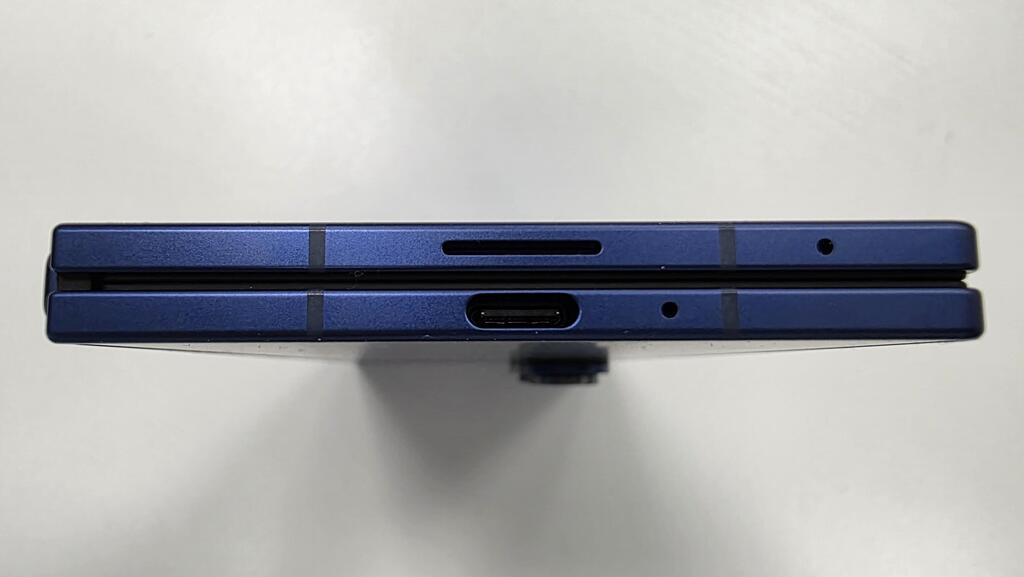
Another long-standing issue the Fold series faced—thickness—has been dramatically improved. While last year’s Fold 6 measured 12.1 mm thick, the Fold 7 is just 8.9 mm when closed, only 0.3 mm thicker than the Galaxy S25 Ultra or iPhone 16 Pro Max. Opened up, it’s a stunning 4.2 mm thick, just enough to allow for a USB-C charging port.
(Photo: Raphel Kahan)
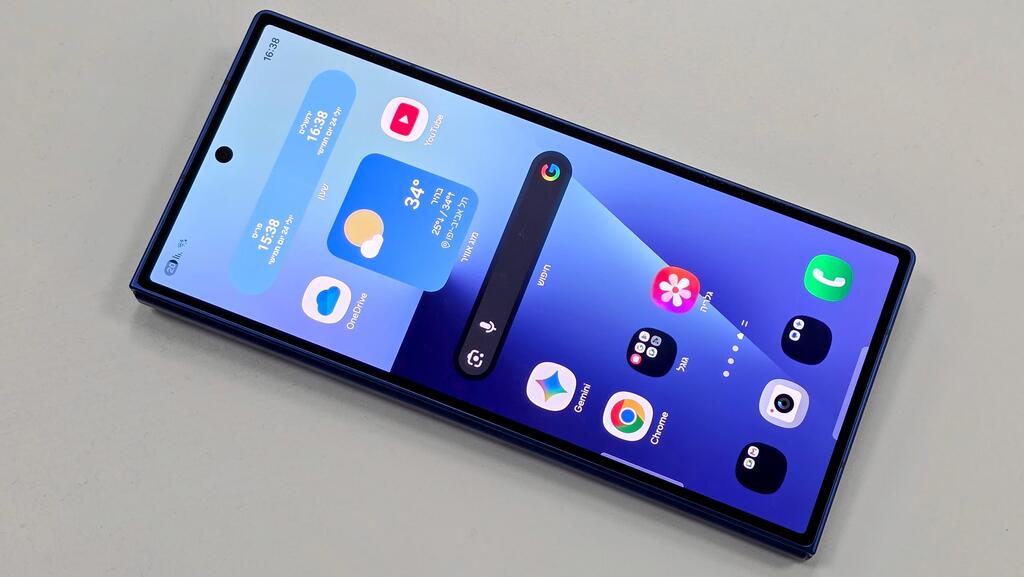
The inner display has grown to 8 inches (up from 7.6”), delivering a sleek viewing experience with the same resolution as before, but now using Foldable Dynamic LTPO AMOLED 2X technology with a 120Hz refresh rate. Visibility is also better in direct sunlight—at least on half the screen—with brightness peaking at 2,600 nits.
The outer display is less impressive, maxing out at around 1,600 nits. Still, Samsung has reduced the crease visibility on the inner display, though it’s something most users get used to quickly.
The only major design flaw? The rear camera bump. The Fold 7’s slim profile makes the camera module protrude even more, making it wobble on flat surfaces unless you use a thick case, somewhat undermining the design’s sleekness.
Performance: A serious powerhouse
Under the hood, the Fold 7 runs on Qualcomm’s Snapdragon 8 Elite chip, the same powerhouse found in the Galaxy S25 Ultra. In some benchmarks, it even beats Apple’s iPhone 16 Pro chip. It delivers smooth performance across tasks, from gaming to video editing to handling massive Excel spreadsheets.
(Photo: Raphel Kahan)
The device supports true multitasking with multiple apps in split screen. It comes with fast UFS 4.0 storage in 256GB, 512GB or 1TB options, paired with 12GB or 16GB of RAM, depending on configuration. Samsung is currently offering double storage on base models at no extra cost.
Connectivity includes WiFi 7, Bluetooth 5.4 and Qualcomm’s high-quality aptX HD audio. Despite the slimmer profile, the speakers still deliver decent sound for media consumption within the limits of a foldable form.
Get the Ynetnews app on your smartphone: Google Play: https://bit.ly/4eJ37pE | Apple App Store: https://bit.ly/3ZL7iNv
Battery life remains similar to the previous model, with a 4,400mAh battery. It should last a full day with moderate use, but less if you rely heavily on the large internal display. Charging speeds haven’t improved: 25W wired and 15W wireless. Expect a 50% charge in 30 minutes and a full charge in about 80 minutes.
One disappointment is the removal of stylus support, likely due to space constraints. This could be a dealbreaker for business users or creatives who relied on the S Pen—some might prefer the S25 Ultra as a result.
Software: Samsung’s Android, for better or worse
The Fold 7 runs Samsung’s familiar One UI 8 on Android 16. It’s clean, colorful and well-optimized for Hebrew, but still carries quirks, like requiring two taps on a contact to start a call, unlike other UIs.
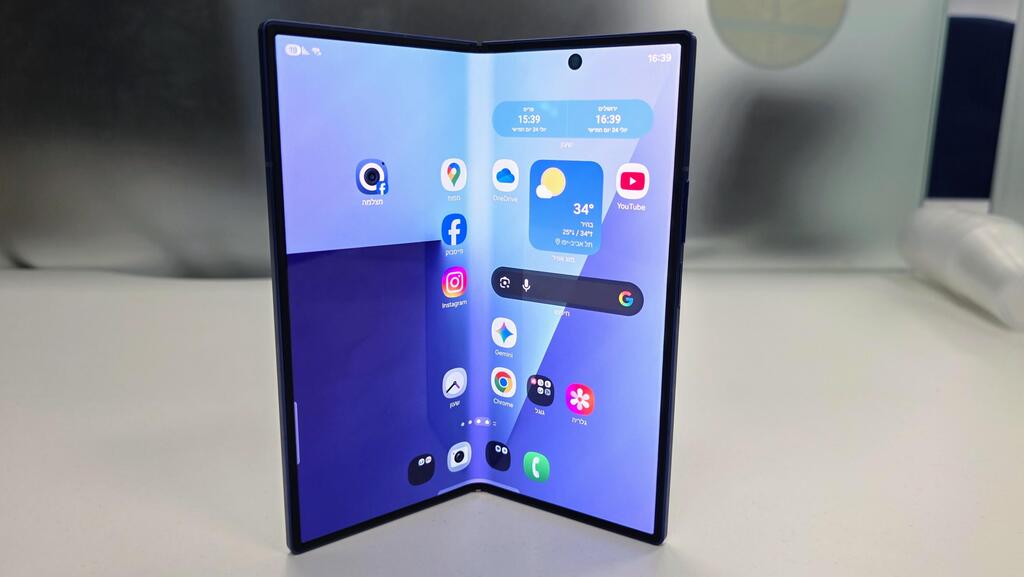
(Photo: Raphel Kahan)
Some Samsung features remain unavailable in Hebrew, such as automatic voice call translation, and there’s no guarantee they’ll arrive later. However, the Fold 7 comes with a rare promise of up to seven major software and UI updates, significantly extending the device’s usable lifespan.
Google apps like YouTube now support the half-folded “laptop” mode, and Gemini AI has improved integration with voice, image and video input. You can now share your screen and get contextual responses based on what's showing.
Other handy features include drag-and-drop support between apps like ChatGPT Image Generator and Samsung Notes, and FlexCam, which lets you use the camera feed for smart interactions.
Cameras: Getting closer to the S25 Ultra
The main camera now uses the 200MP sensor from the Galaxy S25 Ultra. With an f/1.7 aperture, a large 1/1.3” sensor and optical image stabilization (OIS), it delivers fantastic images. High resolution allows for quality digital zoom and cropping without major quality loss. Low-light shots are brighter and sharper thanks to the bigger sensor and wider aperture.
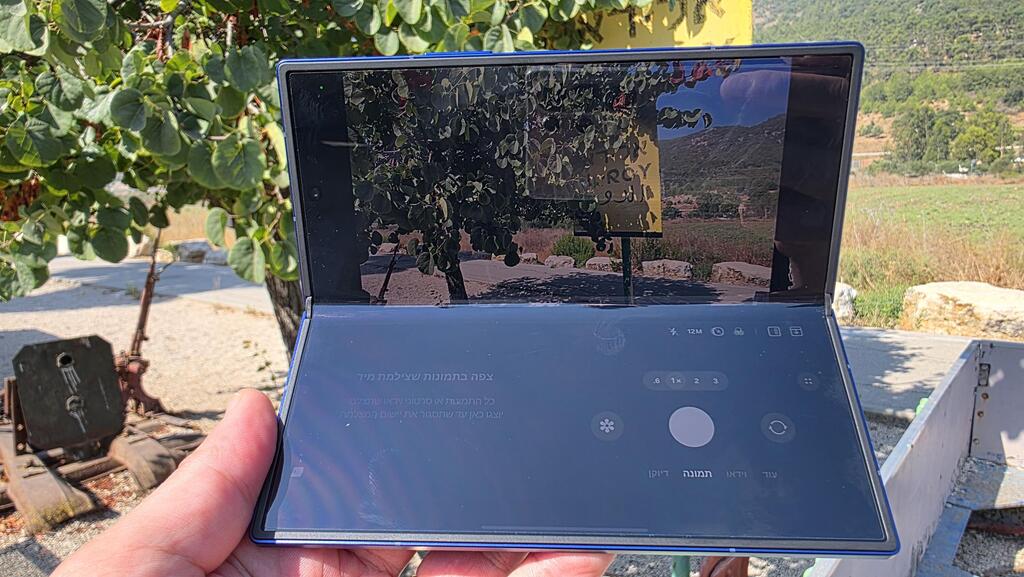
(Photo: Raphel Kahan)
The Fold’s design also makes it easier to shoot steady night photos by propping it up on surfaces.
The 10MP telephoto camera has a 3x optical zoom, f/2.4 aperture and OIS—great for portraits or wildlife shots. It’s sharp and detailed, though not a major leap over last year’s version.
The ultra-wide camera offers 12MP, an f/2.2 aperture, 120° field of view and fast Dual Pixel autofocus—great for landscapes, buildings or large group shots. Again, it uses last year’s sensor, not the latest from the Ultra.
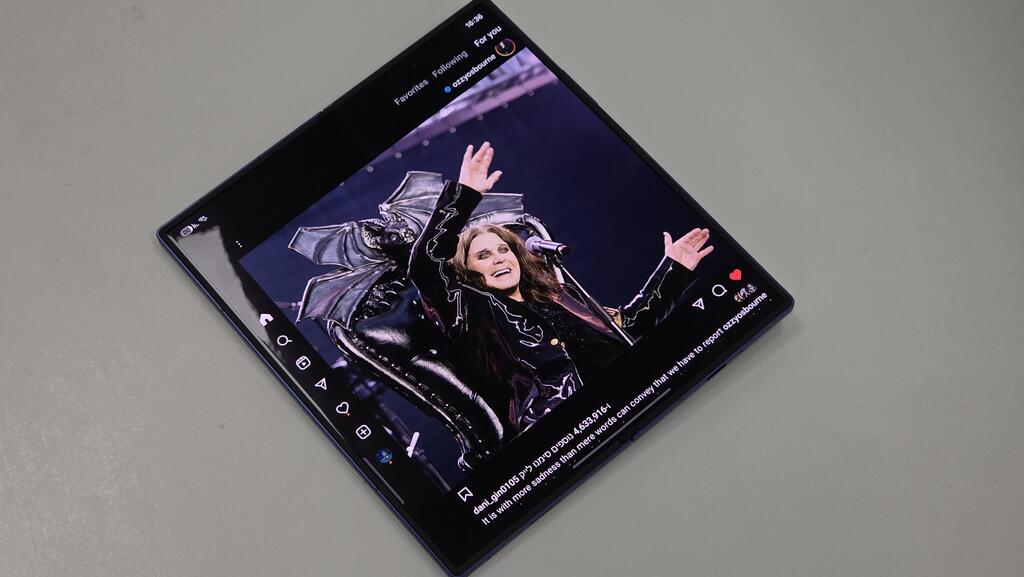
(Photo: Raphel Kahan)
For selfies, there are two 10MP cameras: one outside and one inside. While good, they aren’t top-tier. The S25 Ultra already offers 12MP selfie cams, making Samsung’s decision here a bit disappointing, especially for video calls.
Video recording is impressive: 8K at 30fps and 4K at 60fps with advanced stabilization (gyro-EIS). Slow motion is available at 1080p/240fps or 720p/960fps (Super Slow-Mo). Support for 10-bit HDR and HDR10+ ensures rich colors and a wide dynamic range.
Overall, it’s a significantly upgraded camera system, even if not class-leading. Photography enthusiasts will still find a lot to like.
Verdict: Expensive, but one of a kind (especially in Israel)
The Galaxy Fold 7 is a major step forward for foldables. But it’s expensive: around ₪7,450 for the base model and ₪8,399 for the 1TB version. That’s a hefty price in today’s smartphone market—but if you’re looking for the most polished foldable available, this is it.
The main reason to choose it is that there are virtually no real alternatives in Israel. Devices like the Pixel Fold, OnePlus Open and Honor Magic V5 aren’t officially available here. The only real competition is the Oppo Find N5, which is more expensive and slightly less impressive.
With improved durability, strong performance and a powerful camera system, the Fold 7 sets a new bar. Is it worth the money? If you’re ready to invest in the best foldable out there, otherwise, you could buy a regular flagship and a tablet for the same price—but then you’d be carrying two devices, which the Fold was designed to prevent.