

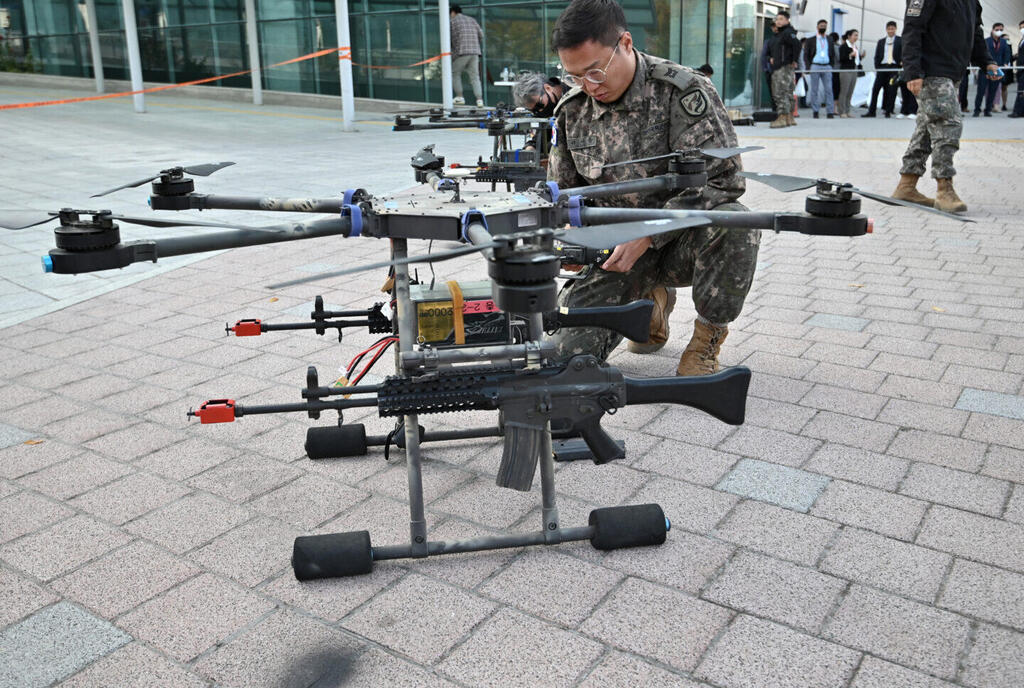
South Korea has embarked on a striking military initiative that reflects what has become one of the clearest lessons of recent years: the future of warfare belongs to swarms of inexpensive drones. Defense Minister Ahn Gyu-back announced the sweeping plan in recent days, under which all 500,000 active-duty personnel across the army, air force, navy and marine corps will receive comprehensive drone operation training.
The objective is to make the small flying device as fundamental to every soldier's equipment as a personal weapon. The urgency behind the initiative is no coincidence. It stems from years of observing the battlefields of Ukraine and the Middle East, where rapidly modified commercial drones have managed to disable advanced defense systems and reshape battlefield tactics.
For Seoul, which has spent the past seven decades in a state of constant tension with North Korea, whose standing army numbers more than 1.2 million troops, inexpensive alternative technology is no longer a luxury but a necessity to offset its significant numerical disadvantage.
The initiative is also intended to erase the embarrassment of 2022, when five North Korean drones penetrated deep into Seoul and even reached the airspace surrounding the presidential office, while repeated interception attempts by the South Korean Air Force failed.
To support its ambitious vision, the Defense Ministry plans to deploy about 11,000 commercial training drones this year, with the goal of expanding the fleet to 60,000 by 2029. In addition, the military will acquire more than 20,000 one-way attack drones, or loitering munitions, by 2030.
At the center of the offensive effort is the accelerated development of the K-Lucas, a long-range loitering munition based on the American Lucas concept, which itself was developed through reverse engineering of Iran's Shahed-136 drone. That platform has become one of Russia's preferred weapons in its air campaign over Ukraine.
The technological irony is difficult to miss: a simple Iranian platform originally designed to circumvent sanctions is now being adapted into an advanced South Korean version to deter its northern neighbor, whose troops are themselves fighting alongside Russia in Ukraine and learning many of the same battlefield lessons.
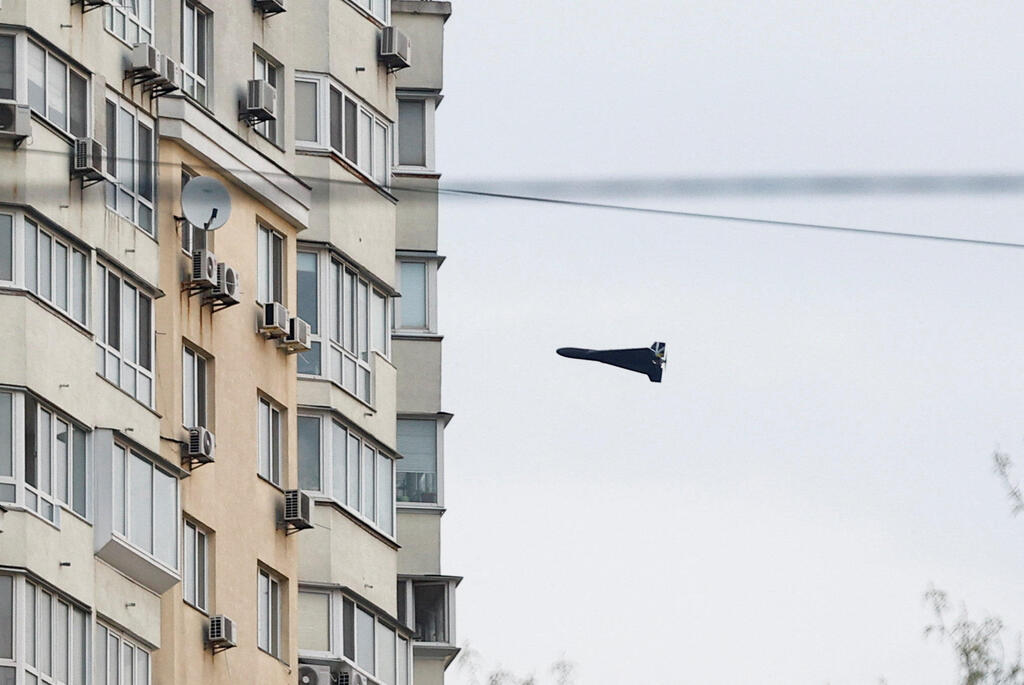
Russian Iran-style Shahed-136 drone in Ukraine
(Photo: REUTERS/Valentyn Ogirenko)
Alongside its offensive drone capabilities, South Korea recognizes that any military deploying drones at scale must also be able to defend against them. Under the organizational overhaul, the drone operations command will be dissolved and transformed into a technology headquarters, while operational authority will be transferred to frontline infantry and armored units.
Beginning in 2027, the country's front-line defenses will be equipped with laser-based active defense systems — it remains unclear whether these will be Israeli systems — as well as high-power microwave (HPM) weapons designed to disable the electronic components of incoming drone swarms without expending costly interceptor missiles.
The road to creating half a million "drone warriors," however, is fraught with structural challenges, the first of which is demographic. South Korea's low birth rate is shrinking the pool of military-age recruits at an alarming pace, and the armed forces are struggling to maintain their current strength of 450,000 personnel, even as the country continues to reject mandatory military service for women.
The defense industry also faces a major supply chain challenge. The Defense Ministry has imposed a strict requirement that all drones be manufactured domestically without any Chinese components for cybersecurity reasons. Yet Chinese companies, led by DJI, dominate the global civilian drone market and the supply chains for low-cost electronic components.
Building a drone industry completely independent of China while simultaneously training hundreds of thousands of recruits without access to inexpensive off-the-shelf drones may prove to be far more costly and complex than Seoul is willing to acknowledge.