

For the past few years, most of the venture conversation around AI has focused on models, applications and software. That made sense when compute felt abundant and infrastructure was someone else’s problem. It no longer is.
AI is becoming an industrial infrastructure business. The constraints increasingly sit below the software layer: electricity, grid connections, cooling, transformers, land and the ability to operate reliably under enormous power loads.
The numbers make the shift hard to ignore. The International Energy Agency says global data-center electricity demand grew 17 percent in 2025. It expects data centers to consume around 945 TWh of electricity by 2030, more than Japan consumes today. Meanwhile, shortages of transformers, turbines and grid capacity are already delaying projects. For investors, this changes where we should be looking.
I am increasingly interested in companies building the physical infrastructure that makes the next decade of AI possible: power systems, cooling, energy orchestration, power electronics and the software that connects them. Israel has an opportunity to build an unusually strong cluster of companies in this category. And the Negev could be their proving ground.
Not because there is cheap land available, and not because Israel should try to compete with the United States or China by building ever-larger data centers. The opportunity is almost the opposite.
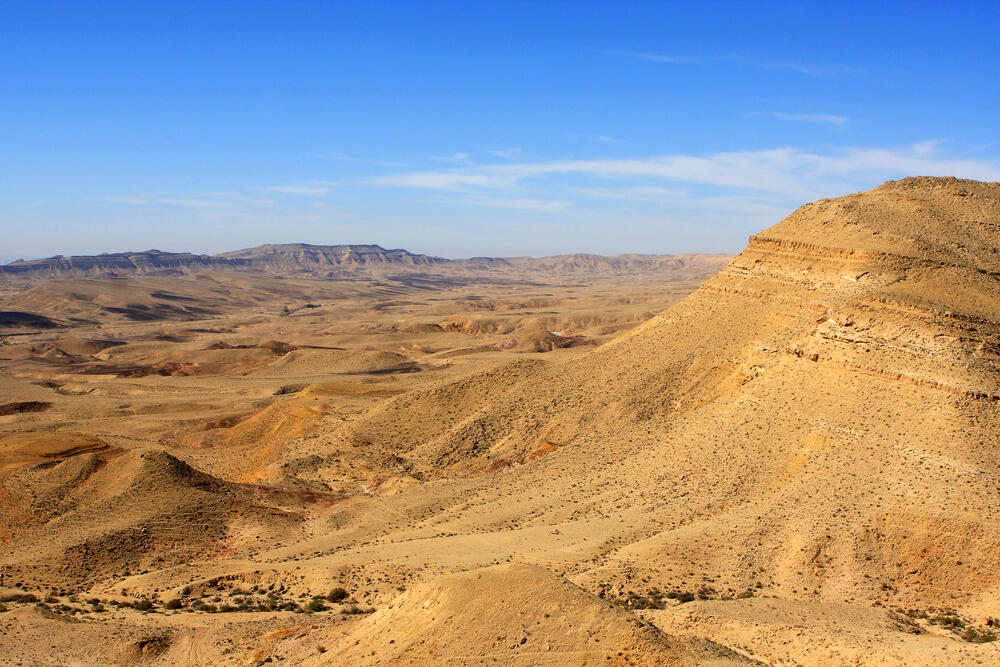
The Negev is hot, water-constrained and limited by a grid that was not designed for massive AI loads. Those sound like disadvantages. For technology development, they may be exactly the point.
If you can make AI infrastructure work efficiently there, you are solving problems that will increasingly matter everywhere.
A testbed, not a server farm
The wrong approach would be to treat the Negev as empty space and import the standard data-center model. AI workloads require continuous, reliable power. Solar generation does not provide that on its own. Cooling systems designed for wetter climates make little sense in a desert. And adding large, inflexible loads to an already constrained grid simply moves the problem somewhere else.
The more interesting challenge is to rethink the system as a whole. Solar generation, storage, grid capacity and compute can increasingly be managed as one integrated stack. The economics have changed dramatically: utility-scale solar costs have fallen by roughly 90 percent since 2010, while battery-storage costs have fallen by more than 90 percent.
At the same time, not every AI workload needs to run at the same moment. Interactive services require low latency and high availability. Training, simulation, synthetic-data generation and many batch workloads are more flexible. Some compute can move in time, increasing consumption when renewable energy is abundant or electricity is cheap and reducing it when the grid is under pressure. That creates room for an entirely new layer of technology.
Imagine AI infrastructure that understands not only GPU utilization, but electricity prices, battery state, grid constraints and cooling capacity. Or data centers that can participate in grid balancing rather than simply drawing power from it.
These are potential companies, not just infrastructure projects. The Negev could serve as the first customer and development environment for them.
Israel has already shown that it can use the region for ambitious energy infrastructure. Ashalim brought together government, engineering and private capital around large-scale solar projects. More recently, the government has been promoting the Negev Hydrogen Valley as a platform for experimentation around hydrogen and energy technologies. AI infrastructure should be the next layer.
Water has to be a design constraint
Cooling is one of the clearest examples of why this matters. Data-center water consumption varies enormously depending on location, power generation and cooling architecture. In a desert, that cannot be treated as an externality to solve later.
A serious Negev AI campus should therefore begin with a simple constraint: do not design around abundant water.
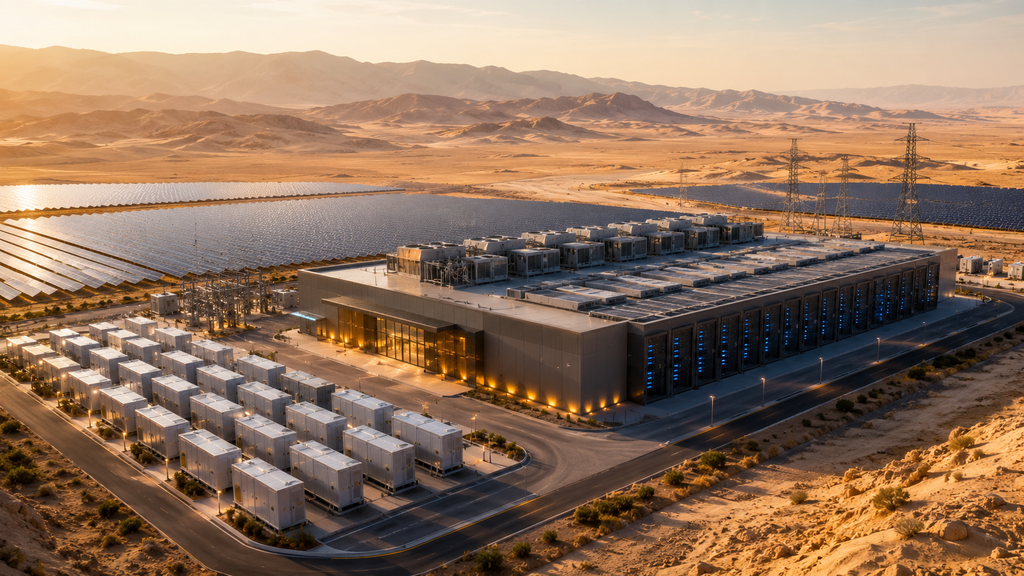
(Generated using AI)
That means prioritizing closed-loop liquid cooling, minimizing or eliminating evaporative cooling, and measuring water and energy efficiency from day one. The goal is not merely to operate a data center with less water: it's developing technologies for high-density compute in hot and water-constrained environments.
That market extends far beyond Israel. The Gulf, India, parts of Africa and the American Southwest are all seeing growing compute demand in places where heat, electricity and water are real constraints.
A cooling company that proves itself in the Negev is not building only for the Israeli market.
The campus is not the company
This distinction matters from a venture perspective. I am less interested in the Negev as a real-estate project than as a company-creation platform.
Israel already has close to 1,000 climate-tech companies, with meaningful activity in energy, water and industrial systems. The Israel Innovation Authority has also been funding beta sites that allow startups to test technologies inside real infrastructure environments.
AI infrastructure needs a version of that model at much larger scale.
A Negev campus could become the first deployment environment for startups building AI-aware grid schedulers, advanced power electronics, direct-liquid-cooling systems, thermal-management technologies, energy storage, resilient networking and cybersecurity for critical compute infrastructure.
Those companies would use Israel as a test market, but their customers would be global. This is the part of the opportunity I find most compelling as an investor. Israel does not need to own the world's largest data centers. It can build the technologies that make the world's data centers work better.
There is a familiar pattern here. Israel rarely wins through scale alone, and tends to do well when a difficult local constraint forces engineers to solve a problem earlier than everyone else.
Cybersecurity was one example. Water technology was another. AI infrastructure could become a third.
A regional opportunity
There is also a regional dimension. Project Prosperity, the proposed energy-and-water arrangement between Jordan and Israel backed by the UAE, offered an interesting model even if regional politics made implementation difficult: different countries contribute different infrastructure advantages.
The same logic can eventually apply to compute. Jordan has land and solar resources. Israel has engineering talent, technology companies and security capabilities. Gulf states have capital, energy and rapidly growing demand for AI infrastructure. Egypt controls critical geographic corridors connecting Europe, Asia and Africa.
 Itamar Mula Photo: Courtesy
A future regional AI infrastructure network could combine power generation, fiber connectivity and compute rather than requiring every country to recreate the entire stack independently.
The World Bank has estimated that deeper electricity-grid integration across the wider Arab world could save up to $196 billion in system costs by 2035. That figure is about grid integration alone, before compute enters the picture, which suggests there's already a large amount of value on the table for whichever countries build the connective infrastructure first.
Instead of exporting energy alone, the region could export computation built on top of it.
That is obviously a longer-term ambition. Politics matter, sovereignty matters and infrastructure cooperation cannot be separated from either. But the technology can be built before the politics are perfect.
What I want to see built
The venture opportunity here is not one giant "AI infrastructure company”; it's a stack.
I want to see founders building power systems designed around GPU workloads. Software that schedules compute against electricity availability. Cooling technologies built for dense racks and extreme temperatures. Power electronics that reduce losses between the grid and the chip. Storage systems optimized for data-center load profiles. Security products designed for infrastructure where compute, energy and networks converge.
Many of these companies will not look like traditional Israeli software startups. They may require hardware, pilots, longer development cycles and customers that operate physical infrastructure.
That is precisely why the opportunity is interesting. The bottlenecks around AI are moving into the physical world, and venture capital needs to follow them there.
The Negev gives Israel a chance to turn its own constraints into an advantage: a place where companies can build and test the infrastructure required to run AI when electricity is scarce, temperatures are high, water is limited and sovereignty matters.
We aren’t going to outbuild the U.S. or China on raw compute, and we don’t need to. We should aim to build the technologies that allow everyone else to use compute more efficiently.
If the next generation of AI infrastructure can survive the Negev, there is a good chance it can survive almost anywhere.
- The writer is principal at Hetz Ventures.