

Aircraft stealth is an advanced technological extension of the ancient principle of camouflage. Just as soldiers wear uniforms that help them blend into their surroundings, and animals in the wild rely on camouflage to evade predators or ambush prey, engineers design military vehicles to reduce the likelihood of detection by radar and other sensing systems. It’s a classic example of an ongoing arms race – or, more precisely, an evasion race – between detection capabilities and the concealment and deception measures used by attack platforms.
Before the radar era, “stealth” was mainly about staying out of the enemy’s sight: painting aircraft in camouflage colors or softening their outlines against the daytime sky. As early as World War I, engineers experimented with transparent materials to make aircraft ‘invisible'.
Gallery
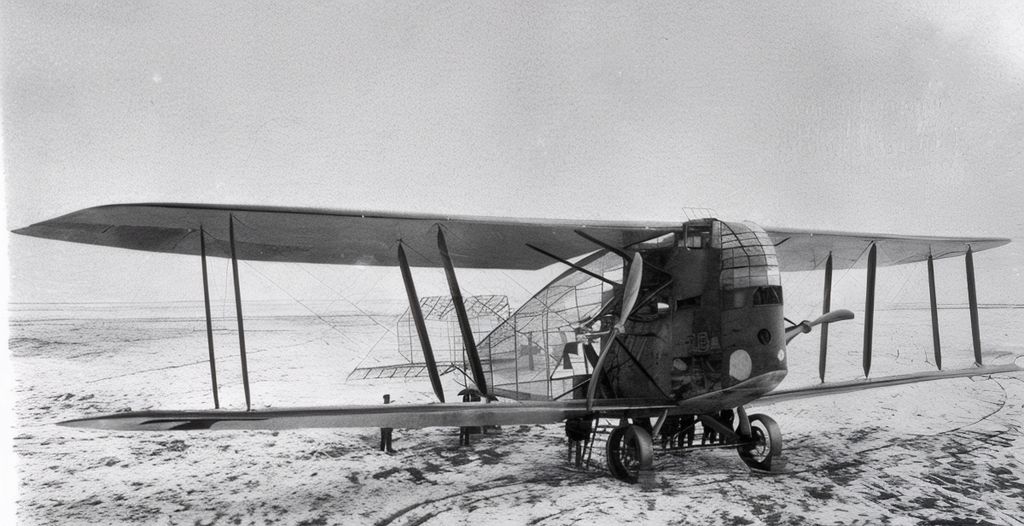
The German Linke-Hofmann R.I aircraft, circa 1917, with transparent sections
(Photo: SDASM Archives/Wikipedia, public domain)
In Germany, for example, the heavy Linke-Hofmann R.I was built with parts of its fuselage covered in a transparent skin to reduce visibility. In practice, the material quickly degraded and lost its transparency, creating telltale reflections instead of concealment. A few other efforts achieved limited, short-lived success, but most fell short. The concept was eventually abandoned—until it re-emerged in the radar age, enabled by far more advanced technology.
In the 1930s, as the first radars were developed and began reshaping air superiority, the concept of modern stealth started to take form. Since then, the term has been associated primarily with evading radar detection—based on radio waves—though not exclusively. For the first time, radar enabled long-range detection and tracking even in harsh weather or poor visibility, sharply reducing the element of surprise in air attacks.
A prominent example is the Battle of Britain in World War II, when British fighters defended England despite the Luftwaffe’s significant numerical advantage, aided by Britain’s radar network, which provided early warning and enabled guided interceptions. By the end of the war, radar had become relatively widespread, creating a strong incentive for focused research into radio-stealth technologies—designing aircraft to deflect radio waves rather than reflect them, effectively “hiding” them from radar. Yet in the 1960s and early 1970s, the prevailing view was still that full stealth was impractical: it was considered too expensive, it degraded flight performance, and radar-return calculations were too complex to support efficient stealth-aircraft design.
Although modern stealth technology was developed and researched largely in the United States, the person often regarded as the founder of stealth theory – probably unintentionally – was the Soviet physicist and engineer Pyotr Ufimtsev. He became known for his work on the physical theory of diffraction, which examines how electromagnetic waves are reflected and scattered by surfaces, especially at edges and vertices.
Until then, it was possible to estimate reflections from large, smooth shapes like spheres or cylinders, but there were no adequate mathematical formulas for multi-angled structures, pronounced edges, or complex geometries. Ufimtsev showed that these cases could be treated analytically by developing a mathematical model that predicts the scattering properties of the returned radiation. His findings became a key theoretical foundation for designing aircraft with reduced radar signatures.
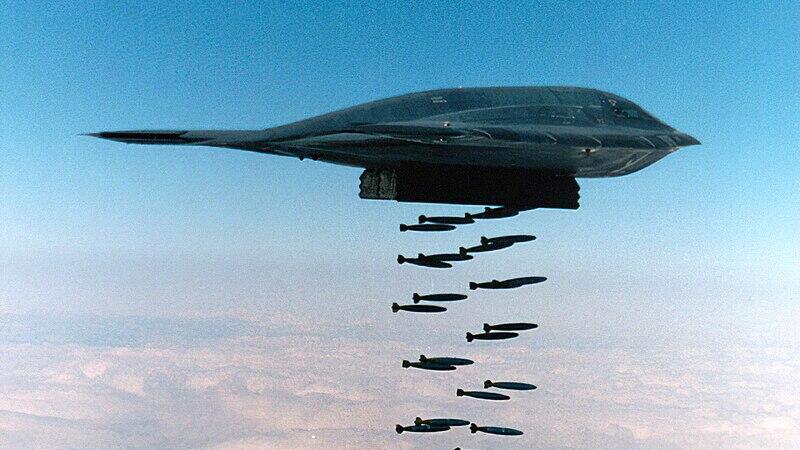
A US B-2 bomber in a 1994 exercise
(Photo: US Air Force)
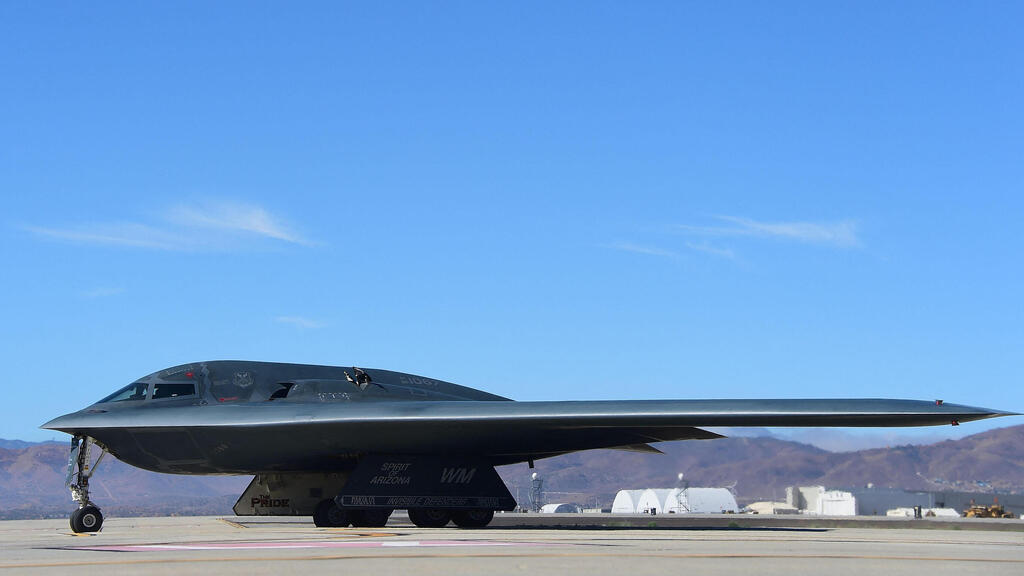
B-2
(Photo: Frederic J. Brown / AFP)
In the Soviet Union of the 1960s, military policymakers failed to recognize the research’s strategic importance, viewed it as purely academic, and allowed Ufimtsev to publish his paper internationally. This enabled Lockheed engineers in the United States to draw on the theory and, in 1981, design the first manned stealth aircraft to enter operational service: the F-117 Nighthawk, developed under the Have Blue project. The same foundations later helped pave the way for Northrop’s B-2 Spirit “flying wing,” which became a symbol of America’s ability to penetrate enemy airspace undetected.
Early U.S. stealth development was conducted as a “black project”—a highly classified military program whose existence is not officially acknowledged by the government, the armed forces, or defense personnel. The purpose of the secrecy was to preserve a strategic advantage and prevent critical information from leaking to rival powers. Development of the F-117 began in the mid-1970s under a veil of secrecy. The aircraft achieved operational capability in 1983, but its existence was not revealed to the public until 1988. The B-2 program, launched in the late 1970s, was likewise kept secret for nearly a decade. For years, the United States denied that such aircraft even existed, and the fuller picture became public only long after they had entered service.
Flying under the radar
The primary form of evasion used by stealth aircraft is radar evasion. Radar (short for Radio Detection And Ranging) uses radio waves to determine an object’s distance, direction and speed relative to the radar’s location. The basic principle is straightforward: a transmitter sends electromagnetic waves—here, radio waves—through an antenna. The waves strike an object and reflect back, and a receiving antenna connected to a receiver picks up the return signal. By processing that signal, the system can calculate the object’s position, size, and range. Tracking the return over time also reveals the object’s direction of travel and speed.
Several countries began developing radar systems in secret even before World War II, and the effort accelerated during the war. One breakthrough that transformed radar technology was the magnetron – a component that can generate very high-power radio waves in a relatively compact device. Beyond household uses such as microwave ovens (microwaves are a particular band within the radio spectrum), the magnetron enabled compact, high-resolution radar systems. Today, radar is used across a wide range of applications: air and ground traffic control, ocean and space monitoring, weather forecasting, flight altitude measurement, autonomous vehicles, geological research and – of course – military defense against aircraft and missiles.
A key concept in stealth design is radar cross section (RCS)—often called an object’s radar signature. RCS measures how detectable an object is to radar: the larger the cross section, the easier it is to spot. It is measured in square meters and depends on many factors, including the vehicle’s geometry, the materials it is made from, the angle at which the radar wave strikes it, and the radar’s operating frequency. In general, an aircraft’s RCS increases with protrusions, grooves, open cavities, and antennas.
Geometric design
Designers of stealth aircraft reduce radar cross section (RCS) in several ways, foremost by shaping the aircraft’s geometry—one of the most critical determinants of its radar signature. When a radar wave strikes a large, flat surface (like a vertical panel), most of the energy reflects directly back toward the transmitting antenna, much like light from a mirror. This specular reflection is a major contributor to RCS. To minimize it, stealth aircraft are built with an outer skin made up of relatively small facets, each tilted at a different angle. The goal is to scatter the reflected energy rather than send it back to the radar: each surface redirects the electromagnetic energy in a different direction, away from the radar’s line of sight. This approach comes with trade-offs—most notably in aerodynamics, since faceted shapes can reduce stability and degrade flight performance compared with fighter jets designed primarily for aerodynamic efficiency.
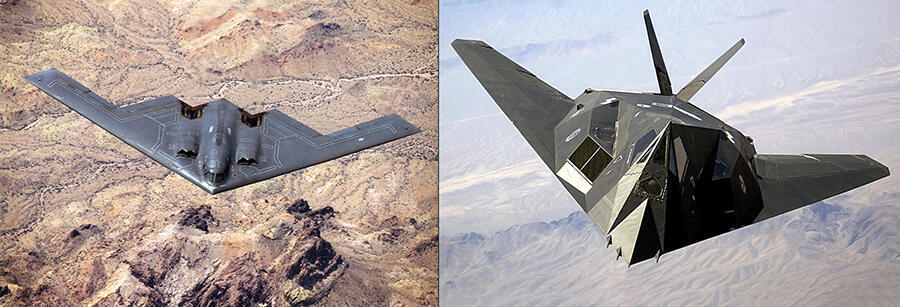
The early F-117 (right) compared with the B-2 bomber
(Photos: USAF, public domain)
Early on, engineers avoided rounded shapes in stealth aircraft out of concern about creeping waves – radiation that can travel along a curved surface and re-radiate back toward the radar. Over time, however, the ability to calculate and simulate radar-wave behavior around complex geometry improved dramatically. That progress made it possible to design curved surfaces that scatter energy in many directions at very low intensity, while also greatly improving aerodynamic performance.
Another key design principle is to avoid right angles between surfaces. Two panels meeting at 90° can form retroreflector-like geometry that sends a strong return straight back to the radar. Stealth designs therefore minimize right angles wherever possible, including in tail surfaces and at the junctions between the wings and fuselage.
One of the strongest sources of radar reflections in jet aircraft is the engine air intakes and other internal cavities, which radar waves can enter and reflect repeatedly off internal surfaces. Exposed compressor blades are especially conspicuous on radar. To reduce these returns, designers may use fine metal meshes that block radio waves without significantly restricting airflow—similar to the mesh on the inside of a microwave-oven door, where the size and spacing of the holes keep microwaves in while still allowing visibility. Intake ducts are also shaped and angled to hide the engine face from the radar’s line of sight. Weapons are carried in internal bays rather than on external pylons, and seams, fasteners and access panels are carefully aligned and recessed into the airframe to eliminate strong reflection points.
Anti-reflection coating
Another way to counter radar detection is to coat aircraft with materials that absorb radio waves or suppress (mask) reflections. These are known as radiation-absorbent materials (RAM), and they rely on three main techniques.
Matching the refractive index: When an electromagnetic wave passes from one material to another, part of it is transmitted and part is reflected at the boundary. The larger the difference between the materials’ refractive indices, the stronger the reflection from that interface. Reflections can be reduced by ensuring the aircraft’s coating has a refractive index closer to that of air. A familiar everyday example is the anti-reflective coating on eyeglass lenses, built in layers that “bridge” between air and glass: the outermost layer has an index closer to air, while the inner layer, next to the glass, transitions toward the refractive index of the glass.
Absorption and conversion to heat: The coating may include tiny ferromagnetic particles—such as carbon- or iron-based additives—that vibrate when radio waves hit them, dissipating the waves’ energy as heat. A familiar example is a microwave oven: microwave radiation makes water molecules in food vibrate, warming it. In an aircraft, the heating is not the goal; it is simply a byproduct of absorbing the electromagnetic energy and dissipating it as heat within the material.
Cancellation through destructive interference: When waves of similar frequency meet at the same point in space, they combine—a phenomenon known as superposition. The outcome depends on their relative phase. Constructive interference occurs when the waves arrive in phase—for example, crest with crest or trough with trough. In that case they reinforce each other, and the amplitude of the resulting wave is the sum of their amplitudes.
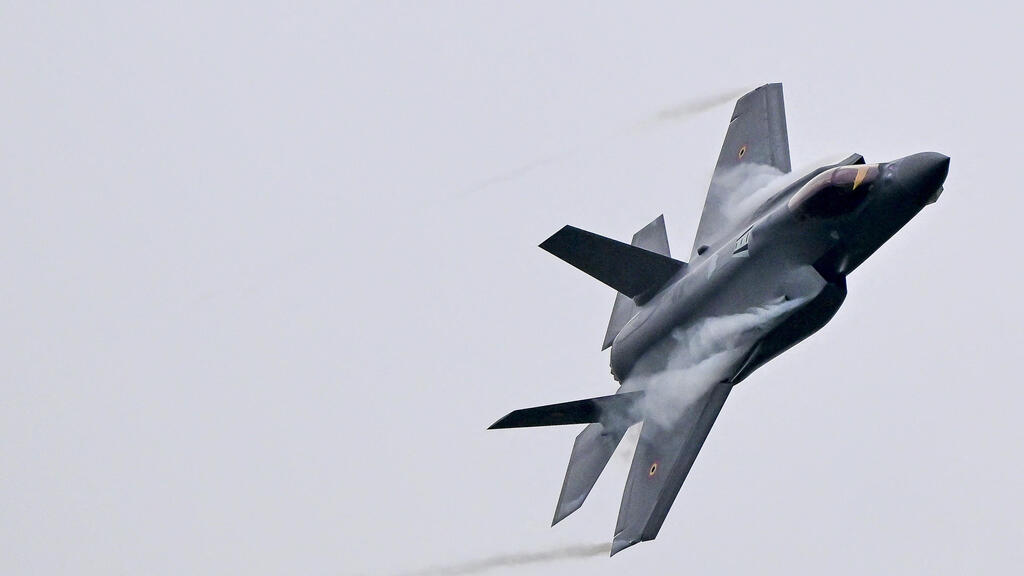
Belgium's F-35 fighter jet in an exercise in October 2025
(Photo: Dirk Waem / Belga / AFP)
Destructive interference occurs when two waves arrive out of phase—crest meeting trough—so the positive part of one wave cancels the negative part of the other. This principle also underlies noise-canceling headphones. When a radio wave strikes an aircraft’s coating, some of the energy reflects from the outer surface. Another portion penetrates the coating, reflects off the aircraft’s skin, and then travels back out through the layers before returning to the air. By choosing the coating thickness in relation to the wavelength, designers can ensure that the second return emerges out of phase with the first, producing destructive interference and reducing the reflected signal back toward the radar.
A similar effect produces the iridescent colors of soap bubbles. A bubble’s surface is an extremely thin liquid film whose thickness varies across the surface. Those tiny variations change how reflected light interferes, creating shifting bands of color.
Shielding coatings can significantly reduce radar reflections and shrink a stealth aircraft’s radar signature, but they come with important drawbacks. First, they are not equally effective across all frequency ranges. In many cases, coatings are optimized for relatively high-frequency radars—such as those used for missile guidance—where efficient absorption or destructive interference is easier to achieve. Against lower-frequency radars, their effectiveness can drop noticeably. Second, the materials are delicate and maintenance-intensive. Coating layers can wear down relatively quickly due to rain, heat, pressure changes, and even sustained high-speed flight. As a result, stealth aircraft may require frequent repainting and careful upkeep, adding substantial lifetime costs on top of an airframe that is already expensive.
Additional forms of evasion: Infrared and acoustic stealth complement radar-stealth technologies by reducing the chances of aircraft detection by other sensors. In the infrared domain—heat detection—approaches include lowering exhaust temperature by mixing in cooler air or dispersing the exhaust over a larger volume; minimizing afterburner use, which greatly increases the thermal signature; and placing exhaust outlets on upper surfaces of the airframe to make them harder for sensors to detect. In parallel, acoustic stealth is designed to reduce engine and exhaust noise, especially during low-altitude flight, through structural design and specialized exhaust ducts that direct sound upward and away from ground-based detectors.
Israel goes stealth
Lockheed Martin’s F-35I, known in the Israeli Air Force as the Adir, is a fifth-generation multirole fighter based on the U.S. F-35 Lightning II, incorporating Israeli-developed upgrades – implemented with the Israeli Air Force and local industries – in three main areas: command-and-control systems, weapons integration, and electronic warfare.
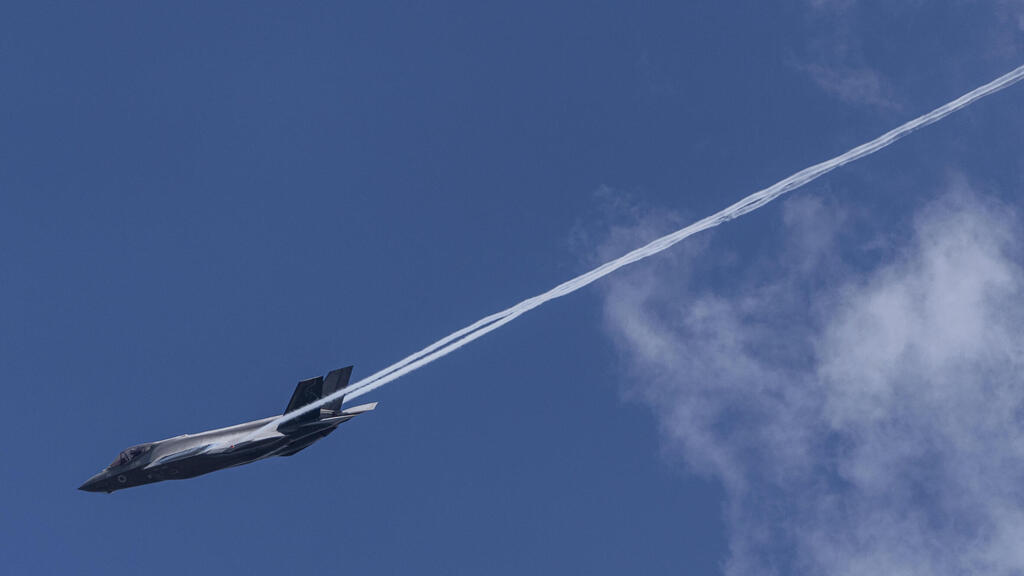
The F-35I, known in the Israeli Air Force as the Adir
(Photo: Ohad Zwigenberg/AP)
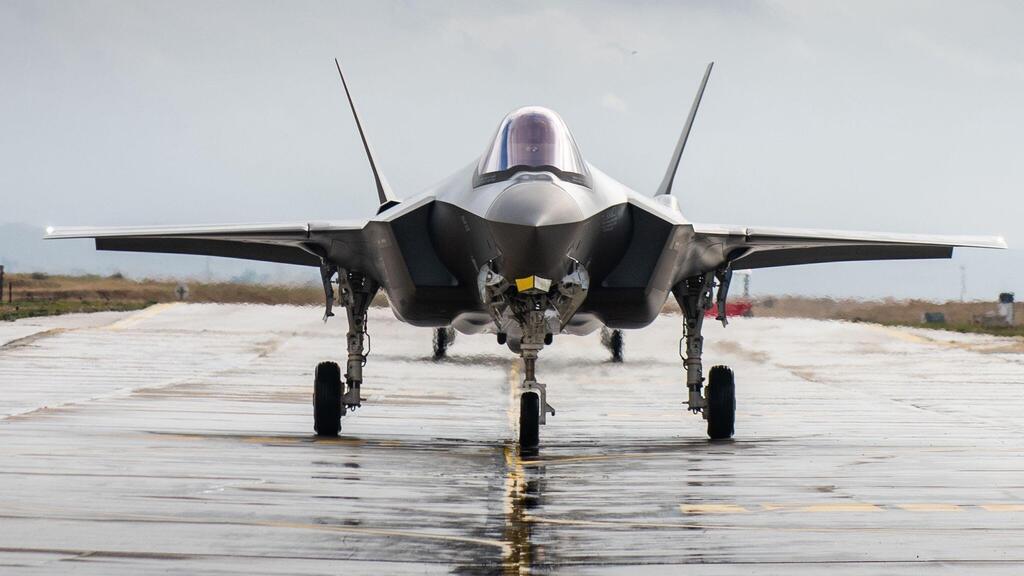
Three new Adir aircraft landed at Nevatim base
(Photo: IDF Spokesperson's Unit)
Israel first ordered the aircraft in 2008, and the first jets arrived in 2016. Since then, Adir aircraft have taken part in numerous operations, including the type’s first operational strike and the F-35’s first confirmed shootdowns worldwide – including interceptions of UAVs and cruise missiles. Today, the Israeli Air Force operates three operational Adir squadrons, and the aircraft are considered a strategic asset that contributes to Israel’s air superiority.
On the horizon
The stealth arms race hasn’t ended, and many organizations continue to study the field and develop innovative technologies. Much of this work is conducted under a veil of secrecy, but several plausible directions for next-generation stealth stand out.
One avenue is the use of advanced metamaterials to improve anti-reflection coatings. These engineered materials have carefully designed microstructures that control how radio waves propagate, are absorbed, or are reflected. Another promising approach is Intelligent Reflecting Surfaces (IRS), which can adjust their reflection properties in real time to match changing radar-detection conditions. A third, more speculative idea is plasma-based stealth, which would create an ionized sheath around an aircraft to alter or absorb radio waves—though practical implementations still appear to be a long way off.
In addition, artificial intelligence and machine learning could support stealth by enabling dynamic adaptation to changing threats. AI systems can analyze sensor data in real time, allowing aircraft, ships, and other platforms to automatically adjust their stealth profiles to match surrounding conditions and risks.
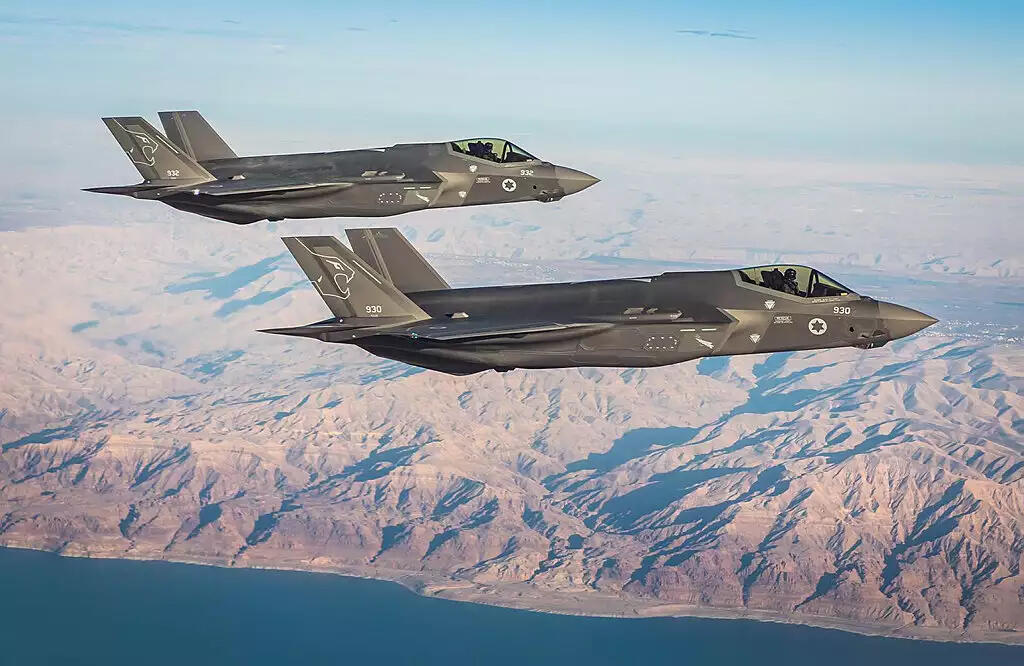
A pair of F-35I Adir aircraft from the “Southern Lions” Squadron over the Eilat Mountains at the squadron’s opening ceremony in 2020
(Photo: IDF Spokesperson's Unit)
Every improvement in stealth design—whether in geometry, coatings or reduced thermal and acoustic signatures—drives parallel investment in advanced detection technologies, which continue to advance in step.
Today, radars often operate across multiple frequency bands simultaneously. Longer wavelengths (VHF and UHF) are less sensitive to stealth shaping, but on their own they lack the precision needed for accurate tracking. By combining multiple bands with advanced signal processing, systems can exploit the strengths of each—earlier detection on the one hand, and more precise localization on the other—producing a fuller, more reliable picture. At the same time multistatic radar is becoming more common: transmitters and receivers are distributed across different locations, making it harder for aircraft to minimize returns from every angle at once.
At the same time, passive detection systems that do not transmit at all are advancing – and because they remain silent, they do not reveal their location. Instead, they exploit ambient electromagnetic radiation already present in the environment, collecting reflections of radio, television or cellular broadcasts from a target and comparing the direct signal from the transmitter with the reflected signal. Differences in arrival time, frequency and signal strength can then be used to locate and track a target without emitting a dedicated radar pulse. This approach is sometimes called Passive Coherent Location, and it is especially effective in environments rich in civilian transmissions.
The next time you see – or hear – a report about a stealth aircraft, give it a moment of respect: think of the long journey from the earliest camouflage experiments, the immense research invested along the way, and all the physics and engineering hidden in the unusual shapes of these unconventional aircraft.
First published: 23:19, 03.04.26