

Just days after reports of an engineer developing a $100 guided missile that can be assembled at home, new findings suggest that Chinese online marketplaces, led by Alibaba, are becoming platforms for the sale of suicide drones and autonomous weapons at relatively low cost.
The systems, once limited to advanced military powers, are now being marketed as civilian equipment, often labeled as agricultural tools or aerial mapping systems.
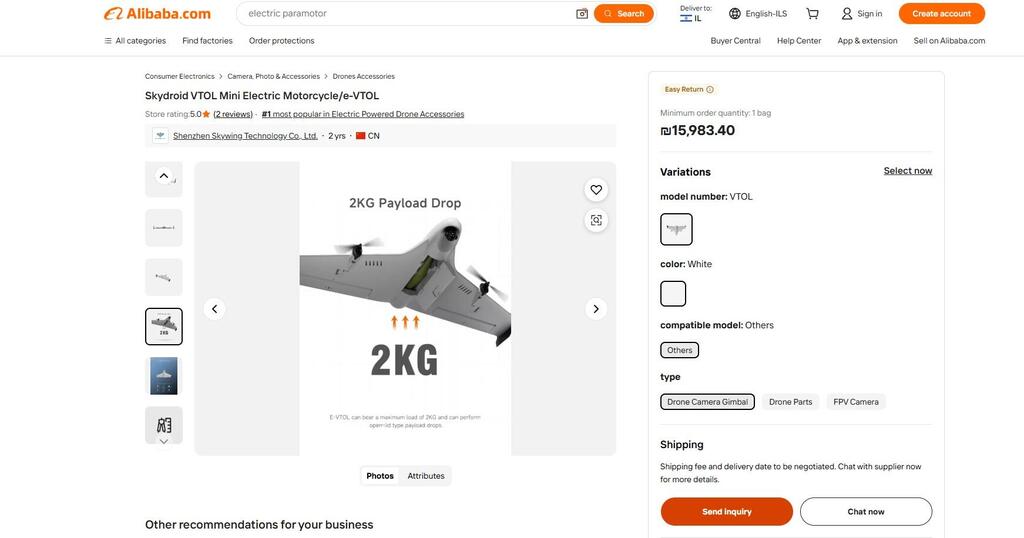
Listings advertise impressive technical specifications, including flight ranges of hundreds of kilometers. At the same time, sellers discreetly note that the drones can carry explosive payloads weighing several kilograms and use AI-based navigation systems that do not rely solely on GPS.
The price: a few thousand dollars, less than the cost of a used car.
Civilian cover, military capability
Security officials say the trend is deeply troubling.
In an investigation by Australia’s ABC network, experts noted that while building a cruise missile once required significant industrial infrastructure, the combination of 3D printing, small gasoline engines and off-the-shelf electronics now allows small manufacturers to offer what are effectively “attack solutions” to anyone willing to pay.
“If you can sell a drone for wedding photography or crop spraying, you can also adapt it for delivering weapons or carrying out an attack,” one expert said.
Some of the drones resemble Iran’s Shahed-136, a loitering munition that has become a symbol of modern warfare.
While a Shahed drone costs tens of thousands of dollars, the systems now available online can cost as little as $2,000 to $5,000.
They may be less precise than advanced Western systems such as the U.S.-made Switchblade, but in large numbers they can operate as swarms capable of overwhelming expensive air defense systems.
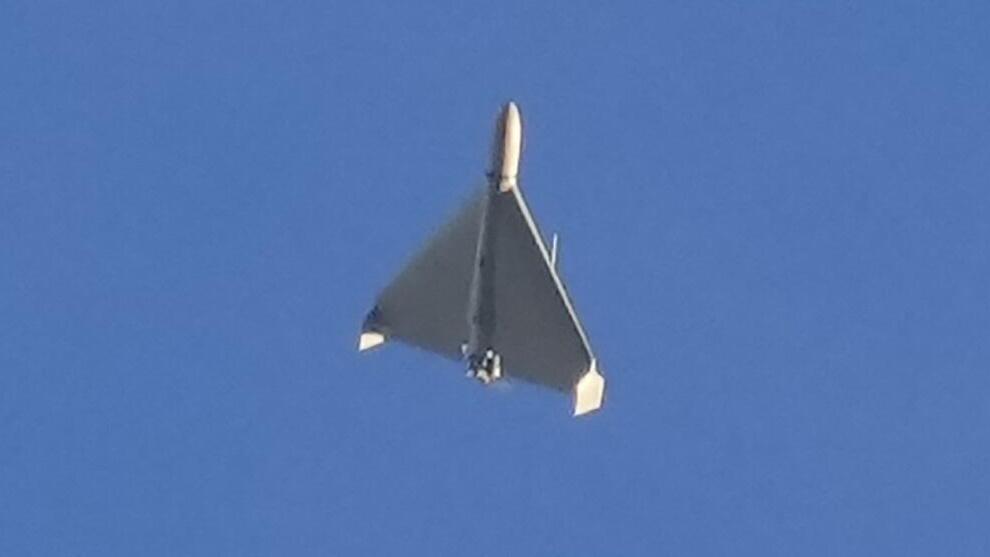
Iranian Shahed 136
(Photo: AP)
‘IKEA of attack drones’
Law enforcement agencies warn of the emergence of what some describe as an “IKEA-style” market for attack drones.
Many of these systems are shipped as assembly kits, making it harder for customs authorities to identify them as weapons.
In Europe, where the war in Ukraine has already demonstrated the effectiveness of low-cost drones, officials are increasingly concerned that such technology could fall into the hands of terrorist organizations or criminal networks.
AI as the turning point
What distinguishes this new generation of systems is the integration of artificial intelligence.
Unlike earlier drones, which relied heavily on GPS or human operators, AI-enabled systems can identify targets autonomously using computer vision, reducing dependence on signals that can be jammed or disrupted.
This shift marks a return to an era of relatively simple and inexpensive weapons, but with a critical upgrade, a “digital brain” that enhances their effectiveness.
A growing challenge for Israel and beyond
For Israel’s defense establishment, the trend presents a significant challenge.
Israel is a global leader in drone development, with advanced systems such as the Harpy and Harop designed for military use. However, these are costly and intended for state actors.

A Russian Shahed drone of Iranian origin after being shot down in the Kharkiv region of Ukraine on April 30
(Photo: Ivan Samoilov/ AFP)
The emergence of cheap alternatives makes it easier for groups such as Hezbollah or Shiite militias in Iraq to acquire capabilities once reserved for national armies.
Israel’s response is increasingly focused on laser-based interception systems, such as Iron Beam, where the cost per interception is minimal compared to traditional missile defenses.
But until such systems become fully operational, the commercial market for low-cost attack drones continues to expand rapidly.
Technology that was once highly classified is now just a few clicks away, shipped in containers across the globe.
Governments and regulators now face a growing challenge: how to control dual-use technologies before this digital marketplace becomes a full-scale strategic threat.