

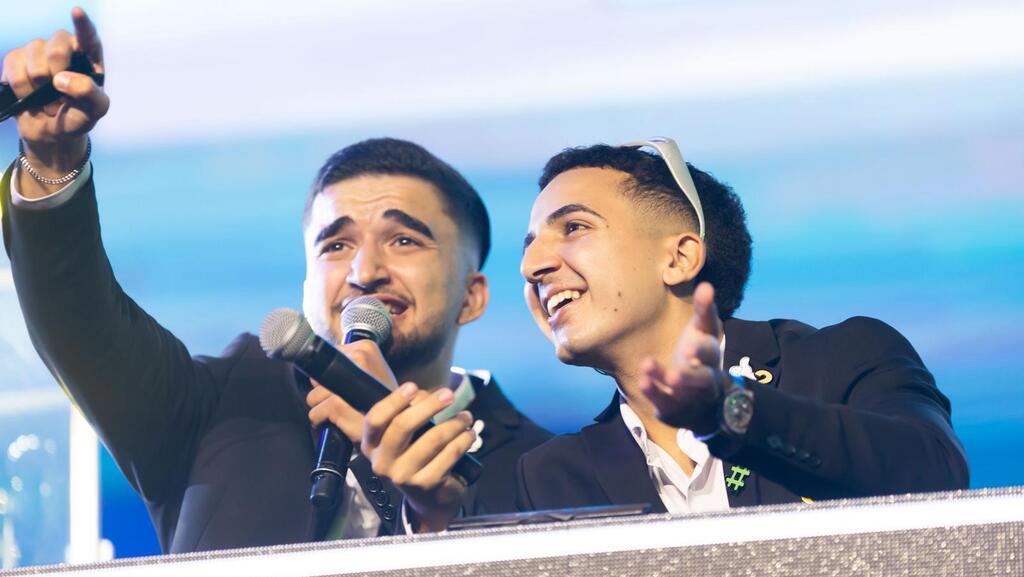
In a world where Roblox has long since morphed into a social network and children spend hours on it every day, two of Israel’s biggest gaming creators, Idan Cohen Atias (De-Cohen) and Ohad Abitbol (Master Ohad), understand the power they hold. They are not just gamers streaming live on YouTube. They are opinion leaders for an entire generation that grows up on their content, follows their codes and laughs at the same inside jokes. “I speak with hundreds of thousands of kids every evening,” De-Cohen says. “For me this is not just a game. It is a responsibility.”
Roblox: more than a game, a full digital world
For those who missed it, Roblox is not just another game. It is a platform where children build, create and explore a huge variety of worlds. Some are innocent. Others less so. Its simplicity and the opportunity to play with friends and express themselves turned Roblox into a global phenomenon, including in Israel.
Roblox has existed for about two decades, but it exploded in 2020 during the COVID-19 pandemic, when children and teens stayed home. Through the platform, they could keep playing with friends remotely and even host events. Virtual birthday parties were held there too.
“Gamers used to be seen as odd, but today we are mainstream. Roblox is not just another game, it is a full cultural world,” he said.
“Today Roblox is the new Fortnite,” De-Cohen explains. “Kids wake up thinking about the game, talk about it at school, go home and play together. It became a real social network, only everything happens behind avatars.”
Registration and most of Roblox are free. However, some areas and premium items require Robux, the platform’s virtual currency. Robux is purchased with real money. Roblox profits from the sales as well as from commissions on in-game purchases.
“There are kids who steal items from other kids in the game,” De-Cohen admits. “Instead of running from the problem, you can deal with it wisely. I created a format called Scam Hunters to teach kids not to do these things. I talk about this on my livestreams and discuss values and responsibility. You cannot ignore it.”
The YouTube and social media generation
The audiences of De-Cohen and Master Ohad, both in their early 20s, are children ages 7 to 14, known as Generation Alpha. They do not watch TV or read newspapers. They consume everything through YouTube and social media.
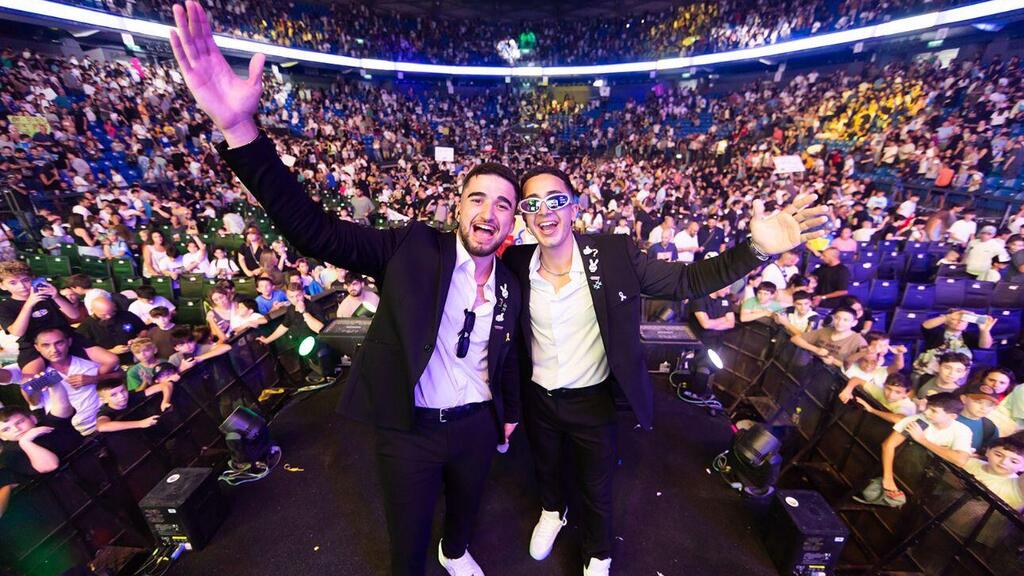
Once seen as odd, today they fill giant arenas. Master Ohad and De-Cohen
(Photo: Stravo)
“This generation is crazy,” Master Ohad says. “They are smart, sharp and aware. But they are also very sensitive. They have seen difficult things since October 7 and grew up in a complicated reality. When we play with them, it is not just a game. Sometimes it is their safe place.”
From that perspective, they see themselves as guides. “When I was 14, I did not have many friends,” Ohad says. “Gaming was my place. I met people there, found friends and YouTubers taught me how to behave online. Now I want to be that guide for other kids.”
Roblox has been around for nearly 20 years, but it became a real phenomenon in 2020 during the COVID-19 pandemic, when children and teens were spending more time at home.
For both creators, the path to fame began by accident. “I started at 15 with three viewers,” De-Cohen recalls. “It was just me, the computer and my mom’s phone. I never thought it would become a profession.” Over the years, the small screen turned into a real stage. The two appeared at the Festigal (Israel’s annual Hanukkah kids’ musical show), sold out Menora Arena six times and turned what was once a kids’ hobby into a full industry with sponsorships, branding and collaborations with major companies including HP and Partner. “Gamers used to be seen as weird,” Ohad says. “Today we are mainstream. There are Roblox shows that fill entire arenas, like the ones coming this Hanukkah, with tens of thousands of parents attending with their kids. It is not just another game. It is a new cultural world.”
A problematic purchase system
Like many popular games, Roblox includes in-game purchases using virtual money, and many children spend hundreds of shekels a month on it. “Parents send me messages about kids who charged their credit cards for tens of thousands of shekels,” Ohad reveals. “I tell them that you never buy online without parental approval. I repeat that on every stream. It is part of our responsibility toward the kids watching us.” De-Cohen sees it similarly. “I am not here to replace the parents, but I do emphasize that everything has a limit. Stop, talk with your parents and understand what you are doing. As content creators, it is our responsibility to convey that.”
Growing global criticism
There are other problems too. The company behind Roblox has faced criticism for lack of oversight, exposure of children to inappropriate content, violence, predatory behavior and an in-game economy that encourages addiction.
This past August, Roblox became embroiled in a major controversy after it banned a hugely popular account named Schlep. He gained millions of views by exposing pedophiles operating within the platform and preventing abuse. Roblox said his actions “created an unpleasant environment.” That explanation was widely condemned.
The company that operates Roblox has faced years of criticism for lack of oversight, exposing children to inappropriate content, violence and even cases of exploitation.
The uproar continued when Roblox’s head of safety sold stock worth about $800,000 shortly after the controversy. Schlep later sued the company, and the state of Louisiana filed its own lawsuit, claiming Roblox “enables a thriving environment for pedophiles.”
Following the criticism, Roblox was officially blocked in several countries, mostly in the Middle East. Turkey banned it in August 2024 over concerns about child exploitation. Iraq, Qatar, Oman, Kuwait and Algeria followed. The Chinese version of Roblox was also discontinued, in line with the country’s strict gaming regulations.
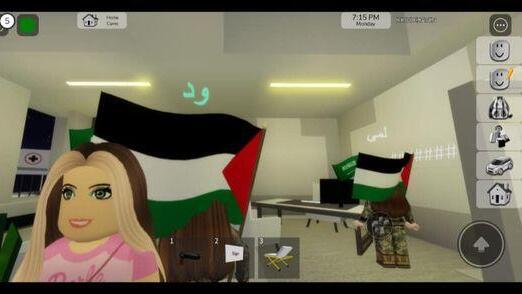
And there were the anti-Israeli incidents that surfaced on Roblox after the war began
(Photo: Screengrab)
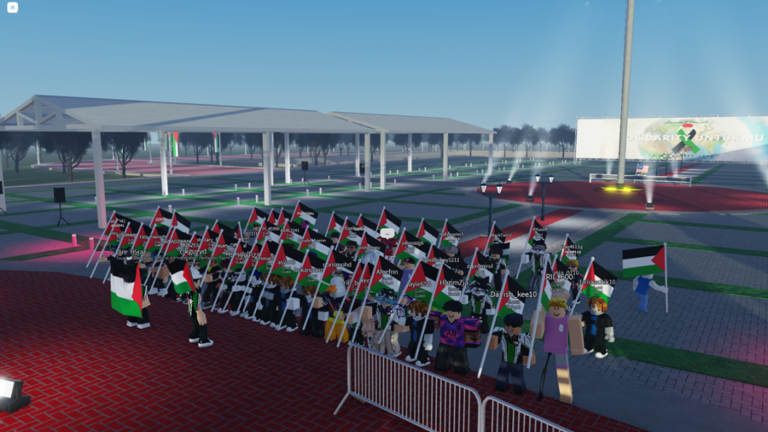
The pro-Palestinian protest on Roblox
(Photo: Screengrab)
Other countries, including Russia, Jordan and Indonesia, have not banned the platform entirely but imposed strict regulatory demands regarding chat systems and protection of young users. They warned that Roblox could be removed if it fails to comply.
Israel’s National Child Online Protection Bureau also issued a public warning about “Condo Games,” hidden Roblox worlds containing sexual content and offensive language. These worlds are created by private users and can be accessed only through direct links or invitations, not through the platform’s main search.
Still, De-Cohen and Ohad offer a more nuanced view. “Every game has faced criticism,” De-Cohen says. “People said Call of Duty encouraged school shootings in the U.S., and Fortnite was called violent. Roblox has problematic parts, yes, but it also has opportunities. It depends how you use it. If kids learn cooperation, boundaries and respect, those are life lessons.”
A mission or too heavy a burden?
Both creators speak in terms of values, belief and mission. “I believe God put me here for a reason,” De-Cohen says. “If I can help one kid understand that stealing is wrong or apologize to a friend, I did my part.”
But this raises a difficult question: should content creators, who were kids themselves not long ago, be the ones responsible for educating a new generation? Is that not the role of parents, the state and the school system? And do they even understand the new world shaped by YouTube and social media?
When YouTube and TikTok livestreams are more engaging than classes, and messages are delivered through memes, creators like De-Cohen and Master Ohad often have more influence than teachers. They are funny, authentic and constantly present. Parents often feel frustrated. At first they are uninvolved, thinking it is just another passing trend. Later, once they see credit card charges, they feel helpless.
“To parents I say, try to understand your kids and what matters to them,” De-Cohen says. “Know what they do on their phones, but also let them play. Set limits, but talk with them. Do not turn the game off in the middle. Be involved. This is the world they live in.”
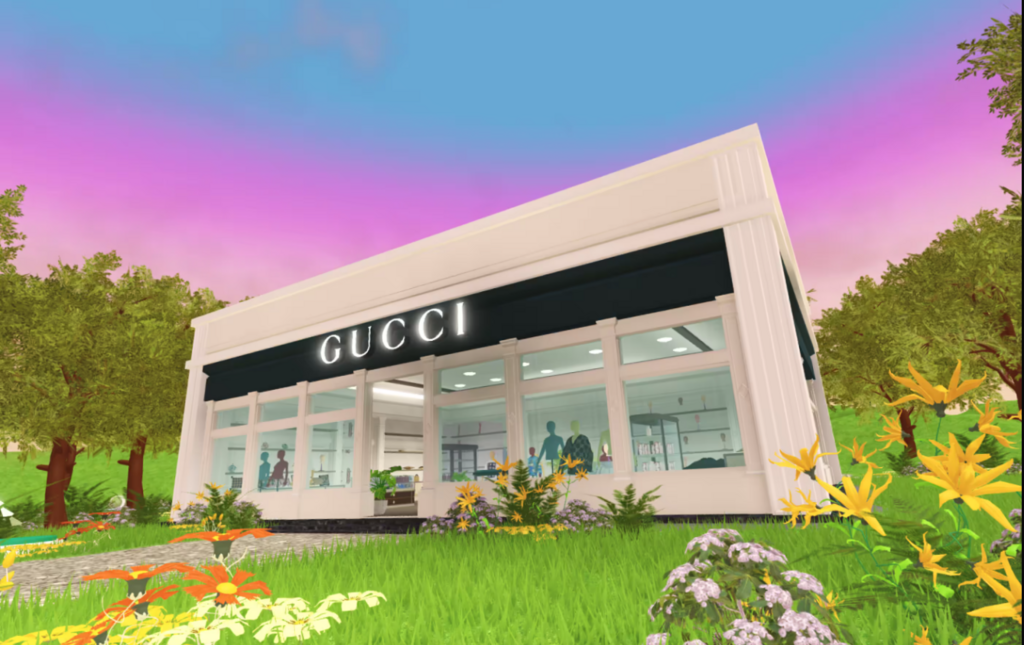
A Gucci store in Roblox. Major brands see its pull among young users
(Photo: from the Gucci website)
“To the kids I say, listen to your parents. They are not against you. They care about you. Protect yourselves, set boundaries and use these games for good. Do not be afraid to share what you are going through, even in-game. And be kind to your friends online.”
In the end, Roblox is no longer just a game. It is an ecosystem where a new generation grows up. They watch, play, learn and dream through screens and social networks. The real question is not whether the game is good or bad, but who guides these children along the way. Today, it seems the answer is less in the hands of the Education Ministry and more on YouTube.
A show that sold out in three hours
For proof that Roblox has become a cultural force, look to the coming Hanukkah holiday. On Dec. 17, Israel will host its first national Roblox Championship, a massive gaming show at Holon’s Toto Arena, placing one of the world’s most talked-about platforms on a live stage before a full audience.
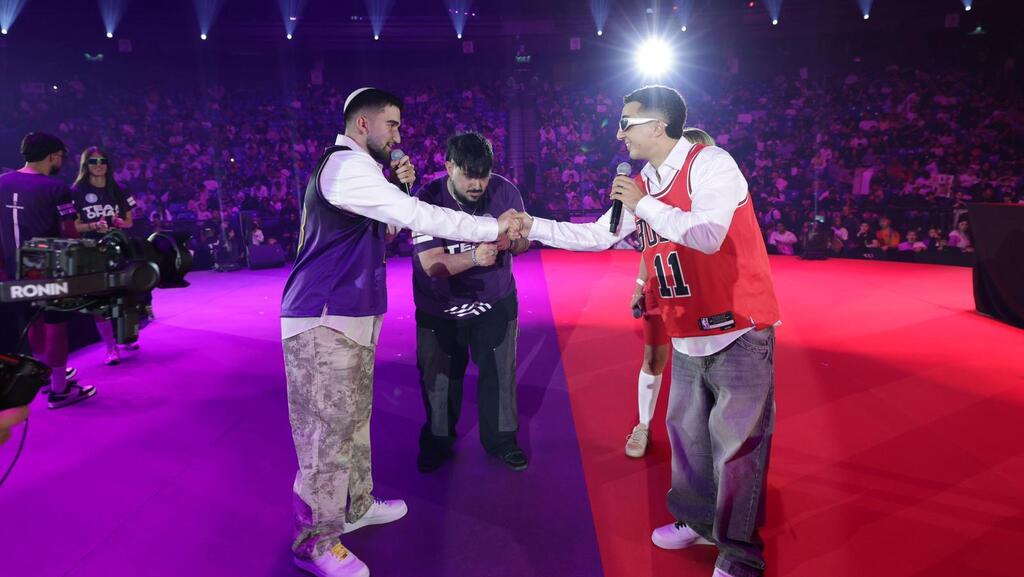
Master Ohad and De-Cohen. Funny, authentic and there for the kids
(Photo: Stravo)
Top Israeli creators will compete on stage, including De-Cohen, Master Ohad, Elbazon, Prizzy, Muffin, Alex, Daniel, Destiny, Nadav, Martzi and Ben-Ben. They are well known to young viewers who have turned them into brands. The excitement is so great that all tickets sold out within three hours. De-Cohen, who created and will host the event, announced an additional show that is also expected to sell out.
“This is not just a competition,” he says. “It is a celebration of an entire culture that kids live in every day.”
Behind that celebration lies a deeper cultural shift: the move from screen to stage, from virtual to real life. The characters children meet through their screens suddenly become real people standing before them, and the game becomes a wide social gathering merging digital and physical worlds. It is a symbolic moment in which the Roblox generation receives full legitimacy and becomes a cultural community of its own.