

The battle over artificial intelligence chips is escalating: Huawei is expected to unveil the Ascend 960, the next generation of its AI processors, this week in Shanghai, along with an especially ambitious roadmap: a new chip every year, double the computing power with each generation and massive systems capable of linking as many as 1 million processors.
Huawei’s goal is to build an alternative to Nvidia, initially for China’s AI industry and later for the global market, as the United States continues to restrict China’s access to the most advanced chips and technologies.
According to Reuters, Huawei’s rotating chairman, David Wang, also known in China as Wang Tao, is expected to present the Ascend 960 at the company’s annual conference in Shanghai. Commercial deployment is planned for 2027, with the 960DT version expected in the first quarter and the 960PR version in the third quarter.
But Huawei is not stopping with a single chip. Under its roadmap, the Ascend 970 is set to arrive in 2028, followed by the Ascend 980 in 2029. In other words, the company plans to move to a new generation every year, with each generation expected to deliver twice the computing power of its predecessor.
The goal: Run any AI model
Behind the numbers lies a much broader ambition. Huawei wants to turn the Ascend family into an infrastructure capable of running virtually any artificial intelligence model, first in China and eventually beyond its borders.
For Beijing, this is also a strategic issue. U.S. export restrictions make it difficult for Chinese companies to obtain Nvidia’s most advanced AI chips, prompting China in recent years to invest enormous resources in trying to build a technology supply chain that is as independent as possible.
Huawei’s approach, however, is not limited to trying to produce a single faster chip. The company is seeking to compensate for gaps at the processor level by building systems that connect huge numbers of chips and make them work together as a single giant computer.
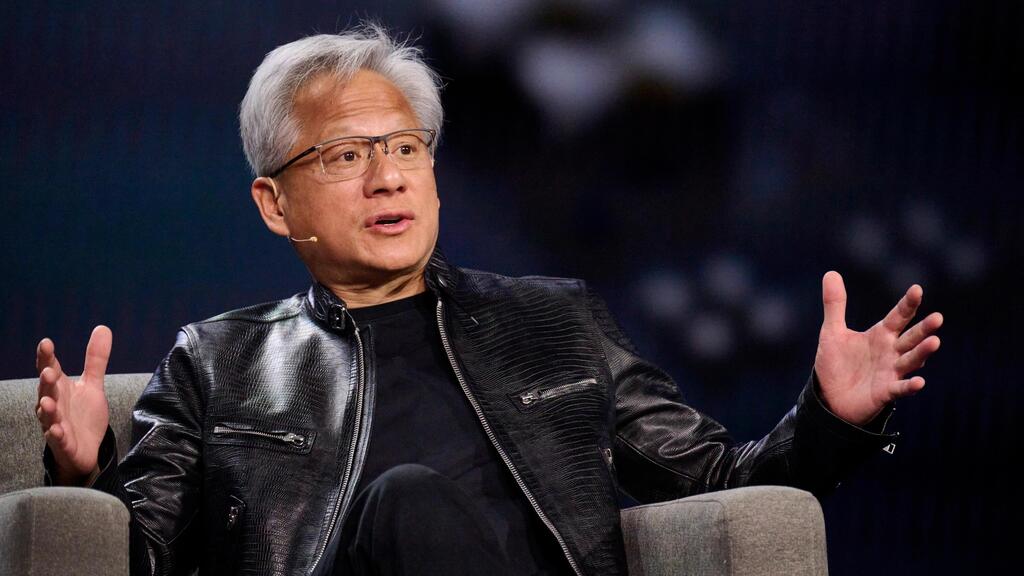
Nvidia CEO Jensen Huang
(Photo: Bloomberg)
According to the company, the Ascend development environment already has about 5,270 active developers each month. At the same time, Huawei has delivered more than 1,000 AI computing systems known as Supernodes to more than 370 customers.
A Supernode connects multiple AI processors so they can work together on the same task. The idea is to allow companies to train and run large models using the combined computing power of many chips, rather than relying solely on the performance of a single processor.
Up to 1 million processors in one system
This is where one of the most important technologies in Huawei’s new strategy comes into play: the Ascend 960 SuperPoD. The company recently introduced an upgraded version of UnifiedBus, its communications technology designed to link chips. Combined with an optical system called Hi-ONE, a single SuperPoD system can connect up to 4,000 processors using high-speed optical links.
That may sound like a technical detail, but it addresses one of the biggest challenges facing the AI industry today. As models become larger and more complex, producing an extremely fast chip is no longer enough. Thousands and sometimes tens of thousands of processors must exchange enormous amounts of data while remaining synchronized as they work together.
In other words, the bottleneck is gradually shifting from the chip itself to the ability to connect thousands of chips into a single efficient system. That is precisely where Huawei is trying to narrow the gap with Nvidia. According to the company, it has already developed 11 chips based on UnifiedBus and its ambitions extend far beyond a single SuperPoD.
Huawei says its computing architecture can scale up to “Superclusters,” enormous computing clusters capable of containing as many as 1 million AI processors. The company says these vast arrays of chips can operate together as a single computing resource. Among the configurations it describes are systems connecting as many as 100,000 Ascend chips.

Huawei founder and CEO Ren Zhengfei
(Photo: Huawei)
Those figures also illustrate how Huawei is trying to address one of its main weaknesses: Even if an individual Ascend chip still does not necessarily match Nvidia’s most advanced processors, connecting enormous numbers of chips could allow Huawei to provide the computing power needed to train and run advanced AI models.
According to The Business Times, DeepSeek is already planning to deploy at least 160,000 Ascend 950DT chips at a new data center in Mongolia that will be used to run its models. At the same time, reports say Huawei is already looking beyond China and examining markets including Malaysia and Egypt for its AI technologies.
For Nvidia, the development is significant. U.S. export restrictions were intended in part to limit China’s access to the most advanced computing technologies, but they have also accelerated Beijing’s efforts to build domestic alternatives. Huawei, which has been a major target of U.S. sanctions for years, is now trying to turn Ascend into a homegrown alternative offering a complete AI platform.
And the goal Huawei has set for itself is no longer simply to produce a “Chinese chip instead of Nvidia’s.” If its roadmap is realized, Huawei wants to build an entire ecosystem, from the individual chip to computing centers containing hundreds of thousands or even 1 million processors, giving China’s AI industry an infrastructure on which it can continue to develop without depending on the United States.